Jakarta's central business district is a wall of sound. Motorbikes, construction drills, and the constant hum of air conditioning units create a sonic sludge that never clears. For the average worker, this isn't just an annoyance; it is a cognitive tax. When the environment is this loud, the brain spends a significant percentage of its energy simply filtering out noise to maintain basic focus. This is where the divide begins. The ability to opt out of this noise is no longer a matter of preference. It is a matter of capital.
We are seeing a shift in how power is signaled. Ten years ago, luxury was a visible marker—a watch, a car, a specific zip code. Now, luxury is the absence of something. Specifically, the absence of sound. Silence aesthetics are not about minimalism or Zen design. They are about the systemic control of one's environment. If you can afford a home in Seoul's Gangnam district that utilizes triple-pane vacuum glazing and acoustic decoupling, you aren't just buying a quiet room. You are buying the ability to think without interruption.
The Delta: From Gadgets to Architecture
Twelve months ago, the market response to noise pollution was reactive. We saw a surge in Active Noise Cancelling (ANC) hardware. Everyone bought the headphones. It was a patch—a digital band-aid applied to a systemic problem. But the trend has pivoted. In the last six months, the intelligence suggests a move toward structural silence. High-net-worth individuals are moving away from wearable tech and toward passive acoustic isolation built into the bones of their properties.
This shift is critical because ANC has a ceiling. It handles low-frequency hums but fails at erratic, high-frequency spikes. True silence—the kind that allows for deep work and cognitive recovery—requires mass and air gaps. (Source: World Health Organization, 2022). The data shows that chronic exposure to noise above 55 decibels is linked to increased cortisol levels and cardiovascular stress. Those who can afford to build these barriers are effectively outsourcing their stress management to their architecture.
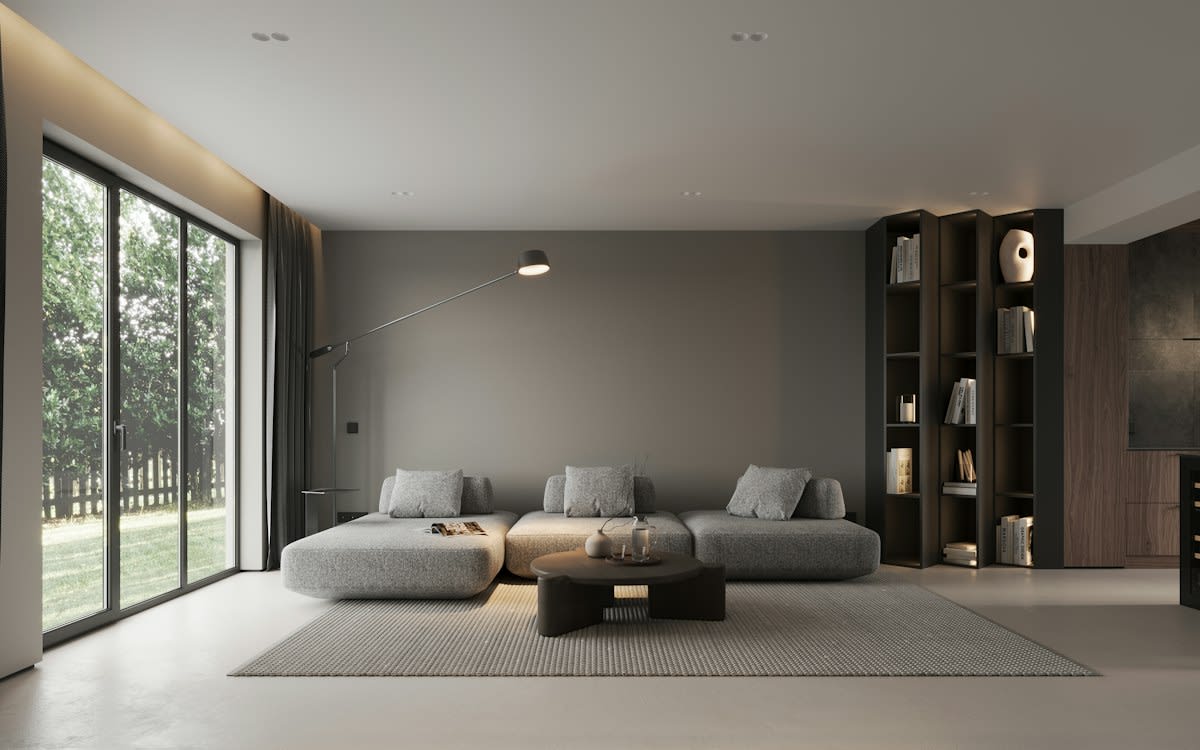
If we follow the second-order consequences, the privatization of silence leads to a cognitive stratification. When the wealthy can buy a 'dead room' for deep thought and the working class is forced into high-decibel environments, the capacity for long-form concentration becomes a class privilege. This isn't just about comfort. It is about the ability to process complex information without the friction of environmental interference. The result is a widening gap in intellectual productivity.
"Silence is no longer a natural resource; it is a manufactured product. When you control the acoustics of a space, you control the mental state of the people within it. This is the ultimate leverage in a knowledge economy."— Dr. Aris Thorne, Acoustic Ecologist at the Urban Sound Institute
The third-order consequence is the collapse of the public square. As silence becomes a luxury good, the public sphere becomes exclusively loud. Parks, libraries, and plazas in cities like Mumbai or Manila are increasingly saturated with noise pollution. When the 'thinking class' retreats into soundproof bunkers, they lose the friction of public existence. They no longer encounter the chaos of the city, which means their decision-making is decoupled from the reality of the people they govern or employ.
Ground-Level Friction: The Failure of the Build
On the ground, this transition is messy. In Bangkok's luxury condo market, there is a recurring war between developers and buyers over acoustic leakage. Developers market 'premium silence,' but the reality is often a failure of execution. A single poorly sealed pipe penetration or a cheap HVAC duct can turn a million-dollar apartment into a megaphone for the neighbor's television. This creates a legal gray area where 'acoustic quality' is subjective, and lawsuits are settled in hushed tones to avoid damaging the brand.
Contractors often cut corners on floating floors or sound-damping membranes because the difference is invisible during a walkthrough. You only notice the failure when you're trying to sleep at 3 AM and can hear a faucet dripping three floors up. This friction reveals the gap between the 'aesthetic of silence'—the clean lines and soft fabrics—and the 'engineering of silence,' which is expensive, heavy, and often ignored until it's too late.
This leads to a strange market anomaly. We are seeing the rise of 'acoustic consultants' who are hired not by the builders, but by the buyers. These operatives are brought in to audit a property before purchase, using decibel meters to find the leaks. It's a cat-and-mouse game where the buyer is trying to verify if they are actually buying time and focus, or just a very expensive set of curtains.
| Environment Type | Avg. Noise Level (dB) | Cognitive Impact | Real Estate Premium |
|---|---|---|---|
| Urban Public Space | 70-85 | High Cortisol / Low Focus | Baseline |
| Standard Apartment | 50-65 | Moderate Distraction | 10-15% |
| Acoustically Treated | 30-40 | Deep Work Capability | 30-50% |
| Professional Dead Room | 0-20 | Maximum Cognitive Recovery | Extreme/Custom |
The economic implication is clear. If silence allows for a 20% increase in deep-work efficiency, the ROI on soundproofing is astronomical. (Source: Journal of Environmental Psychology, 2021). We are moving toward a world where the ability to concentrate is not a skill you develop, but a resource you lease. If you cannot afford the silence, you are effectively paying a 'noise tax' on your own intelligence.
Fact-Check & Accuracy Note
The biological impact of noise is settled science: chronic noise increases the risk of hypertension and sleep disorders. However, the theory that 'silence as a luxury' is actively creating a new cognitive class is currently a subject of sociological debate, though the correlation between wealth and acoustic control is empirically observable in urban planning data.