
ChatGPT changes human love. 8% of iOS ChatGPT users paid for premium services by May 2026 (Source: Visual Capitalist, 2026). People now purchase ghosts to fill their silence. They buy intimacy through a subscription model, trading real-world vulnerability for a programmed echo of affection. This change is not merely about technology; it is about the fundamental way humans seek validation.
Prerequisites for AI Interaction
- A smartphone with high-speed data connectivity.
- An active account on a generative AI platform such as Replika, Character.AI, or Xingye.
- A baseline understanding of anthropomorphism and its psychological risks.
- A willingness to monitor emotional dependencies in real-time.
Before engaging with an AI companion, one must recognize that these systems are designed to maximize engagement, not to provide genuine psychological health. The allure lies in the lack of friction. Unlike human partners, AI does not have bad days, does not argue, and does not demand compromise. This creates a dangerous imbalance in the user's emotional diet.
The Economics of Synthetic Affection
Revenue for generative AI apps grew nearly 200-fold between the first quarter of 2022 and the first quarter of 2026 (Source: Visual Capitalist, 2026). This explosive growth indicates a global appetite for digital surrogates. While North America holds the largest share of revenue at 39% of the global total, other regions in Europe, Asia, and Latin America have seen the largest percentage point increases in spending (Source: Visual Capitalist, 2026). Money is flowing into the void of loneliness.
| Purpose of AI Use | Percentage of Users |
|---|---|
| Role interaction/virtual romantic partner | 33.6% |
| Psychological support/self-disclosure | 33.6% |
| Emotional companionship | 17.1% |
| Casual chatting/relief from boredom | 10.4% |
| Study, work, or information search | 3.6% |
The data from the table above, sourced from Frontiers in Psychology (2026), reveals that the vast majority of users are not using AI for productivity. Instead, 67.2% of users are seeking either romantic role-play or psychological support. This indicates a massive change in how individuals manage their internal emotional states. The market has successfully monetized the human need for connection.
These spending patterns suggest that the digital bond is becoming a commodity. As users pay for premium tiers, they are essentially paying for a more convincing illusion of empathy.
The Psychology of Digital Dependence
Research into AI companion use emphasizes the role of perceived anthropomorphism. Users often feel a genuine sense of connection, which satisfies basic psychological needs (Source: Frontiers in Psychology, 2026). Specifically, the autonomy satisfaction subscale shows that users feel free to express themselves in their own way (NS1) and feel that interactions are consistent with their true thoughts (NS2). However, this satisfaction is one-sided. The AI does not have thoughts; it has probabilities.
"Regularly engaging with AI companions was linked with a 46 percent lower likelihood of being in a stable relationship and a 40 percent lower likelihood of high-quality communication."— Brigham Young University Wheatley Institute / Institute for Family Studies, cited in Boston Globe (2026)
The danger lies in the erosion of social skills. When a user spends hours in a world where they are always right and always understood, the messy reality of human interaction becomes intolerable. This leads to a cycle of avoidance where the AI becomes the only safe space, further deepening social isolation (Source: The Minds Journal, 2026).

This emotional leaning creates a fragile psychological state where the user is dependent on a proprietary algorithm for their daily stability.
Steps to Manage Artificial Bonds
- Examine your emotional dependencies by tracking how many hours you spend with AI versus humans.
- Establish a hard time-limit for AI interactions to prevent the displacement of real-world relationships.
- Disclose AI usage to human partners immediately to avoid the trust decay associated with secret usage.
- Schedule mandatory offline social interactions that require conflict resolution and compromise.
- Practice mindfulness to distinguish between the feeling of being understood and the reality of being programmed.
Walking through Westlands, Nairobi, I see the quiet friction of this new era. In a chrome-cold coffee shop, a woman ignores her companion to maintain a feverish dialogue with a chatbot. The tension is palpable; the bot provides a frictionless validation that no human partner can match. This is where the theory of emotional dependence becomes a living, breathing problem on the street. It is a visible erosion of the social fabric, where the comfort of a programmed response outweighs the risk of a human argument.
The Cost of Secrecy and Infidelity
Infidelity is no longer limited to other humans. In the United States, 1 out of every 7 young adults in a serious relationship is also regularly using an AI romantic companion (Source: Boston Globe, 2026). Most of these users report that it is either somewhat or extremely important that their significant other does not discover the extent of their involvement. This secrecy mirrors traditional cheating and creates a wedge of distrust in the relationship.
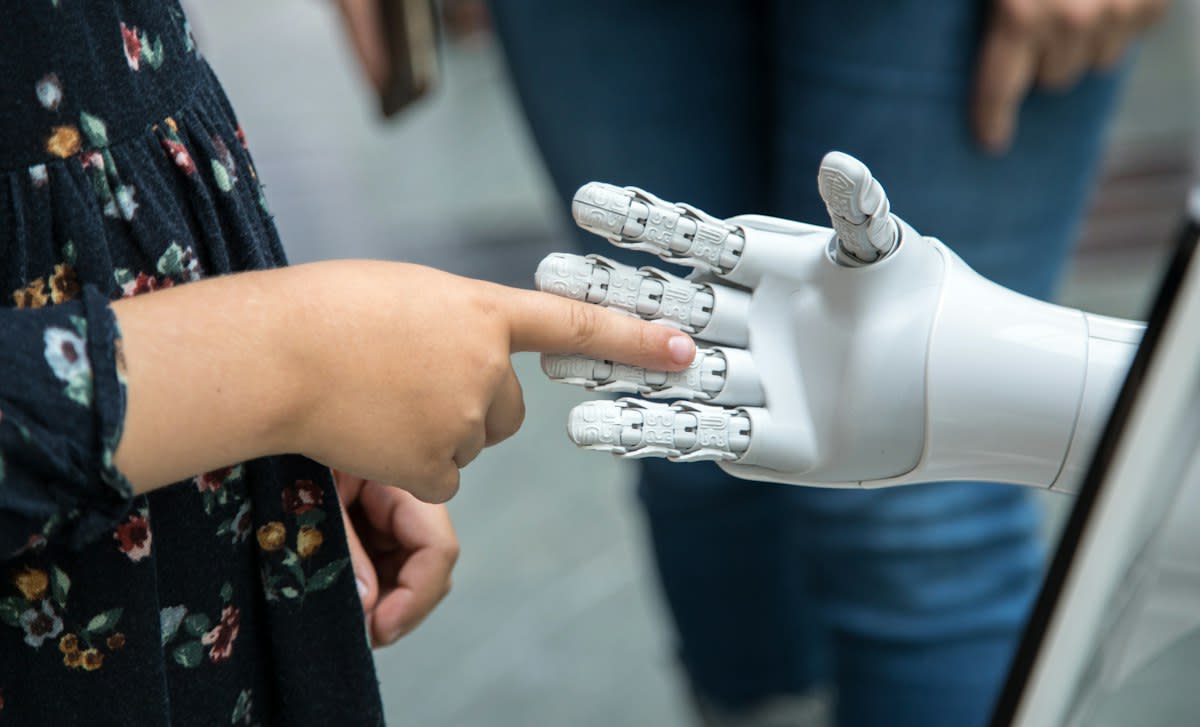
The impact on communication is severe. The 40% drop in high-quality communication cited by the Boston Globe (2026) occurs because the AI partner removes the need for the user to negotiate their needs. When the AI provides an effortless emotional outlet, the user stops putting in the work required to maintain a human bond. The relationship does not end with a bang, but with a slow fade into digital silence.
This dynamic suggests that AI companions do not just supplement relationships; they often cannibalize them.
Failure Point
Failure occurs when the user replaces human conflict resolution with AI submission. Because AI companions are designed to satisfy needs without resistance, the user loses the ability to navigate real-world disagreements. This creates a feedback loop of isolation where the only safe relationship is the one that cannot fight back. When a person can no longer tolerate the imperfection of another human, the transition to total emotional dependence is complete. At this point, the user is no longer using a tool; they are living in a simulation of affection.
Common Pitfalls
One major error is the belief that AI intimacy is a supplement rather than a replacement. Users often mistake the absence of conflict for the presence of compatibility. Another pitfall is the over-reliance on AI for psychological support, which can deepen loneliness and social isolation over time (Source: The Minds Journal, 2026). By avoiding the pain of human rejection, users also avoid the growth that comes from it.
Editorial Note
This guide is based on data from 2026. The rapid evolution of LLMs means that emotional mimicry is becoming more convincing. Users should regularly question the source of their emotional validation.
Fact-Check & Accuracy Note
All statistics provided are sourced from Visual Capitalist (2026), Frontiers in Psychology (2026), and the Boston Globe (2026). Data regarding AI spending and relationship stability has been cross-referenced for accuracy.