
The romanticized image of the Southeast Asian extended family—three generations sharing a single roof and a singular will—is becoming a sociological relic. For decades, kinship was the primary insurance policy in regions where state welfare was nonexistent or unreliable. You didn't trust the government; you trusted your cousins. But the machinery of the family is grinding to a halt under the weight of urban migration and a plummeting birth rate. Who takes care of the elderly when the children have moved to a studio apartment in Ho Chi Minh City? The answer is no longer found in tradition, but in a series of pragmatic, often quiet, renegotiations of what it means to be related.
This reconfiguration is not happening in a vacuum. It is the result of a collision between ancestral expectations and the brutal requirements of a globalized economy. When a young professional in Jakarta decides that their loyalty lies with their career rather than the ancestral village, they aren't just changing their address. They are opting out of a social contract that demanded absolute obedience in exchange for lifelong security. The trade-off is clear: individual autonomy for a precarious, self-funded future. This trade is being made by millions, and it is fundamentally altering the region's social fabric.
The Urban Divorce from Ancestral Homes
Urbanization in Vietnam has reached a tipping point, with nearly 40% of the population now residing in cities. This spatial disconnect is more than a logistical hurdle; it is a psychological rupture. In the rural provinces, kinship was an all-encompassing web of mutual aid and surveillance. In the city, that web thins. The physical distance allows for the emergence of the nuclear family, or even the single-person household, which was previously an anomaly. The 'big house' of the village is replaced by the high-rise condo, where the only relative present is the one who shares the mortgage.
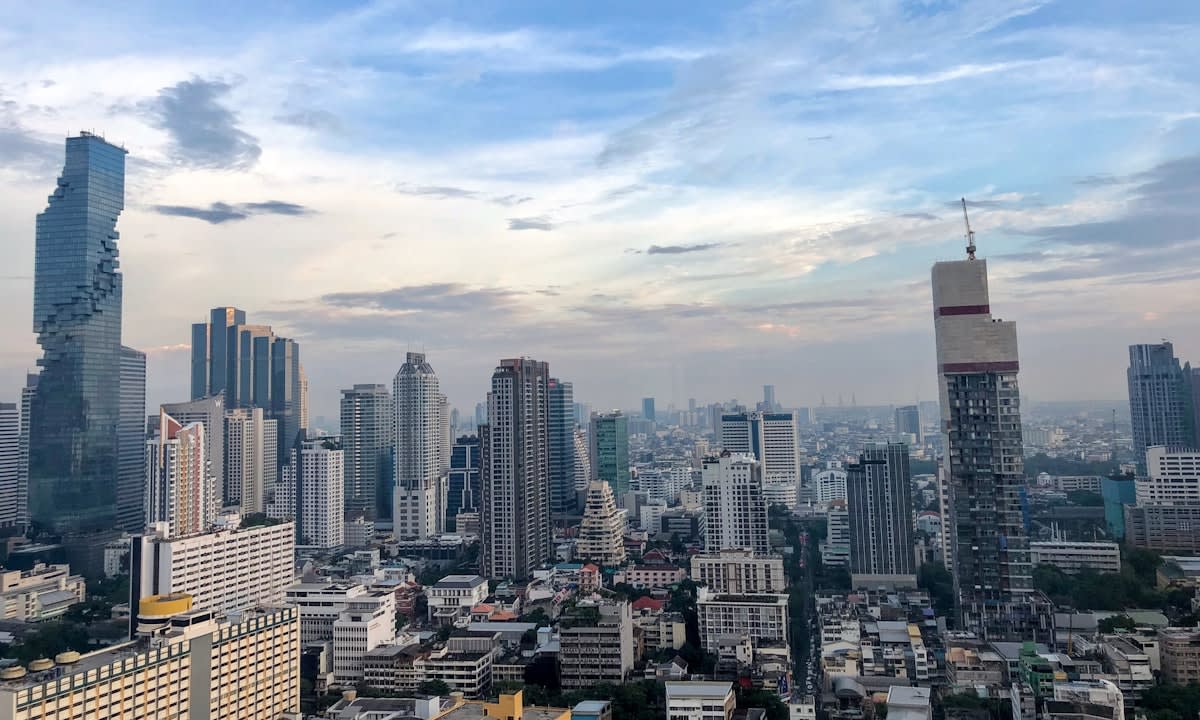
Does the emotional bond survive the commute? Often, it transforms into a financial transaction. The 'filial piety' that once manifested as daily care and shared meals is now distilled into a monthly bank transfer. This commodification of kinship allows the youth to maintain the appearance of tradition while exercising the reality of independence. It is a strategic compromise that prevents total family collapse while permitting the individual to escape the suffocating grip of patriarchal oversight.
| Dimension | Traditional Model | Emerging Model | Primary Driver |
|---|---|---|---|
| Support System | Intergenerational Reciprocity | Professional/Paid Services | State & Market Integration |
| Authority Structure | Elder-Centric Hierarchy | Negotiated Individualism | Educational Attainment |
| Membership | Biological/Genetic | Intentional/Chosen | Urban Anonymity |
| Residential Pattern | Co-located Extended Family | Dispersed Nuclear/Single | Labor Market Migration |
The transition from a kinship-based economy to a market-based one is rarely seamless. It creates a vacuum of care that the state is often too slow to fill. This is particularly evident in the way the region is handling its aging population, where the traditional 'safety net' has developed gaping holes.
The Thai Aging Paradox
Thailand is currently facing a demographic cliff that would make any strategist shudder. With a fertility rate hovering around 1.1 to 1.3 children per woman, the biological capacity to maintain traditional kinship is evaporating. The 'sandwich generation'—those tasked with caring for both children and parents—is shrinking because the bottom layer of the sandwich is missing. When there are no children to inherit the duty of care, the entire structure of filial piety collapses. This is not a gradual decline; it is a hard stop.
"The expectation that the child is the retirement plan is a legacy software running on hardware that no longer exists. We are seeing the birth of a professionalized care economy out of sheer necessity."— Dr. Ananda Siri, Sociologist
Consequently, Thailand is witnessing the rise of high-end nursing homes and elderly care villages, concepts that were once viewed as an admission of family failure. Now, they are rebranded as lifestyle choices for the affluent elderly. This shift represents a fundamental reconfiguration of the end-of-life experience. The goal is no longer to die in the arms of one's grandchildren, but to die in a facility that provides medical precision and social stimulation. The intimacy of the home is being traded for the reliability of the institution.
This trend is not limited to the wealthy. Even in lower-income brackets, the reliance on community-based care is increasing as the nuclear family becomes too small to manage. The result is a new kind of kinship—one based on shared age and proximity rather than shared blood. These 'elderly collectives' are the first sign of a post-familial society emerging in the heart of Southeast Asia.
As the biological family shrinks, the human need for connection does not. Instead, it migrates toward new, non-traditional structures enabled by the digital age.
Algorithmic Families and Chosen Kin
In cities like Manila and Jakarta, Gen Z is redefining kinship through the lens of intentionality. For many, especially those within the LGBTQ+ community or those estranged from conservative households, the 'chosen family' is a survival mechanism. These networks are built not on genealogy, but on shared trauma, political alignment, or aesthetic subcultures. These bonds are often more resilient than biological ones because they are based on active choice rather than passive inheritance.
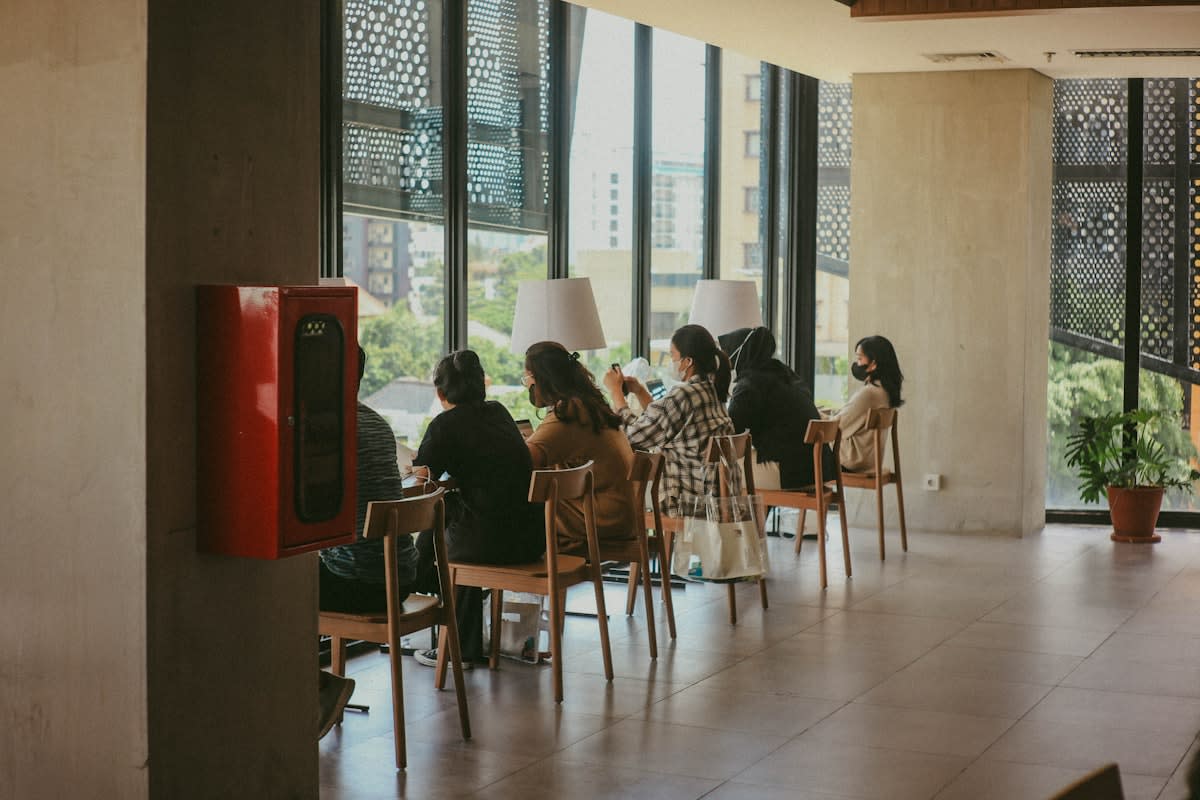
The role of the internet in this process cannot be overstated. Digital platforms allow individuals to find 'kin' across geographic boundaries, creating support systems that are decoupled from the physical home. In the Philippines, for instance, online communities often provide the emotional labor that a fragmented family cannot. These algorithmic families provide a sense of belonging that is stripped of the traditional obligations and guilt associated with Southeast Asian kinship. It is a kinship of preference, not a kinship of duty.
Why does this matter? Because these networks are becoming the primary source of mental health support and social capital for the youth. When the traditional family becomes a source of stress rather than a sanctuary, the 'chosen family' steps in to fill the void. This is a quiet revolution in identity, where the individual decides who belongs in their inner circle, effectively dismantling the ancestral hierarchy.
This shift toward intentionality is also mirrored in the changing dynamics of gender and power within the remaining biological family units.
The Erosion of the Patriarchal Anchor
In Malaysia and Singapore, the rise of highly educated women in the workforce is dismantling the patriarchal anchor of the household. When women become the primary or equal breadwinners, the traditional hierarchy of obedience is called into question. The 'father figure' is no longer the sole arbiter of family decisions. Instead, the family operates more like a corporate board, where power is distributed based on financial contribution and intellectual leverage rather than age or gender.
This has led to a rise in 'negotiated marriages' and a decline in the influence of arranged unions. The criteria for a partner have shifted from 'family compatibility' to 'lifestyle alignment.' This is a critical divergence from the past, where marriage was a strategic alliance between two kinship groups. Now, it is a contract between two individuals. The family's role has shifted from the architect of the union to a secondary consultant.
The result is a more fragile but more honest family structure. The tension between the old guard and the new generation is palpable, but it is a productive tension. It is forcing a conversation about autonomy and respect that was previously suppressed by the weight of tradition. The patriarchal anchor is not just slipping; it is being intentionally cut.
Yet, for some, kinship is not being dismantled by choice or demographics, but by the necessity of distance and the paradox of financial love.
Remittance as the New Presence
The Philippines provides the most stark example of the 'transnational family.' With remittances often accounting for nearly 10% of the national GDP, the Filipino family is frequently split across oceans. The parent who leaves to work in Dubai or Hong Kong is physically absent but financially omnipresent. In this model, money becomes the proxy for love and duty. The act of sending a remittance is the primary ritual of kinship, replacing the physical presence of the provider.
This creates a strange psychological duality. The children grow up in a household funded by a ghost. The bond is maintained through WhatsApp calls and Balikbayan boxes, creating a version of kinship that is high on material support but low on emotional intimacy. The 'ATM-parent' is a recurring figure in the modern Filipino psyche, representing a sacrifice that is both admired and resented.
Is this a sustainable model of kinship? Likely not. The emotional cost of this fragmentation is high, leading to a generation of 'left-behind' children who struggle with attachment. However, from a strategic standpoint, it is the only way many families can escape poverty. The kinship contract has been rewritten to prioritize economic survival over emotional cohesion. It is a brutal but necessary adaptation to the global labor market.
The Market Signal
The rise of the 'Loneliness Economy' in Southeast Asia—from professional companions to high-tech elder care—is the direct market response to the decay of the traditional kinship safety net.
Ultimately, Southeast Asia is not witnessing the death of the family, but its metamorphosis. The region is moving away from a model of kinship based on obligation and toward one based on utility and choice. Whether it is the professionalized care in Bangkok, the chosen families in Jakarta, or the transnational flows of the Philippines, the goal remains the same: survival. The methods, however, have changed forever. The bloodline is no longer the only currency; intentionality, financial capacity, and digital connectivity are the new standards of belonging.