
The Great Disconnect
We are currently witnessing the most profound contradiction in human history: the simultaneous peak of technical connectivity and the nadir of functional community. We can broadcast a thought to ten thousand strangers in a second, yet many of us would struggle to find a single person to help us move a couch or watch a child during a medical emergency. This isn't a failure of personality or a trend of modern selfishness; it is a systemic collapse of social capital. We have confused the 'network'—a technical arrangement of nodes—with the 'community'—a moral arrangement of mutual obligations.
This deficit manifests differently across the globe, revealing a stark divide in how trust is cultivated. Research analyzing 74 countries over a 29-year period indicates that trust is not distributed evenly. Western societies historically displayed a higher propensity for generalized trust, while Latin American societies recorded the lowest levels of this social lubricant (Source: Academia.edu, 2026). When generalized trust erodes, the cost of every single human interaction rises because we must replace faith with contracts, surveillance, and verification.

Why does this matter during an emergency? Because social capital is the invisible insurance policy of a functioning society. A 'High Trust Profile' is characterized by greater community engagement, less prejudice, and a higher capacity for political elaboration (Source: Academia.edu, 2026). When these traits vanish, we lose the 'weak ties'—the acquaintances and neighbors who provide the critical bridge to resources during a crisis. We are left with a few 'strong ties' (immediate family) and a million 'zero ties' (digital followers), leaving a dangerous void in the middle.
The Architecture of Erosion
The digital economy didn't just provide new tools for connection; it fundamentally rewired the incentives of human interaction. For a decade, addictive digital products like smartphones and social media have altered the cognitive frameworks of an entire generation, leading to increased rates of loneliness, depression, and a diminished capacity for rational and social functioning (Source: IFStudies, 2026). We have traded the slow, often friction-filled process of building offline trust for the instant gratification of digital validation.
"An elegant and powerful indictment of the digital degradation of our shared life, including our politics, and a call to protect and renew associational life where it most matters - offline, not online."— David Grewal, citing Bitton & Sadler's 'A Bounded Web'
This shift represents a move from 'associational life' to 'platform life.' In an association—a bowling league, a church, a local union—you are bound by shared geography and mutual goals. On a platform, you are bound by an algorithm designed to maximize engagement, not resilience. The platform doesn't care if you have someone to call in an emergency; it only cares that you stay on the app long enough to see another advertisement (Source: Cambridge University Press, 2026).
| Trust Profile | Primary Characteristics | Societal Outcome | Regional Prevalence (Trend) |
|---|---|---|---|
| High Trust | High community engagement, low prejudice | Greater political participation & cohesion | Higher in Western Societies (Source: Academia.edu, 2026) |
| Intermediate Trust | Moderate social capital | Stable but fragile civic structures | Catholic/European regions (Source: Academia.edu, 2026) |
| Low Trust | Low generalized trust, high skepticism | Fragmented social cohesion, higher inequality | Higher in Latin American societies (Source: Academia.edu, 2026) |
The erosion isn't just social; it's institutional. There is a sparse but critical relationship between the health of political institutions and the level of generalized trust within a population (Source: Academia.edu, 2026). When people stop trusting the systems meant to protect them, they stop investing in their neighbors. This creates a feedback loop where the lack of trust makes institutions less effective, which in turn further destroys trust.
As we move deeper into the era of generative and agentic AI, the risk of 'hollowing out' family and community life intensifies. These technologies threaten to replace human-to-human support structures with synthetic alternatives, further eroding the religious, economic, and political structures that human flourishing depends upon (Source: IFStudies, 2026). If an AI can simulate the empathy of a friend, the incentive to do the hard work of maintaining a real friendship evaporates.
The Practitioner's Friction
In the field of strategic social analysis, we often debate the 'metric trap.' For years, policymakers have looked at the number of 'connections' or 'memberships' as a proxy for social capital. But on the ground, this is a fantasy. I have seen communities with high digital membership but zero operational resilience. The real debate among practitioners today is the distinction between 'bonding' social capital (deep ties with people like us) and 'bridging' social capital (ties with people different from us). We are seeing an explosion of bonding capital—echo chambers of the like-minded—and a total collapse of bridging capital.
This friction is most evident when we try to implement community-led resilience projects. You find that people are happy to 'like' a community initiative on a screen, but when it comes to the physical labor of organizing a neighborhood watch or a food bank, the participation rate plummets. The cognitive load of digital life has made the physical effort of associational life feel burdensome. We are essentially experiencing a 'social atrophy' where the muscles required for real-world interdependence have wasted away.
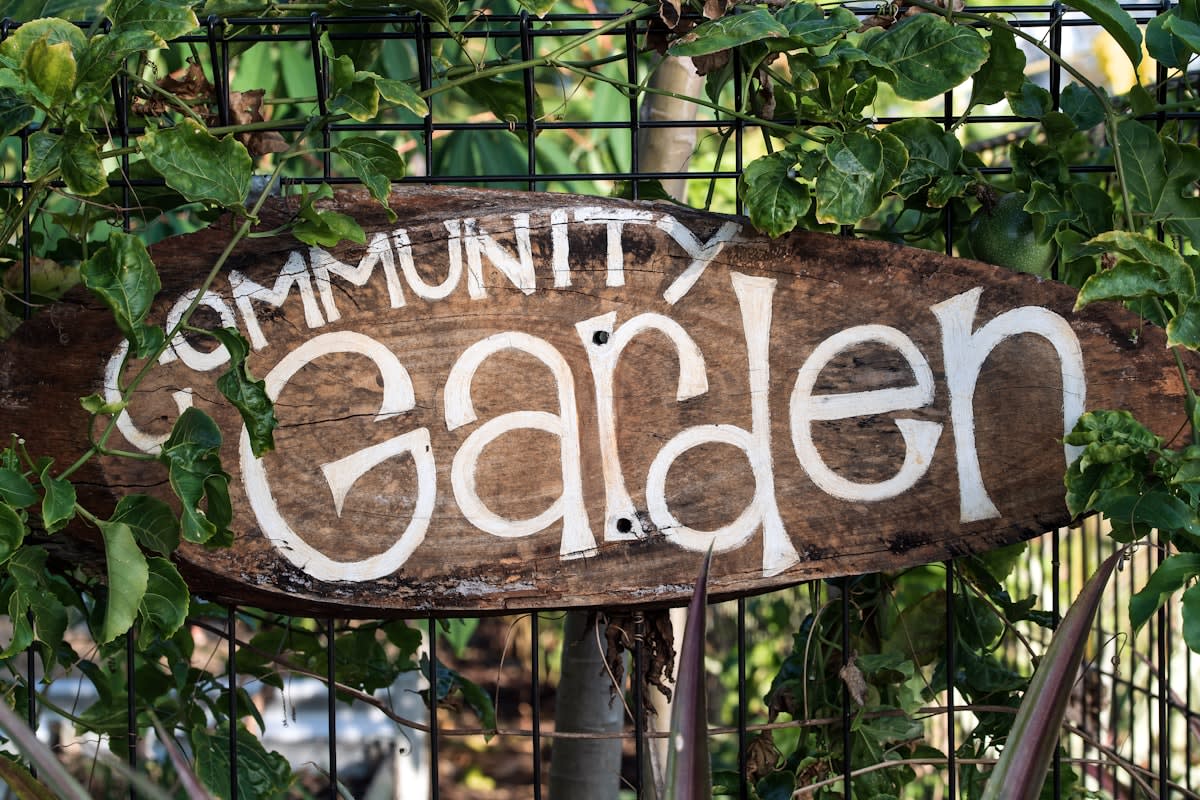
Pathways to Resilience
Solving the social capital deficit requires more than just 'putting the phones away.' It requires a fundamental shift in how we view data and digital rights. One emerging proposal is the concept of 'Associational Data Rights,' which suggests that the digital economy should be restructured to empower families and communities rather than isolating individuals for profit (Source: IFStudies, 2026). By giving bedrock institutions—families, local clubs, religious groups—a voice in how AI and digital platforms are governed, we can begin to align tech incentives with human flourishing.
The opportunity lies in the intentional redesign of 'third places'—those spaces between home and work where unplanned social interactions occur. If we treat the renewal of offline associational life as a matter of national and global security rather than a lifestyle choice, we can rebuild the networks that actually matter. This means investing in physical infrastructure that forces interaction and supports the 'slow' building of trust that no algorithm can replicate (Source: Cambridge University Press, 2026).
Ultimately, resilience is found in the willingness to be inconvenienced by other people. The 'efficiency' of the digital age is the enemy of the 'resilience' of the social age. To ensure we have someone to call in an emergency, we must accept the friction, the conflict, and the time-commitment of real-world relationships. The goal is not to delete the digital world, but to ensure it serves the associational world, rather than replacing it.
Editorial Note
This analysis avoids the common 'moral panic' regarding technology. Instead, it views the social capital deficit as a structural misalignment. The focus is on the transition from individual-centric digital consumption to community-centric associational rights.
Fact-Check & Accuracy Note
Key claims regarding trust profiles across 74 countries and the correlation between political institutions and generalized trust are sourced from the systematic review 'The Erosion of Trust in the United States' (2026). Claims regarding AI's impact on family structures and 'Associational Data Rights' are sourced from the IFStudies report (2026). The call for offline renewal is attributed to the discussion surrounding 'A Bounded Web' (2026).