
The loud logo is dying. For decades, the global language of status was simple: the larger the emblem, the higher the rank. But look at the streets of Tokyo, New York, or Mumbai this August, and you will see a different story unfolding. We are witnessing a pivot from conspicuous consumption to what can only be described as value-signaling. It is no longer about what you can afford to buy, but what you have the taste to curate and the time to pursue. This is not a temporary dip in luxury spending; it is a fundamental restructuring of how identity is broadcast in a hyper-connected world.
The Era of Conspicuous Waiting
The most jarring shift has appeared in the way the youngest consumers interact with scarcity. According to a report from Fortune published on July 31, 2026, we are seeing the rise of conspicuous waiting. Thorstein Veblen once defined status through the purchase of exclusive goods, but Gen Z is redefining exclusivity through the lens of time. In urban centers, the act of waiting in a viral line has become the product itself. The queue is no longer a hurdle to the purchase; it is the primary content.
"The scarce resource on display isn’t money. It’s time — and posting the wait is how you spend it publicly."— Kumar, as cited by Fortune
Consider the economics of an $11 cake. To a global audience, the price point is accessible, almost trivial. However, spending an hour or more in a physical line to acquire that cake is a luxury few can afford in a productivity-obsessed culture. By documenting the wait on social media, the consumer signals a specific kind of wealth: the freedom of time. This democratized snobbery shifts the power dynamic from the brand's price tag to the consumer's patience and dedication. It is a calculated move that trades financial signaling for experiential signaling.

This shift represents a massive delta compared to the consumption patterns of just twelve months ago. Where the previous trend was the 'drop'—the instant acquisition of a limited item—the current trend is the 'process.' The ritual of getting ready, the endurance of the wait, and the eventual reward are packaged into a narrative. The brand provides the excuse, but the consumer provides the value. This is the essence of value-signaling: the item is merely a trophy for the effort expended.
But this behavior is not limited to low-cost viral goods. It extends into the highest echelons of luxury, where the definition of a 'new' item is being challenged by a preference for the archival.
The Archival Pivot: Horology and the $85 Billion Shift
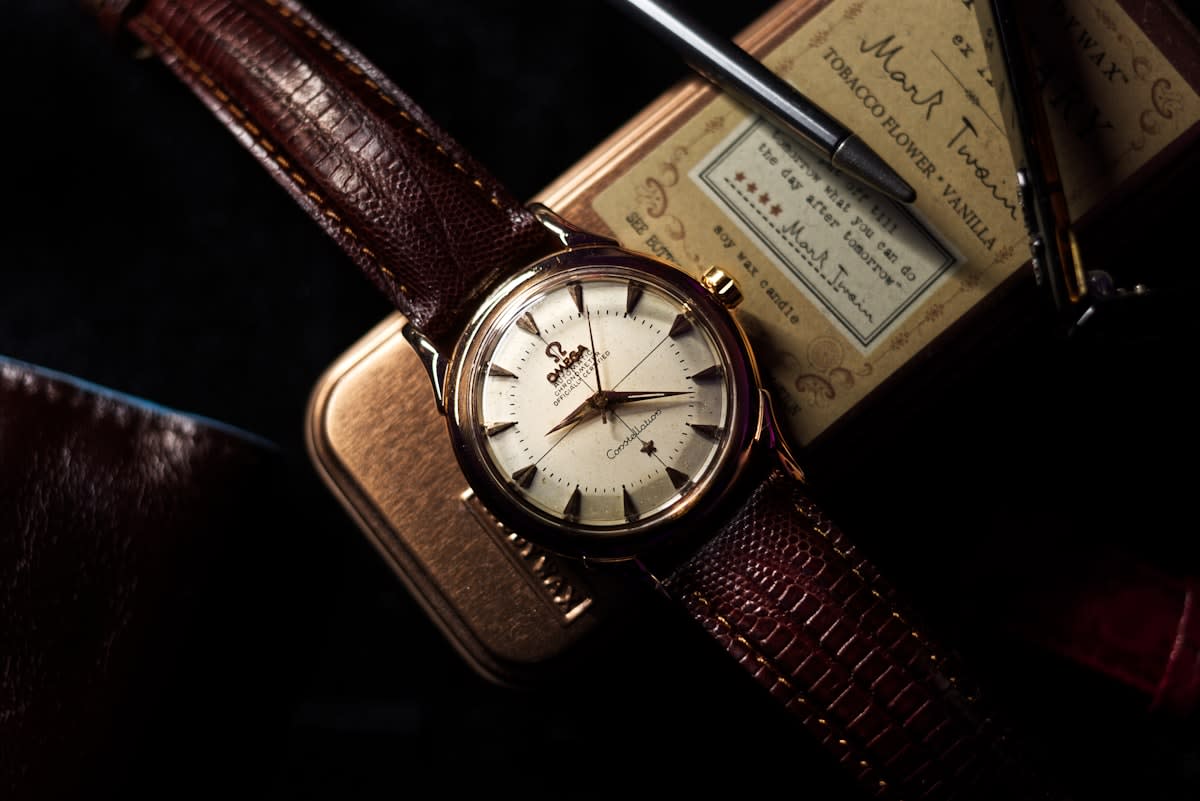
While the mass market chases the next viral line, the luxury watch industry is undergoing a seismic correction. Data from July 31, 2026, indicates that pre-owned horology is no longer a niche hobby for collectors but a primary driver of the global luxury market. Driven heavily by millennial and Gen Z demand, the pre-owned market is projected to reach a staggering $85 billion. The allure is no longer the shiny, brand-new piece from a boutique, but the archival revival—the watch with a history.
| Metric | Traditional Luxury Model | New Value-Signaling Model |
|---|---|---|
| Primary Driver | Brand New / Current Season | Archival / Pre-owned / Rare |
| Status Signal | Financial Capacity (Price) | Curation Knowledge (Taste) |
| Key Resource | Capital | Time and Research |
| Market Focus | Volume Growth | Margin and Provenance |
Why the sudden pivot to the secondary market? Because a brand-new watch can be bought by anyone with enough money. An archival piece, however, requires knowledge, hunting, and an understanding of horological history. This transforms the object from a status symbol into a signal of expertise. In this economy, the 'hunt' is the value. Luxury watchmakers are now forced to embrace this shift, recognizing that their legacy is being redefined by the secondary market's appetite for the pre-owned.
This trend mirrors the 'conspicuous waiting' seen in the cake lines. Whether it is spending hours in a queue or spending months tracking down a specific 1970s reference watch, the common thread is the investment of non-financial capital. The luxury is found in the effort, not just the acquisition.
This evolution is not happening in a vacuum; it is reflecting a broader global trend toward premiumization, even in markets where volume is stalling.
Premiumization in Emerging Markets: The Indian Example
The shift toward value over volume is perhaps most evident in the spirits industry. In India, a critical market for global luxury, liquor majors are pivoting their entire strategy. As of August 2, 2026, firms like Diageo India and Radico Khaitan are aggressively shifting toward premium spirits. This move comes as mass-market volume growth begins to slow, forcing companies to seek higher margins through premiumization.
Market Insight
The move by Diageo India and Radico Khaitan signals a maturing consumer base that is less interested in the quantity of consumption and more interested in the perceived status and quality of the brand.
This is the industrial side of the value-signaling coin. When volume growth slows, the only way to maintain growth is to elevate the product's perceived value. In India, this means moving away from the mass-market bottle and toward the premium label. It is a strategic adaptation to a consumer who no longer wants the 'standard' option but seeks a marker of distinction. The goal is no longer to reach everyone, but to be the preferred choice for those signaling a higher social or economic tier.
When you connect these dots—the $11 cake lines, the $85 billion pre-owned watch market, and the premiumization of Indian spirits—a clear pattern emerges. The global consumer is moving away from the 'entry-level luxury' logo. They are seeking markers of identity that cannot be simply purchased off a shelf with a credit card.
The Implications for Global Brands
For brands, this shift is a double-edged sword. The traditional model of scaling via logo ubiquity is failing. If everyone can buy the logo, the logo ceases to signal status. To survive, brands must now create 'friction.' They must design experiences that require time, knowledge, or a specific type of cultural capital to access. The focus is shifting from the product's features to the product's provenance.
- Shift from 'Newness' to 'Provenance': Archival and pre-owned items now hold more signaling power than current season releases.
- Time as Luxury: The ability to wait in line or spend months searching for a piece is the new high-status marker.
- Margin over Volume: As seen in the Indian liquor market, growth now comes from premiumization rather than mass-market expansion.
- Experience as Content: The process of acquisition is now as valuable as the acquisition itself.
We are entering an era of 'quiet luxury' not just in aesthetics, but in economics. The most powerful signals are now the ones that are invisible to the uninitiated. If you know why a specific pre-owned watch is valuable, or why a specific queue is worth standing in, you belong to the in-group. The logo was a shout; value-signaling is a whisper. And in 2026, the whisper is far more influential.
The death of the logo is not the death of status. It is simply the evolution of how we prove our place in the world. By trading the symbol for the story, Gen Z is not rejecting luxury—they are reclaiming it from the assembly line and moving it back into the realm of the rare, the curated, and the earned.