Two killed in 'massive' Ukrainian drone attack on Moscow region, says Russia
Source Entity
BBC News
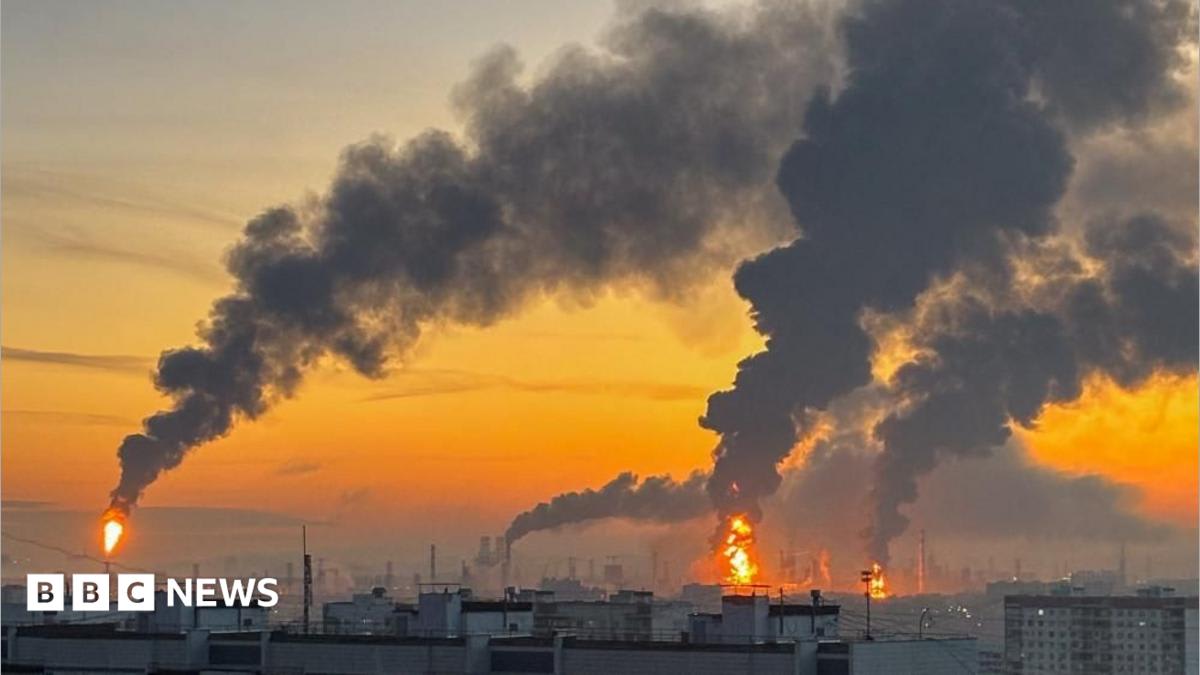
A massive Ukrainian drone attack targeted the Moscow region, causing damage to a major oil refinery and residential areas. The assault resulted in at least two fatalities and multiple injuries while forcing flight suspensions at capital airports.
Escalation in the Air: Assessing the Massive Drone Strike on Moscow
The Scope of the Assault
In a significant escalation of the ongoing conflict, Russia reported a massive, coordinated drone attack targeting the capital, Moscow, and the surrounding region. According to reports from the TASS news agency and regional officials, the operation involved a large volume of unmanned aerial vehicles, with Moscow Region Governor Andrei Vorobyev claiming that 249 drones were intercepted and destroyed. The sheer scale of the operation marks one of the most intense aerial engagements near the Russian capital in recent times.
Impact on Critical Infrastructure
The attack resulted in tangible damage to strategic energy infrastructure, specifically hitting a facility at the Moscow Oil Refinery. Moscow Mayor Sergey Sobyanin confirmed the damage, with footage showing visible flames and thick smoke billowing from the site. Such strikes on energy facilities represent a tactical shift in the war, where both sides are increasingly prioritizing the disruption of logistics, transport, and energy-generating capabilities to undermine the opponent's economic and military endurance.
Human Toll and Regional Destabilization
Beyond the industrial damage, the human cost of this offensive has been significant. Governor Vorobyev confirmed that at least two people were killed and six others injured across the Moscow region. Reports indicate that a 44-year-old woman was among the victims in Sofyino after a drone impact. Furthermore, the attack caused residential fires and set a local warehouse ablaze, necessitating emergency responses. The gravity of the situation was compounded by the suspension of flights at two major Moscow airports as authorities worked to secure the airspace.
Contextualizing the Tit-for-Tat Dynamic
This strike did not occur in a vacuum; it follows a pattern of heightened intensity in the conflict. Prior to this event, Ukrainian officials reported that Russian strikes on the Kyiv and Sumy regions resulted in seven deaths, including two children. This cycle of retaliatory strikes highlights the fragile nature of the current frontline, where civilian centers and critical infrastructure are increasingly caught in the crossfire of high-stakes military maneuvers.
Broader Implications and Future Trends
The targeting of the Moscow Oil Refinery suggests that Ukraine is actively seeking to degrade Russia's refining capacity, a tactic aimed at impacting domestic fuel supplies and state revenue. Conversely, the high number of intercepted drones suggests that Russian air defenses remain a primary focus for the Kremlin. As both nations continue to invest heavily in drone warfare, we can expect future trends to involve more sophisticated anti-drone swarming techniques and further efforts to protect vulnerable industrial assets against long-range aerial incursions.