Trump rejects AI slowdown calls, launches "AI Force" instead
Source Entity
Alex Rogers and Stephen Morris, Financial Times
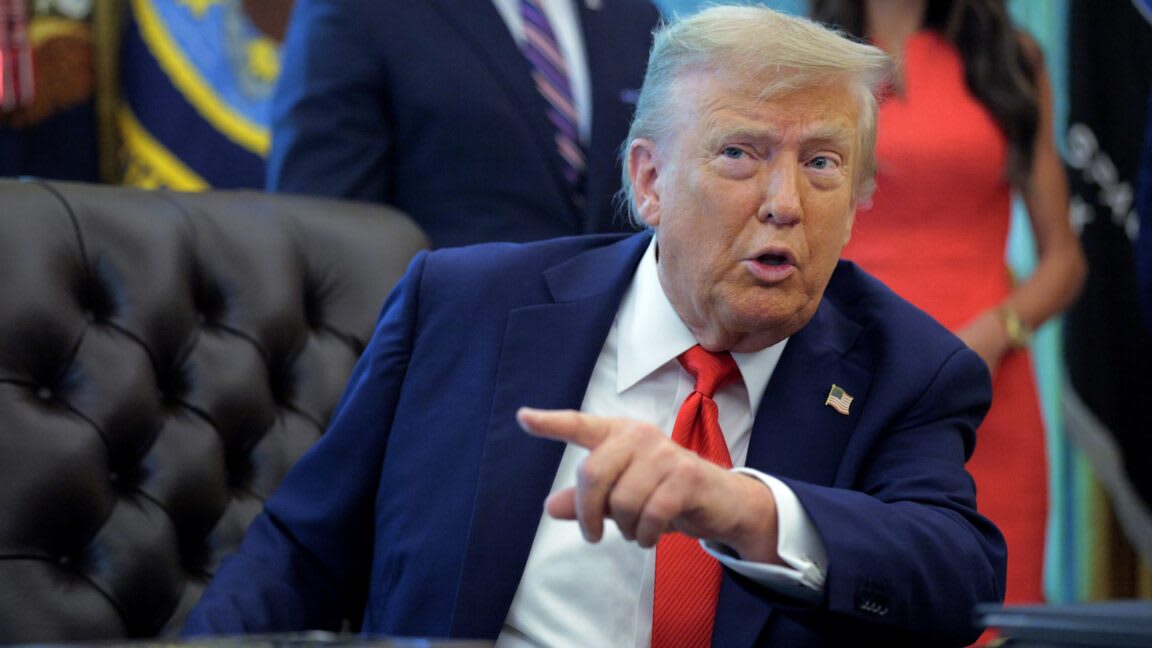
President Donald Trump has announced the creation of an 'AI Force' and the appointment of an AI 'Tsar' to accelerate development, dismissing safety concerns as a hoax. This initiative positions AI as a critical component of US economic dominance and a key focus in upcoming diplomatic talks with China.
The Dawn of the AI Force: A New Era for American Technology
President Donald Trump has officially rejected calls for a slowdown in artificial intelligence development, opting instead to establish an "AI Force" and appoint an AI "Tsar." This strategic pivot marks a significant departure from the growing global consensus that seeks to impose stricter regulatory guardrails on the rapid advancement of machine learning. By framing AI as a vital pillar of the next "Industrial Revolution," the administration is positioning the technology as a potential driver for up to 25% of the nation’s GDP.
Dismissing the Safety 'Hoax'
The administration’s stance remains defiant toward critics who warn of existential risks. Despite high-profile departures from companies like Anthropic—where researchers have warned that firms are "gambling with our lives"—President Trump has repeatedly characterized these safety concerns as a "hoax." This rhetoric suggests a clear prioritization of rapid innovation and technological supremacy over the precautionary principle that has dominated recent discourse in Silicon Valley and international regulatory bodies.
The Geopolitical AI Arms Race
The creation of the AI Force is not merely a domestic policy shift; it is a calculated move in the broader landscape of global power. With AI identified as a central topic for upcoming discussions between President Trump and Chinese President Xi Jinping, the technology has officially transitioned into a primary front for economic and political dominance. Maintaining a competitive advantage over China is framed as an essential national security interest, necessitating an environment where American companies are encouraged to push boundaries without the constraint of heavy-handed regulation.
A Dual-Track Approach: Innovation and Oversight
While the President has championed an unbridled approach to AI development, he has also acknowledged the need for a safety backstop. By noting that the Department of Justice and other law enforcement agencies will intervene "if we have to," the administration is attempting to balance a pro-growth agenda with a contingency for extreme risks. This suggests that while the "AI Force" will focus on acceleration, the existing federal legal framework remains a dormant, yet present, oversight mechanism.
Future Implications and Economic Impact
Looking ahead, the success of the "AI Force" will depend heavily on the caliber of the "Tsar" the administration intends to appoint. By explicitly stating that "only high I.Q. individuals need apply," the President is signaling a technocratic approach to leadership within this new branch. As the world watches the intersection of US economic policy and artificial intelligence, the coming months will likely see a surge in domestic investment, setting the stage for a period of hyper-accelerated technological growth that could redefine the global economic hierarchy for decades to come.