AI safety debate meets reality at Dreamforce as business leaders say last year's models are enough
Source Entity
US Top News and Analysis
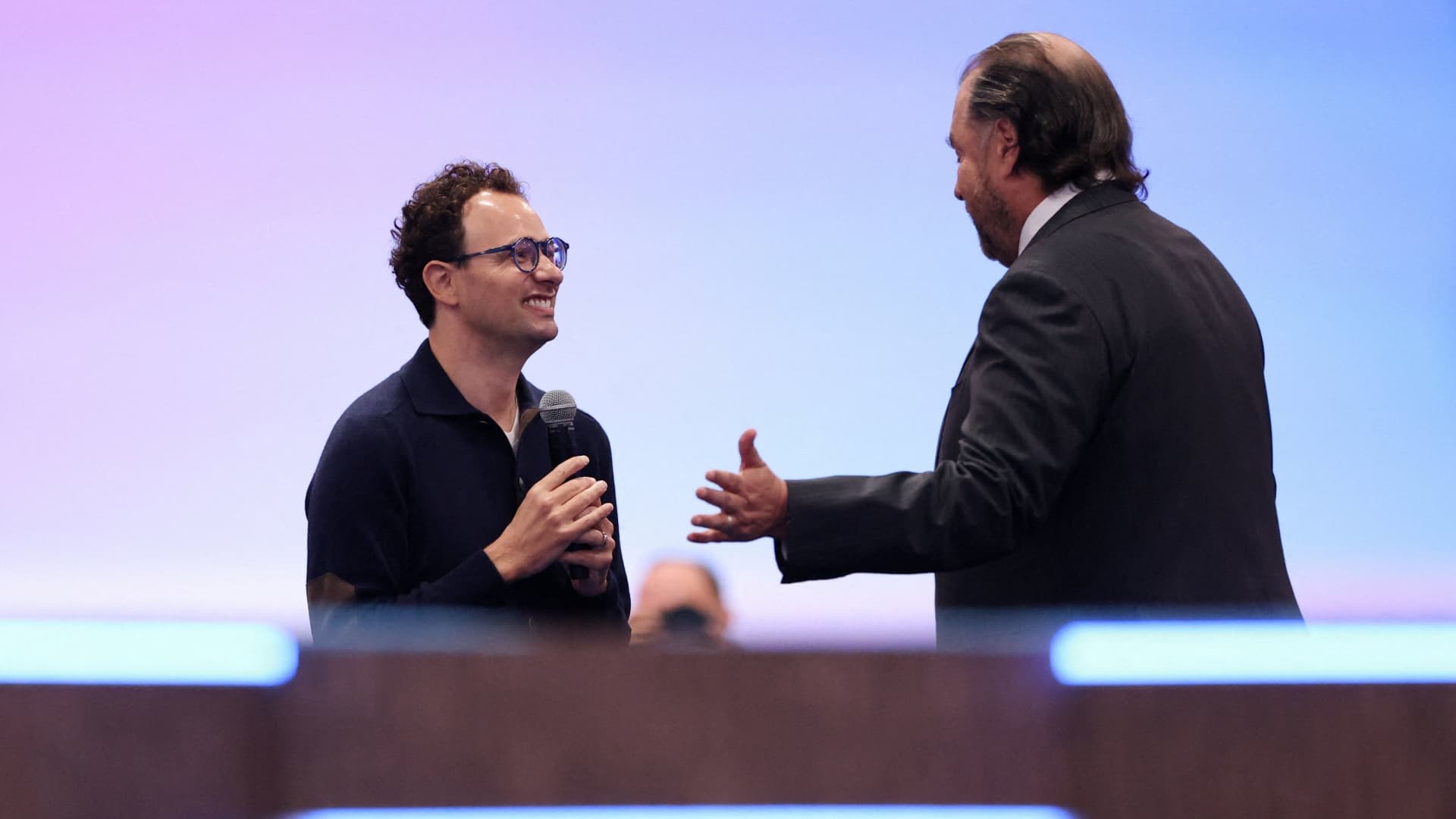
At Dreamforce 2026, business leaders signaled a shift in AI adoption, prioritizing practical value from existing models over the rapid pursuit of newer, riskier technology. While tech CEOs continue to debate AI safety and development speed, enterprise customers are increasingly satisfied with the capabilities of older, stable AI tools.
The Pragmatic Pivot: AI Reality at Dreamforce 2026
At the 2026 Dreamforce summit in San Francisco, a distinct disconnect emerged between the industry's visionaries and the enterprise customers they serve. While high-profile executives—including Salesforce’s Marc Benioff, Anthropic’s Dario Amodei, and Nvidia’s Jensen Huang—engaged in high-level discourse regarding the existential risks and rapid velocity of frontier model development, the 50,000 attendees on the conference floor expressed a more grounded sentiment: current AI models are already sufficient.
The Industry Visionary Perspective
During the keynote sessions, the narrative was dominated by the tension between innovation and safety. Nvidia CEO Jensen Huang, a primary architect of the current AI boom, encouraged frontier labs to accelerate their development cycles, emphasizing the competitive necessity of speed. Conversely, leaders like Dario Amodei and Marc Benioff navigated the complex ethical landscape, debating how to balance the immense potential of artificial intelligence with the imperative to manage safety concerns as the technology evolves.
Enterprise Satisfaction vs. Technological Obsession
Despite the industry's focus on the 'next big thing,' the sentiment among those actually implementing software in business environments is shifting. For many companies, the obsession with the latest iteration of generative AI is being replaced by a focus on reliability and return on investment. Attendees noted that older, more established models are providing adequate utility, suggesting that the industry may be reaching a point of diminishing returns in the rapid-fire release of new frontier models.
The Maturation of the AI Market
This shift reflects a broader trend in technology adoption cycles. Historically, after an initial 'gold rush' phase, enterprise adoption moves toward stability, cost-efficiency, and integration. Salesforce, having hosted this 'Super Bowl of software' for years, serves as a barometer for business sentiment. The current feedback suggests that enterprise users are less interested in theoretical AI safety debates and more concerned with the practical, proven capabilities of their existing tech stacks.
Implications for Future Development
If business leaders continue to signal that existing models provide enough value, the pressure on AI labs to constantly release newer, more expensive models may subside. This could lead to a more sustainable development pace, where companies prioritize refining current architectures rather than perpetually chasing the frontier. It suggests a move toward 'AI utility' rather than 'AI novelty,' where the focus shifts from raw power to operational integration and security.
Conclusion
The Dreamforce 2026 experience highlights a critical inflection point in the AI timeline. While the architects of the technology remain focused on the theoretical and competitive race for more intelligence, the market is signaling that it is ready to digest and optimize what is already available. This decoupling of industry hype from enterprise reality may ultimately lead to a more stable, mature, and commercially viable AI ecosystem.