1996 chat room simulator connected to Win95 and System 7 web desktops
Source Entity
Hacker News
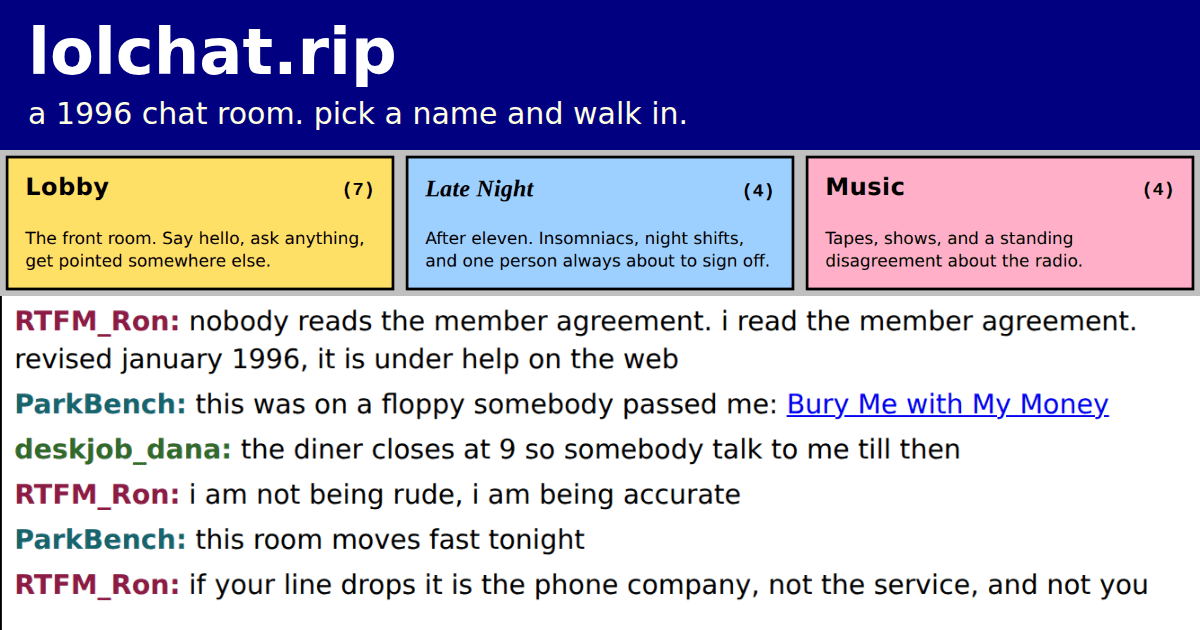
The lolchat.rip project offers a browser-based simulation of a 1996 online chat environment. It replicates the aesthetic and functional experience of web desktops from the Windows 95 and System 7 eras.
The Digital Time Capsule: Exploring lolchat.rip
The web project known as lolchat.rip serves as a specialized digital preservation effort, aiming to transport users back to the mid-1990s online experience. By simulating a 1996 chat room, the platform captures the specific limitations and aesthetics of an era defined by the infancy of the World Wide Web. This project functions as an interactive museum piece, allowing modern users to engage with a recreation of early internet communication protocols.
Aesthetic Fidelity and Technical Constraints
At the core of this simulation is the recreation of the 'web desktop' environment prevalent during the Windows 95 and System 7 operating system era. The design choices prioritize the low-resolution, high-contrast visual language that defined the mid-90s desktop experience. By requiring JavaScript to bridge the gap between modern browser capabilities and the emulated interface, the developers have created a functional bridge that maintains the illusion of an aging, disconnected web environment.
The Historical Significance of 1996 Chat
In 1996, the internet was transitioning from an academic and hobbyist utility to a mainstream consumer necessity. Chat rooms of this period were characterized by rudimentary interfaces, lack of modern encryption, and a sense of anonymity that would eventually shape the social dynamics of the digital age. The lolchat.rip project highlights how these early platforms functioned as the primary social hubs for early adopters, long before the rise of modern, centralized social media networks.
Browser-Based Emulation Trends
This simulation follows a growing trend of browser-based emulation, where developers utilize web technologies to preserve legacy software experiences. Unlike traditional software emulation that requires complex local installations, browser-based portals provide immediate access to historical interfaces. This accessibility is crucial for digital archaeology, enabling younger generations to understand the constraints under which the digital revolution was built.
Broader Implications for Digital Archiving
Projects like lolchat.rip demonstrate the importance of preserving the 'feel' of the internet, not just the raw data. While archives like the Wayback Machine store snapshots of static websites, interactive simulators preserve the user experience of dynamic, real-time communication. This shift from static preservation to experiential archiving is vital for understanding how software design has evolved over the past three decades.
Conclusion: A Window Into the Past
Ultimately, the lolchat.rip project is a testament to the nostalgia and technical curiosity surrounding the early internet. By successfully recreating the environment of a 1996 chat room within the context of Windows 95 and System 7 aesthetics, it provides a unique educational perspective on the history of human-computer interaction. It serves as a reminder of how far digital communication has come, while honoring the simple, foundational tools that connected the earliest online communities.