Celebrity artist Abhay Sehgal on copying and AI use allegations: ‘My ideas and storytelling come from my own journey'
Source Entity
Latest News: Todays Latest News Headlines from India & World | Hindustan Times | Hindustan Times
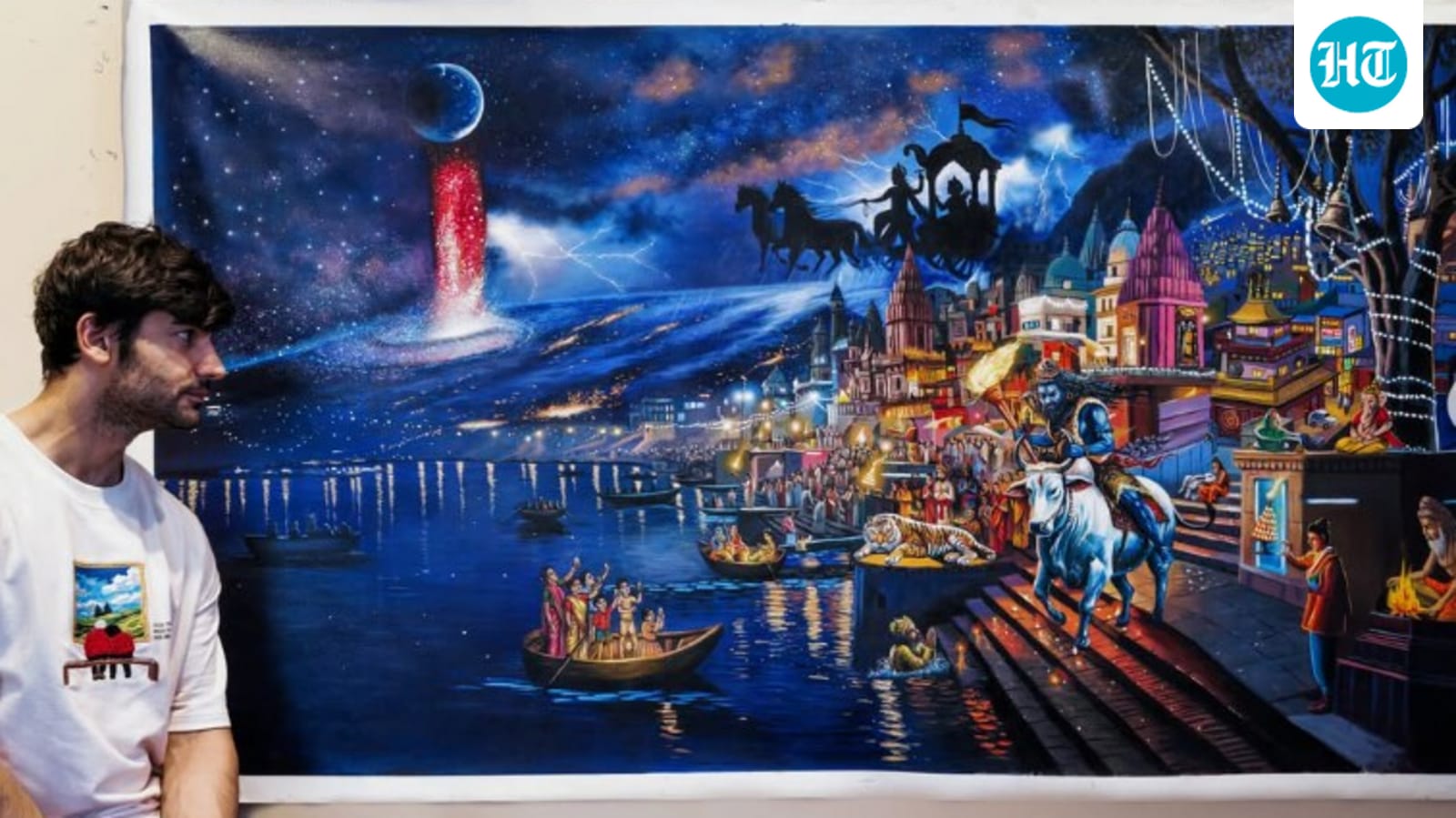
Artist Abhay Sehgal defends his surrealist interpretation of Indian mythology against allegations of plagiarism and AI misuse. He emphasizes that his work is a personal reflection of timeless human experiences rather than a derivative exercise.
The Intersection of Tradition and Modernity in Abhay Sehgal’s Art
Artist Abhay Sehgal has recently found himself at the center of a public discourse regarding the ethics of artistic production. Known for his distinctive surrealist approach to Indian mythology, Sehgal has faced scrutiny regarding the originality of his work and the role of artificial intelligence in his creative process. By bridging the gap between ancient narratives and contemporary aesthetics, Sehgal’s work invites viewers to reconsider the relevance of historical archetypes in an increasingly digitized world.
Addressing Allegations of Copying and AI
In recent discussions, Sehgal has directly addressed allegations concerning his methodology. Critics have questioned whether his reliance on modern imagery and technological tools constitutes a departure from authentic artistic creation. Sehgal maintains that his storytelling is deeply rooted in his own personal journey. He argues that his artistic process involves a synthesis of ancient concepts with the visual language of the present, asserting that these are deliberate creative choices rather than instances of copying or unethical reliance on AI.
Mythology as a Living Narrative
Central to Sehgal’s defense is his philosophical stance on mythology. He challenges the common perception that ancient stories are static artifacts belonging to a bygone era. Instead, he views mythology as a fluid, living entity that reflects enduring human themes such as faith, conflict, and love. By grounding his work in the belief that these stories remain inherently relevant, he justifies his reinterpretation of these narratives as a means of connecting past wisdom with current realities.
The Role of Surrealism in Reinterpretation
Sehgal’s use of surrealism serves as a bridge between the archaic and the avant-garde. By placing mythological figures and motifs within modern contexts, he forces an engagement between the viewer's current life and the historical weight of the source material. This method allows him to explore the persistence of human nature despite the rapid transformation of the world around us. For Sehgal, the surrealist lens is not a way to obscure the truth of the original stories, but a tool to highlight their universality.
Implications for the Future of Digital Art
The debate surrounding Sehgal’s work reflects a broader anxiety within the creative community regarding the integration of technology into traditional art forms. As AI tools become more sophisticated, the line between inspiration, curation, and creation has become increasingly blurred. Sehgal’s experience underscores the growing need for artists to be transparent about their processes while defending their right to experiment with new mediums. His case serves as a microcosm for the larger challenge of defining 'originality' in the 21st century.
Conclusion
Ultimately, Abhay Sehgal’s response to these allegations highlights a critical moment in contemporary art. By asserting that his work is a product of his personal journey and his deep connection to mythological themes, he advocates for the evolution of storytelling. While the debate over AI and plagiarism will undoubtedly continue, Sehgal’s commitment to reinterpreting ancient stories suggests that the value of art lies in the resonance of the narrative, regardless of the tools used to manifest it.
Verification Required?