Agri. scientists suggest raising alternative crops in case of dry spells beyond July 15
Source Entity
India Latest News: Top National Headlines Today & Breaking News | The Hindu
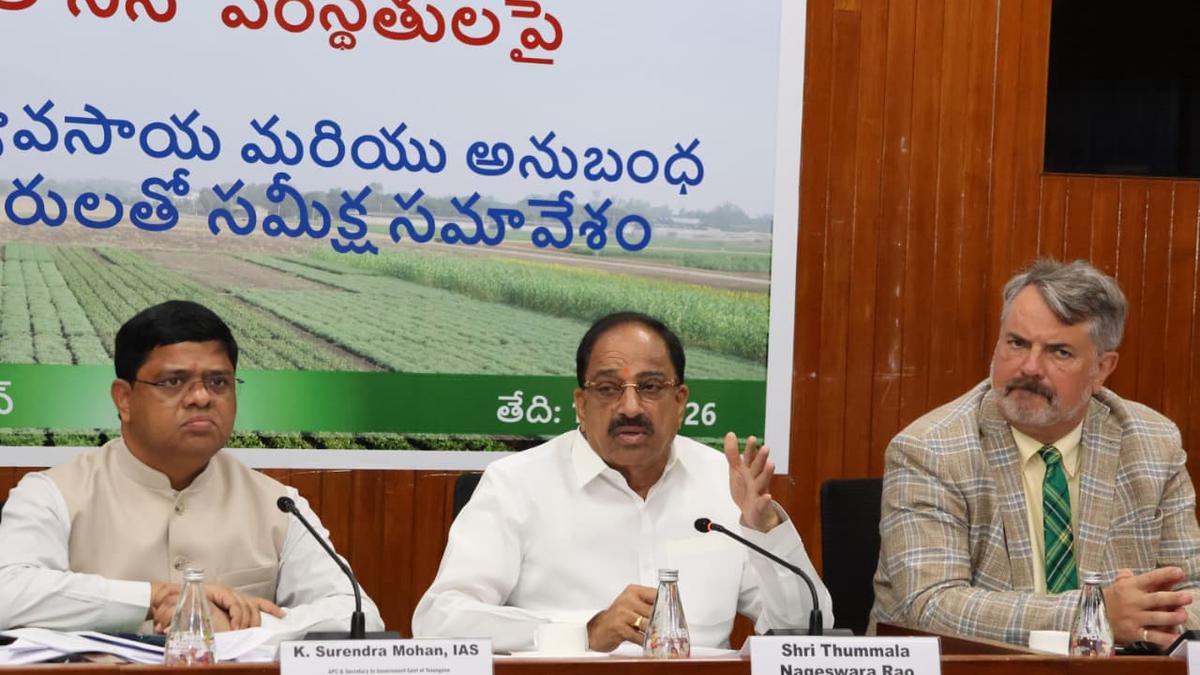
Minister Tummala Nageswara Rao holds a meeting with scientists of various institutions on contingency crop plans
Proactive Agricultural Strategy: Addressing Monsoon Uncertainty
In a critical move to safeguard the livelihoods of the farming community, Minister Tummala Nageswara Rao recently convened a high-level meeting with agricultural scientists from various prestigious institutions. The primary objective of this consultation was to formulate a robust contingency crop plan to address the potential for prolonged dry spells. The central focus of these discussions is the July 15 deadline; if adequate rainfall does not materialize by this date, the traditional planting cycles for primary Kharif crops may become unsustainable, necessitating a strategic pivot to alternative crops.
The Criticality of the July 15 Threshold
In the context of Indian agriculture, the timing of the Southwest Monsoon is the single most important factor determining the success of the Kharif season. July 15 serves as a psychological and biological tipping point. Most traditional long-duration crops, such as certain varieties of paddy, require consistent moisture during their early growth stages to ensure a healthy yield. When dry spells extend beyond mid-July, the risk of seed failure or stunted growth increases exponentially. By setting this specific date as a trigger for contingency planning, the government and scientific community are attempting to minimize the window of risk and prevent farmers from investing resources into crops that are likely to fail due to water scarcity.
Implementing Contingency Crop Plans
Contingency crop planning involves shifting the agricultural focus from water-intensive, long-duration crops to short-duration, drought-resistant alternatives. Based on the scientists' suggestions, this likely includes promoting the cultivation of millets, pulses, or oilseeds that can mature quickly and survive on minimal rainfall. This scientific approach ensures that the land does not remain fallow and that farmers can still secure a harvest, albeit a different one, thereby maintaining a level of food security and income stability. The transition to these alternative crops is a calculated risk-mitigation strategy designed to prevent the total loss of the season's investment.
The Role of Scientific Collaboration
The decision by Minister Tummala Nageswara Rao to involve scientists from multiple institutions underscores the importance of evidence-based policymaking. Agriculture is no longer just about traditional knowledge; it requires precise data on soil moisture levels, seed genetics, and meteorological forecasting. By integrating the expertise of various research bodies, the government can provide farmers with specific recommendations tailored to different soil types and micro-climates. This collaborative framework allows for the rapid dissemination of technical guidance, ensuring that farmers are not guessing which alternative crops to plant but are following a scientifically validated roadmap.
Economic Implications and Farmer Welfare
From an economic perspective, these contingency plans are essential for preventing a cycle of rural debt. When a primary crop fails due to drought, farmers often face devastating financial losses, leading to increased reliance on high-interest loans. By proactively suggesting alternative crops, the state aims to ensure a minimum guaranteed return on labor and input costs. This strategy not only protects the individual farmer but also stabilizes the local economy by preventing a sharp drop in agricultural productivity, which could otherwise lead to inflation in food prices and a decrease in rural purchasing power.
Adapting to Climate Volatility and Future Trends
This event reflects a broader, systemic shift toward 'climate-smart agriculture.' As global weather patterns become increasingly erratic, the traditional reliance on predictable monsoon dates is becoming a liability. The move toward contingency planning suggests a future where agricultural calendars are dynamic rather than fixed. We can expect an increase in the adoption of drought-tolerant seed varieties and a greater emphasis on crop diversification. The government's current approach serves as a model for how regional administrations can adapt to climate volatility by bridging the gap between laboratory research and field implementation.
Conclusion
The initiative led by Minister Tummala Nageswara Rao demonstrates a proactive and scientifically grounded approach to disaster management in agriculture. By establishing a clear deadline of July 15 and preparing alternative crop strategies, the administration is effectively hedging against the unpredictability of the monsoon. This synthesis of political will and scientific expertise is crucial for building a resilient agricultural sector capable of weathering the challenges of an increasingly unstable environment.
Verification Required?