How I changed teaching after AI managed to do all my homework assignments
Source Entity
Hacker News
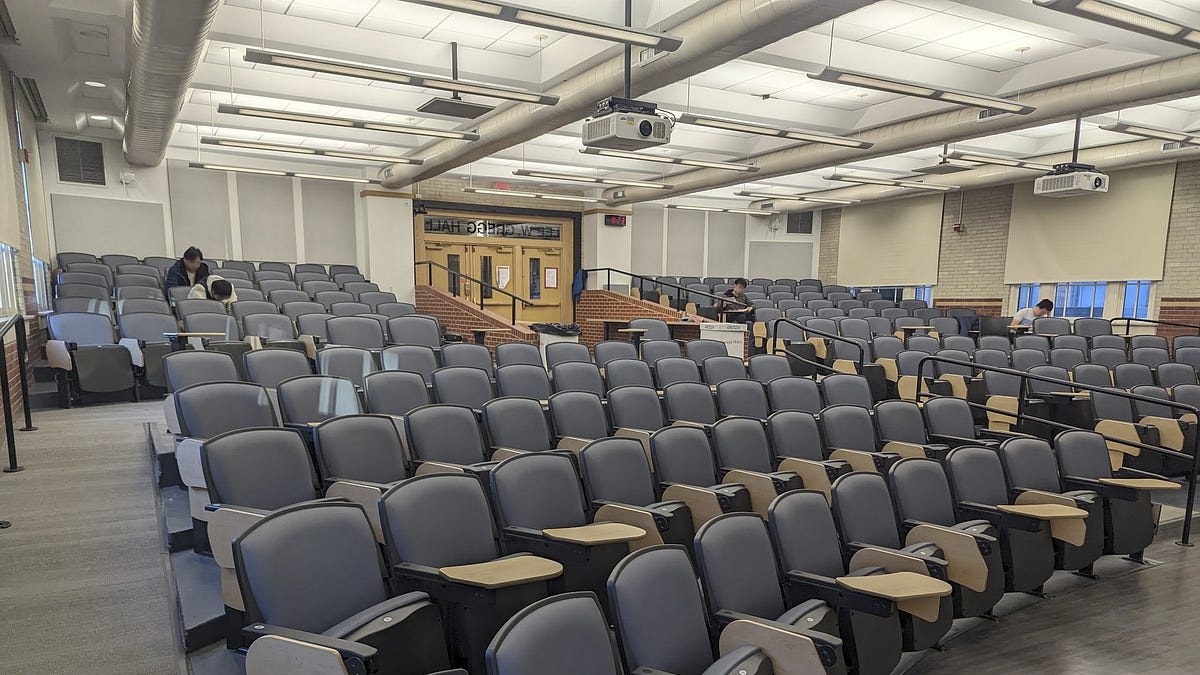
An educator describes redesigning their Machine Learning in Production course curriculum to counter the rise of AI-generated student work. The shift prioritizes in-person assessments over take-home assignments to ensure academic integrity.
The Paradigm Shift in Academic Assessment
The landscape of higher education has undergone a seismic shift as generative AI tools have moved from experimental curiosities to ubiquitous utilities. The account of an educator teaching 'Machine Learning in Production' highlights this transition, noting that as early as 2021—pre-dating the public explosion of ChatGPT—AI models like GPT-3 were already capable of passing academic rubrics without genuine comprehension. This realization serves as a case study for the broader existential crisis currently facing traditional assessment methods.
From Take-Home to High-Stakes Evaluation
Historically, the 'take-home' assignment was a cornerstone of pedagogical design, intended to foster deep, independent research and critical thinking outside the classroom. However, the efficacy of this model has collapsed under the weight of AI agents that can synthesize, summarize, and solve complex problems in seconds. The educator in question has been forced to abandon these traditional practices, pivoting entirely toward in-person interactions, live video demonstrations, and proctored exams to verify student knowledge.
The Tension Between Pedagogy and Practicality
One of the most striking admissions in the educator’s reflection is the acknowledgment that these new assessment strategies may explicitly violate established, evidence-based pedagogical best practices. In an ideal educational framework, students benefit from the iterative, low-pressure environment of homework. By shifting to high-stakes, real-time testing, the instructor is prioritizing the necessity of verifying academic integrity over the long-term benefits of reflective, asynchronous learning.
The Evolution of the 'Machine Learning in Production' Curriculum
As an upper-level course, the 'Machine Learning in Production' curriculum faces a unique irony: the very technology being studied is the technology undermining the assessment of that study. This creates a recursive loop where the instructor must constantly evolve to stay ahead of the tools they are teaching. The reliance on TA interactions and video demos suggests a return to a 'master-apprentice' model, where human verification becomes the only reliable filter in a world of automated content generation.
Long-Term Implications for Higher Education
This trend signals a future where the 'homework' model may become entirely obsolete in fields related to software, coding, and writing. If the goal is to ensure that students actually learn the material, institutions may have to invest heavily in smaller class sizes and more frequent, synchronous human evaluation. While this ensures that degrees remain meaningful, it raises significant concerns regarding the scalability of education and the potential for increased faculty burnout.
Conclusion: The New Normal
Ultimately, the educator’s experience underscores a reality that many institutions are struggling to accept: the tools of modern productivity have rendered traditional grading methods insufficient. While the core learning objectives of the course remain unchanged, the methodology of instruction has been forced into a defensive posture. Moving forward, the balance between leveraging AI for efficiency and preserving the rigors of intellectual development will remain the defining challenge of the 21st-century classroom.