APPCB sets up four air quality stations in Srikakulam district
Source Entity
India Latest News: Top National Headlines Today & Breaking News | The Hindu
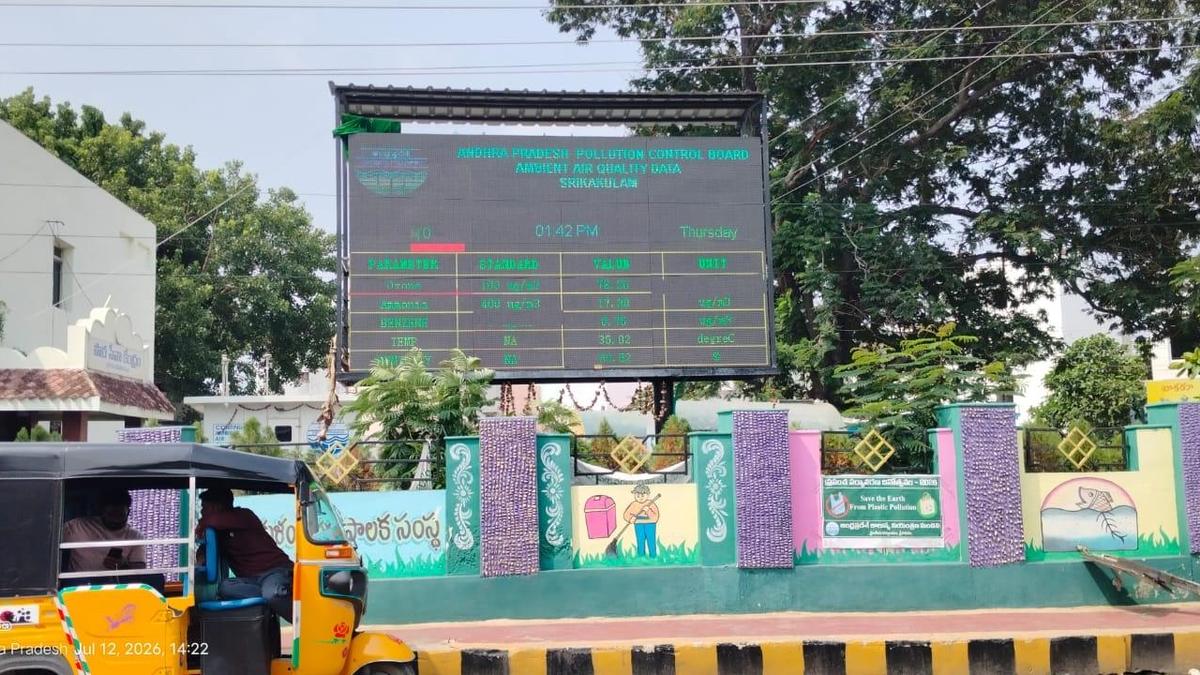
Andhra Pradesh Pollution Control Board (APPCB) Environmental Engineer Balaga Karunasri said on Monday that four digital air quality stations have been established, under the National Ambient Air Quali...
Enhancing Environmental Surveillance: APPCB's Strategic Move in Srikakulam
In a significant step toward bolstering environmental oversight in Andhra Pradesh, the Andhra Pradesh Pollution Control Board (APPCB) has announced the installation of four digital air quality monitoring stations across the Srikakulam district. As confirmed by Environmental Engineer Balaga Karunasri, these stations are being integrated into the National Ambient Air Quality Monitoring Program (NAAQP). This initiative represents a critical transition from sporadic sampling to continuous, real-time data acquisition, allowing the state to maintain a more vigilant eye on the atmospheric health of the region.
The Role of the National Ambient Air Quality Monitoring Program (NAAQP)
The implementation of these stations under the NAAQP framework is not merely a local administrative update but part of a broader national strategy to standardize air quality data across India. The NAAQP is designed to provide a comprehensive network of monitoring stations that track pollutants such as Particulate Matter (PM2.5 and PM10), Nitrogen Dioxide (NO2), Sulfur Dioxide (SO2), and Carbon Monoxide (CO). By aligning Srikakulam's monitoring capabilities with national standards, the APPCB ensures that the data collected is comparable with other districts and cities, facilitating a more accurate assessment of the region's environmental standing relative to national air quality indices.
Technological Transition to Digital Monitoring
The shift toward "digital" stations is a pivotal aspect of this development. Traditional monitoring often relied on manual sampling and laboratory analysis, which created significant time lags between data collection and policy action. Digital stations, however, offer continuous monitoring and automated data transmission. This allows environmental engineers to detect sudden spikes in pollution levels—whether caused by industrial mishaps, seasonal agricultural burning, or urban congestion—in real-time. Such agility is essential for the APPCB to issue timely health advisories and enforce environmental regulations more effectively.
Regional Implications for Srikakulam District
Srikakulam, characterized by its unique blend of coastal geography and growing industrial and urban centers, faces specific atmospheric challenges. The installation of these four stations suggests a strategic placement designed to cover diverse land-use patterns, likely including industrial zones, residential hubs, and sensitive ecological areas. By mapping the air quality across these different zones, the board can identify specific "pollution hotspots." This granular data is invaluable for urban planners and policymakers who must balance economic growth and industrialization with the necessity of maintaining breathable air for the local population.
Public Health and Regulatory Enforcement
Beyond data collection, the long-term implication of this project is the improvement of public health outcomes. Air pollution is a leading cause of respiratory and cardiovascular diseases; thus, having a reliable monitoring network allows the government to correlate health trends with air quality fluctuations. Furthermore, these stations provide the APPCB with the empirical evidence needed to hold polluters accountable. When digital sensors record a breach of permissible limits, the board can pinpoint the timing and magnitude of the violation, making it significantly harder for industrial entities to bypass environmental compliance laws.
Conclusion: Towards a Data-Driven Environmental Future
The establishment of these air quality stations in Srikakulam marks a transition toward a data-driven approach to environmental management in Andhra Pradesh. By leveraging the infrastructure of the NAAQP, the APPCB is not only monitoring the present but building a historical database that will be crucial for predicting future pollution trends. As Srikakulam continues to develop, these digital sentinels will serve as the primary defense in ensuring that progress does not come at the cost of the region's environmental integrity.
Verification Required?