Should Argentina take Messi off penalties?
Source Entity
BBC News
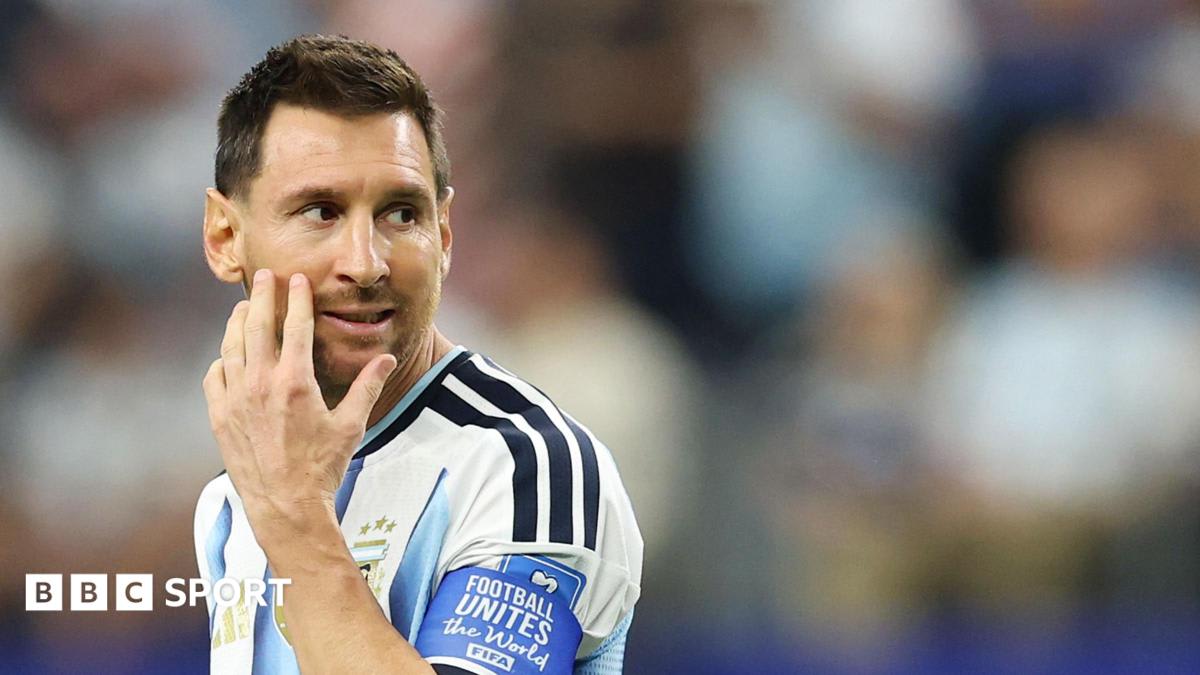
Lionel Messi keeps rewriting World Cup history, but after his latest miss from the spot, should Argentina hand penalty duties to someone else?
The Penalty Dilemma: Evaluating Lionel Messi's Role
Lionel Messi has spent the better part of two decades redefining the boundaries of footballing excellence. However, the nature of the sport is such that even the most storied careers are subject to moments of vulnerability. The current discourse surrounding Argentina's decision to keep or replace Messi as the primary penalty taker stems from a singular, high-pressure miss that has reignited a perennial debate: does the status of a legendary captain outweigh the statistical necessity of selecting the most 'in-form' specialist for a spot-kick?
The Psychology of the Spot-Kick
Penalty taking is as much a psychological battle as it is a technical one. For a player like Messi, the weight of a nation's expectations is an ever-present burden. When a primary taker misses, it often triggers a ripple effect of doubt not only within the player but across the squad and the fanbase. The debate here is whether maintaining Messi's role is a move of confidence in his long-term ability or a rigid adherence to hierarchy that ignores the immediate mental toll of a miss. In high-stakes international football, the difference between victory and elimination often hinges on the confidence of the man standing twelve yards from the goal.
Tactical Alternatives and Squad Depth
Argentina possesses a wealth of talent, and the argument for shifting penalty duties often points toward the tactical benefit of unpredictability. By diversifying who takes the penalties, the coaching staff could potentially disrupt the rhythm of opposing goalkeepers who have spent years studying Messi's tendencies. Furthermore, empowering another player to take the lead in these moments could foster a sense of shared responsibility and resilience within the team, reducing the singular pressure placed upon the captain and allowing him to focus on playmaking and orchestration.
Historical Context vs. Current Form
Historically, Messi has been one of the most reliable finishers in the game, yet the narrative of the 'World Cup miss' often looms larger than a career's worth of successful conversions. To analyze this fairly, one must weigh his lifetime conversion rate against the specific pressure of the tournament environment. The tendency for critics to call for a change after a single miss often overlooks the systemic value Messi provides; removing him from the spot might be seen as a vote of no confidence that could inadvertently impact his overall performance and leadership on the pitch.
Leadership and Team Dynamics
Beyond the physics of the ball and the net, the decision involves complex team dynamics. Messi is the undisputed spiritual and tactical leader of the Argentinian side. Stripping him of penalty duties could be interpreted in two ways: as a strategic optimization or as a public admission of failure. If handled poorly, such a transition could undermine his authority or shake his confidence during a critical phase of the competition. Conversely, a voluntary hand-off of duties could be framed as a selfless act of leadership, prioritizing the team's success over individual glory.
Future Outlook and Strategic Evolution
Looking forward, Argentina must find a balance between honoring their captain's legacy and evolving their strategy for the modern game. As goalkeepers become more adept at using data analytics to predict penalty directions, the era of the 'singular designated taker' may be waning. We are likely to see a more fluid approach where duties are assigned based on the specific match situation and the psychological state of the players. The resolution of the Messi penalty debate will likely serve as a blueprint for how other national teams manage their aging superstars in high-pressure scenarios.
Summary
The question of whether Argentina should move Messi off penalties is a conflict between loyalty and optimization. While his historical brilliance is unquestionable, the immediate need for clinical execution in tournament play necessitates a candid evaluation of current form and psychological readiness. Ultimately, the decision rests on whether the coaching staff believes the benefit of a 'fresh' taker outweighs the risk of destabilizing the team's emotional core.