How Asian countries are looking to prop up markets as AI downturn sinks stocks
Source Entity
US Top News and Analysis
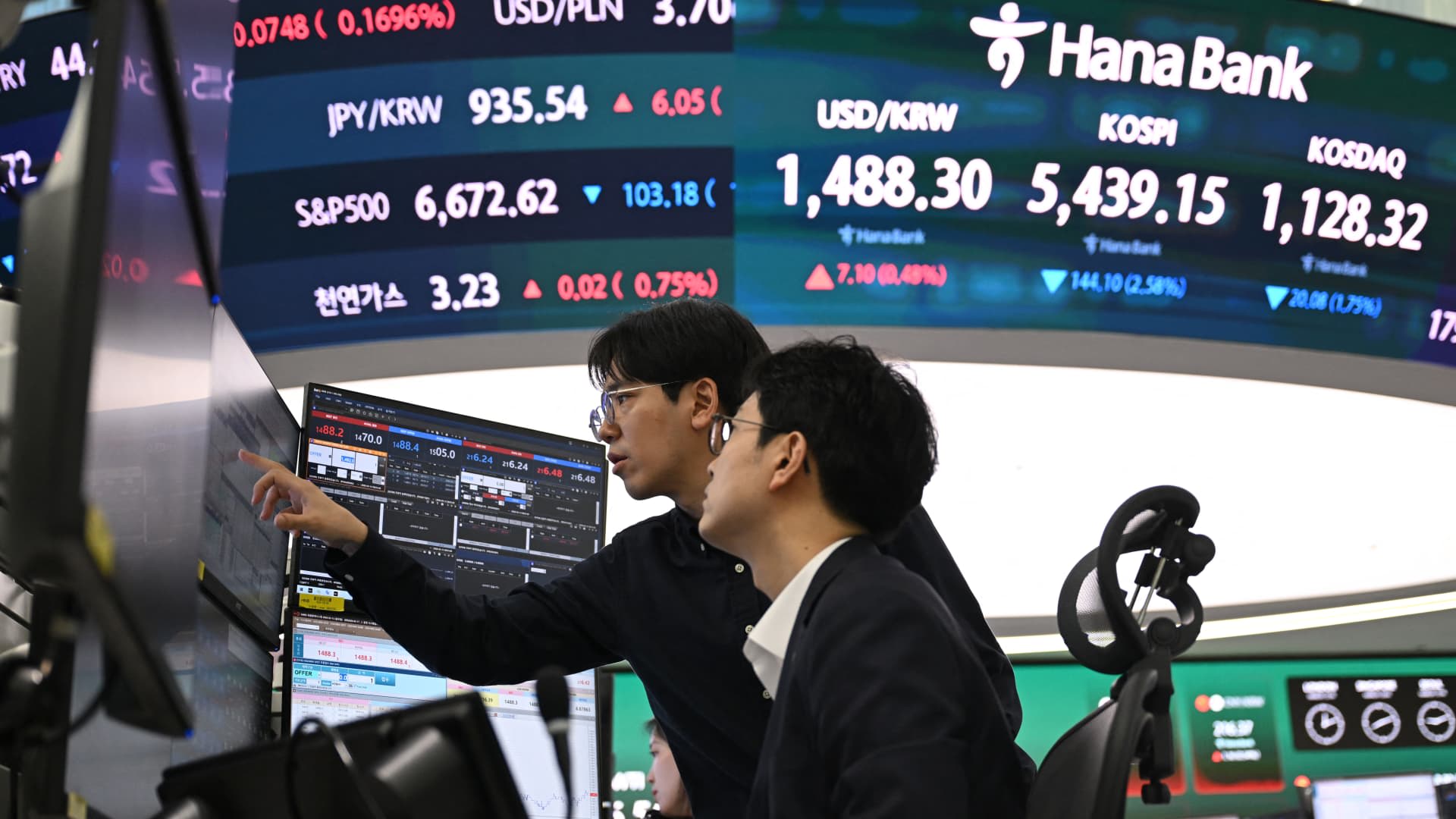
Asian market regulators in South Korea, China, and Taiwan are deploying stabilization measures to counter a tech-driven stock sell-off. Authorities are activating emergency funds and relaxing regulations to restore investor confidence amidst regional volatility.
Regional Market Intervention Amidst AI-Driven Volatility
Recent financial developments across East Asia indicate a coordinated effort by market regulators in South Korea, China, and Taiwan to mitigate the fallout from a significant tech-fueled sell-off. As the global markets grapple with the cooling of the artificial intelligence boom, regional indices have faced sustained downward pressure, prompting governments to transition from passive observation to active market stabilization.
South Korea’s Strategic Response
At the forefront of these efforts, South Korea’s finance ministry has announced the potential activation of its securities-market stabilization fund. Originally established in 2020 to navigate the unprecedented economic volatility triggered by the Covid-19 pandemic, this fund possesses a substantial capital base of 10.76 trillion won, equivalent to nearly $8 billion. The decision to prepare this fund for immediate deployment underscores the severity of the current market downturn and the government's commitment to preventing systemic liquidity crises.
Regulatory Flexibility as a Buffer
Beyond direct capital injections, regional authorities are exploring regulatory adjustments to alleviate pressure on listed entities. By moving to relax daily share price volatility constraints, regulators aim to facilitate more natural price discovery and prevent the panic selling that often exacerbates tech-sector declines. This shift suggests a recognition that rigid market mechanisms can sometimes deepen the impact of speculative bubbles when they begin to burst.
The AI Sector and Regional Exposure
The current market instability is intrinsically linked to the region's heavy reliance on the technology sector. As a global hub for semiconductor manufacturing and electronic components, East Asia is uniquely exposed to fluctuations in demand for AI-related hardware. The recent correction serves as a reminder of the cyclical nature of tech investments and the vulnerability of markets that are heavily concentrated in high-growth, high-risk sectors.
Broader Economic Implications
These measures reflect a broader trend of state-led interventionism in Asian financial markets, designed to protect retail and institutional investors from the volatility of global tech cycles. While these interventions may provide short-term relief, they also pose long-term questions regarding market efficiency and the eventual withdrawal of support. As the region continues to monitor exchange rates and index performance, the effectiveness of these stabilization funds will be a critical bellwether for global investor sentiment.
Outlook and Future Trends
Looking ahead, the stability of these markets will largely depend on whether the tech sell-off is a temporary correction or a sign of deeper structural issues within the AI supply chain. If the downturn persists, it is likely that authorities in China, Taiwan, and South Korea will continue to refine their intervention toolkits, potentially introducing further fiscal or monetary policy adjustments to ensure economic resilience in an increasingly volatile global landscape.