Bengaluru CEO fixes footpath near Koramangala society, builds a ramp: ‘It cost me ₹2,700’
Source Entity
Latest News: Todays Latest News Headlines from India & World | Hindustan Times | Hindustan Times
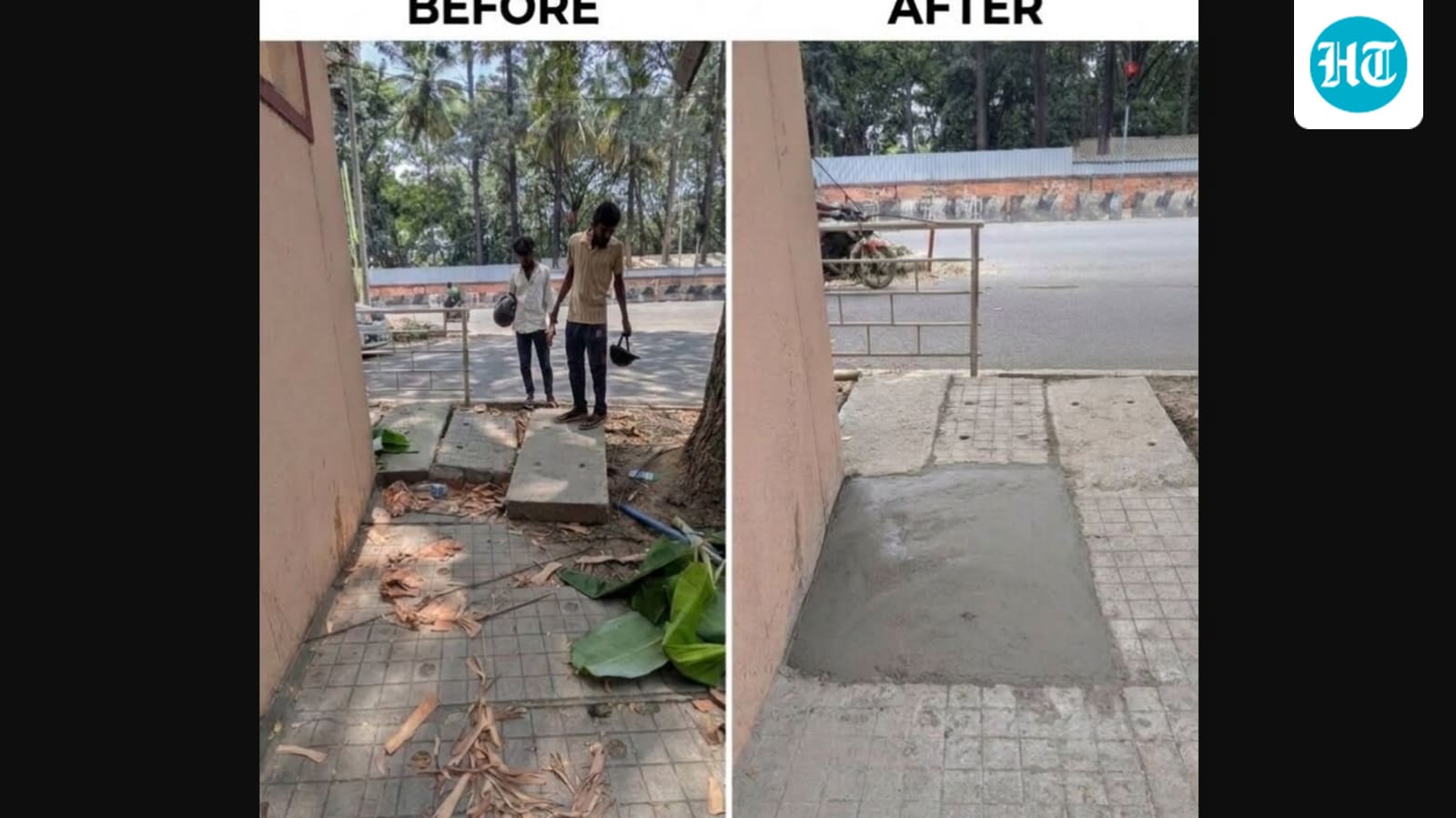
A Bengaluru CEO took the initiative to repair a neglected footpath in Koramangala after repeated failed attempts to get municipal authorities to act. The project, costing ₹2,700, highlights growing public frustration with urban infrastructure maintenance in the city.
Civic Neglect and Private Intervention in Bengaluru
The recent case of Siddharth Dialani, a Bengaluru-based CEO and IIT alumnus, highlights a recurring tension between urban citizens and municipal governance. After experiencing years of inaction regarding a dilapidated footpath near his Koramangala residence, Dialani opted to personally fund and oversee the repairs. His decision to bypass traditional bureaucratic channels underscores a growing trend of 'do-it-yourself' urbanism in India's technology hub.
The Failure of Traditional Grievance Redressal
Dialani’s testimony reveals a systemic breakdown in the Bruhat Bengaluru Mahanagara Palike (BBMP) response mechanisms. Despite utilizing multiple channels—including email, official help desks, and WhatsApp-based grievance systems—the issue remained unresolved. This pattern of administrative inertia often leaves citizens feeling alienated, prompting them to take remedial action into their own hands to ensure safety and accessibility in their immediate neighborhoods.
The Cost of Accountability
With an investment of just ₹2,700, the CEO managed to fix the footpath and construct a ramp, demonstrating that the barriers to basic infrastructure maintenance are often not financial, but rather administrative and logistical. By sharing the before-and-after photos on social media, Dialani not only showcased the tangible improvement but also highlighted the stark contrast between the low cost of the repair and the high cost of the bureaucratic delay that preceded it.
Broader Implications for Urban Infrastructure
This incident serves as a microcosm of the larger infrastructure challenges facing Bengaluru. As a rapidly expanding metropolitan area, the city struggles to maintain basic pedestrian infrastructure amidst densification. When citizens are forced to perform municipal duties, it raises questions regarding the efficacy of local tax utilization and the accountability of city planning bodies. It suggests a shift where, in the absence of government service, private citizens are increasingly filling the gaps.
Future Trends in Civic Engagement
As digital platforms like X (formerly Twitter) become the primary forum for civic complaints, we are likely to see more 'public shaming' or 'public action' campaigns. This trend forces authorities to respond not necessarily because of the merit of the complaint, but due to the pressure of social media visibility. However, reliance on individual intervention is not a sustainable model for municipal governance, as it risks creating an uneven landscape of infrastructure based on the resources of individual residents.
Conclusion
Siddharth Dialani’s initiative is a poignant reminder of the power of individual agency in the face of institutional apathy. While his actions provided an immediate solution for his community, the event serves as a call to action for the BBMP to modernize its response infrastructure. Without a more proactive approach to maintenance, the disconnect between citizens and city planners is likely to deepen, leading to further instances of private citizens stepping into roles traditionally reserved for the state.
Verification Required?