Seven police stations added, four new divisions created
Source Entity
India Latest News: Top National Headlines Today & Breaking News | The Hindu
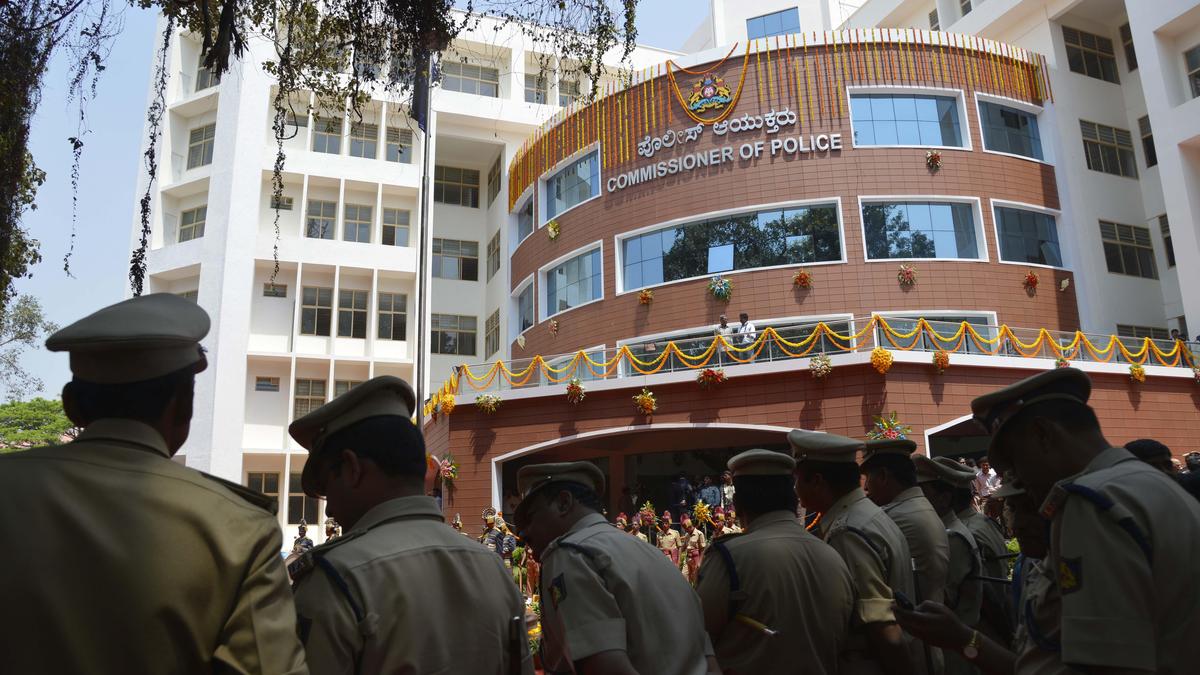
The Karnataka government has overhauled the Bengaluru City Police, replacing the single-commissioner system with a five-zone structure led by a new Chief Commissioner. R. Hithendra has been appointed to lead this decentralized model, which mirrors the administrative framework of the Greater Bengaluru Authority.
A New Era for Bengaluru Policing
On November 18, 2026, the Karnataka government initiated a significant administrative overhaul of the Bengaluru City Police, effectively dismantling the long-standing single-commissioner system. By transitioning to a model comprising five distinct commissionerates—Central, North, East, South, and West—the state aims to align police administration with the broader governance structure of the Greater Bengaluru Authority (GBA). This move signals a strategic shift toward decentralization, intended to streamline law enforcement operations across one of India's fastest-growing metropolitan hubs.
Leadership and Structural Changes
The restructuring introduces a hierarchical shift under a newly appointed Chief Commissioner of Bengaluru City, a role tasked with overseeing the five regional units. R. Hithendra, a seasoned 1996-batch Indian Police Service (IPS) officer of Additional Director General of Police (ADGP) rank, has been selected to spearhead this transition. His leadership will be supported by specific commissioners assigned to individual zones, including Labhu Ram, P.S. Harsha, Vikash Kumar Vikash, and M.B. Boraligaiah, with further leadership roles envisaged for South Bengaluru.
Rationale Behind the Decentralization
The primary motivation for this restructuring appears to be the management of Bengaluru's exponential urban expansion. By mimicking the five-city corporations model, the government is attempting to bring police leadership closer to the ground level. Each of the five new commissionerates has been allocated a Deputy Commissioner of Police (DCP) for headquarters and crime, suggesting a move toward localized accountability and faster response times in an increasingly complex urban environment.
The Ambiguity of the Central Crime Branch (CCB)
Despite the clear structural changes, the future of the Central Crime Branch (CCB) remains a subject of intense speculation and concern. The current government orders provide little clarity on how the existing CCB—which encompasses specialized wings such as Organised Crime, Special Inquiry, Women Protection, Anti-Narcotics, and Economic Offences—will integrate with the new regional units. The creation of a pan-city Additional Commissioner (Anti-Rowdy Squad) post suggests that while some functions may be centralized, others might be absorbed into the regional DCP offices, leading to a potential fragmentation of specialized investigative capacity.
Broader Implications and Future Trends
This administrative pivot reflects a growing trend in Indian urban governance where police structures are being forced to evolve alongside rapid municipal development. By appointing Hemanth M. Nimbalkar as the Commissioner (Traffic) with concurrent responsibilities, the government is clearly prioritizing mobility and order in a city notorious for its traffic congestion. As the Department of Personnel and Administrative Reforms (DPAR) continues to finalize these postings, the success of this model will depend on the seamless transition of investigative data and the clear delineation of jurisdictional authority between the new Chief Commissioner and the regional heads.
Conclusion
The restructuring of the Bengaluru City Police is a bold experiment in urban policing. While the move promises improved governance and localized control, the lack of clarity regarding the CCB's future leaves a critical gap in the administration's current roadmap. As the city moves forward under the guidance of R. Hithendra, the effectiveness of this five-commissionerate model will be measured by its ability to maintain public safety while ensuring that specialized crime-fighting units remain agile and cohesive within the new, decentralized framework.
Multiple Citing Sources
Verification Required?