Keeping up with UP: Will Bharat Ratna to Kanshi Ram tilt 2027 poll scales
Source Entity
Latest News: Today's Latest News Headlines from India & World | Hindustan Times | Hindustan Times
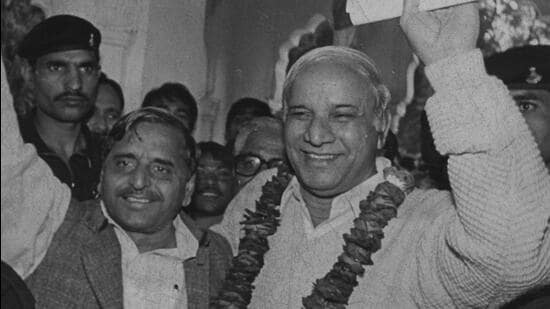
Kanshi Ram is remembered more for empowering Dalits than for his aggressive language against powerful leaders of all parties
The Intersection of Honor and Hegemony: Kanshi Ram and the 2027 UP Polls
The discourse surrounding the potential conferment of the Bharat Ratna—India's highest civilian honor—upon the late Kanshi Ram is not merely a matter of recognizing historical contribution, but a calculated piece of political choreography. In the volatile landscape of Uttar Pradesh (UP) politics, where caste dynamics often outweigh programmatic platforms, such a gesture carries profound symbolic weight. Kanshi Ram was not just a politician; he was the architect of a systemic awakening among the Bahujans, transforming the Dalit community from a marginalized social group into a potent political force. As the 2027 assembly elections approach, the prospect of the central government honoring him suggests a strategic attempt to bridge the gap between the state's current administration and a critical demographic.
The Legacy of Dalit Mobilization
To understand why a posthumous award would tilt the electoral scales, one must examine Kanshi Ram's role in reshaping the sociopolitical fabric of North India. Unlike many of his contemporaries, Kanshi Ram focused on 'political consciousness' before 'political contestation.' He spent decades organizing the marginalized, teaching them that political power is the 'master key' to unlock all other doors of progress. By founding the Bahujan Samaj Party (BSP), he provided a dedicated vehicle for Dalit aspirations. This history of empowerment creates a deep-seated emotional bond between the community and his legacy, meaning any official state validation of his work is perceived as a direct validation of the community's struggle and identity.
Strategic Calculations for 2027
With the 2027 Uttar Pradesh elections on the horizon, the ruling dispensations are likely eyeing the fragmented Dalit vote. In recent election cycles, the BSP's grip on its traditional base has loosened, with voters splitting between the BJP and the SP. By awarding the Bharat Ratna to Kanshi Ram, the government could effectively 'co-opt' the symbol of Dalit resistance. This move would signal a gesture of inclusivity and respect, potentially neutralizing the opposition's narrative that the current administration is indifferent to the Bahujan cause. It is a classic example of symbolic politics where a high-profile award is used to create a psychological bridge to a community that feels politically alienated.
Rhetoric vs. Recognition
One of the most intriguing aspects of this debate is the tension between Kanshi Ram's aggressive political style and the prestige of the Bharat Ratna. The provided context notes that he is remembered more for empowerment than for his 'aggressive language against powerful leaders.' During his career, Kanshi Ram was unapologetically combative, often using sharp, confrontational rhetoric to challenge the hegemony of upper-caste leadership. Traditionally, the Bharat Ratna is reserved for figures of consensus and national unity. However, the current political climate suggests a shift where 'disruptive' legacies are being re-evaluated. Recognizing Kanshi Ram despite his combative history would be a powerful signal that the state is willing to embrace the radical roots of Dalit empowerment.
Implications for the BSP and Mayawati
Such a move would place the current leadership of the BSP, specifically Mayawati, in a complex position. On one hand, the honor would bring national prestige to the founder of her party. On the other hand, it could be viewed as a tactical maneuver by the center to weaken the BSP's exclusivity over the Dalit identity. If the state claims the legacy of Kanshi Ram, the BSP may find it harder to argue that they are the sole custodians of the Bahujan movement. This could further accelerate the trend of Dalit voters looking toward the ruling party for representation, potentially altering the three-way contest that typically defines UP politics.
Future Trends in Caste Politics
Looking forward, this development indicates a trend where the 'politics of recognition' is becoming as important as the 'politics of delivery.' As the 2027 polls approach, we can expect more such symbolic gestures aimed at sub-castes and marginalized groups. The ability of a party to synthesize the legacies of regional icons into a broader national narrative will be key to winning the electoral battle in UP. Whether the Bharat Ratna for Kanshi Ram actually converts into votes remains to be seen, but it certainly demonstrates a sophisticated understanding of how identity and honor are leveraged in the world's most populous electoral college.
Conclusion
In summary, the potential awarding of the Bharat Ratna to Kanshi Ram is a high-stakes political gamble. While it acknowledges a genuine legacy of empowerment, its primary utility lies in its potential to disrupt the 2027 electoral arithmetic in Uttar Pradesh. By honoring the man who taught the Dalits to seek power, the government seeks to capture a portion of that power for itself, proving once again that in Indian politics, the past is always a prologue to the next election.
Verification Required?