Bill Gates bought a Porsche 959 but it spent 13 years stuck in US customs
Source Entity
TOI TECH DESK
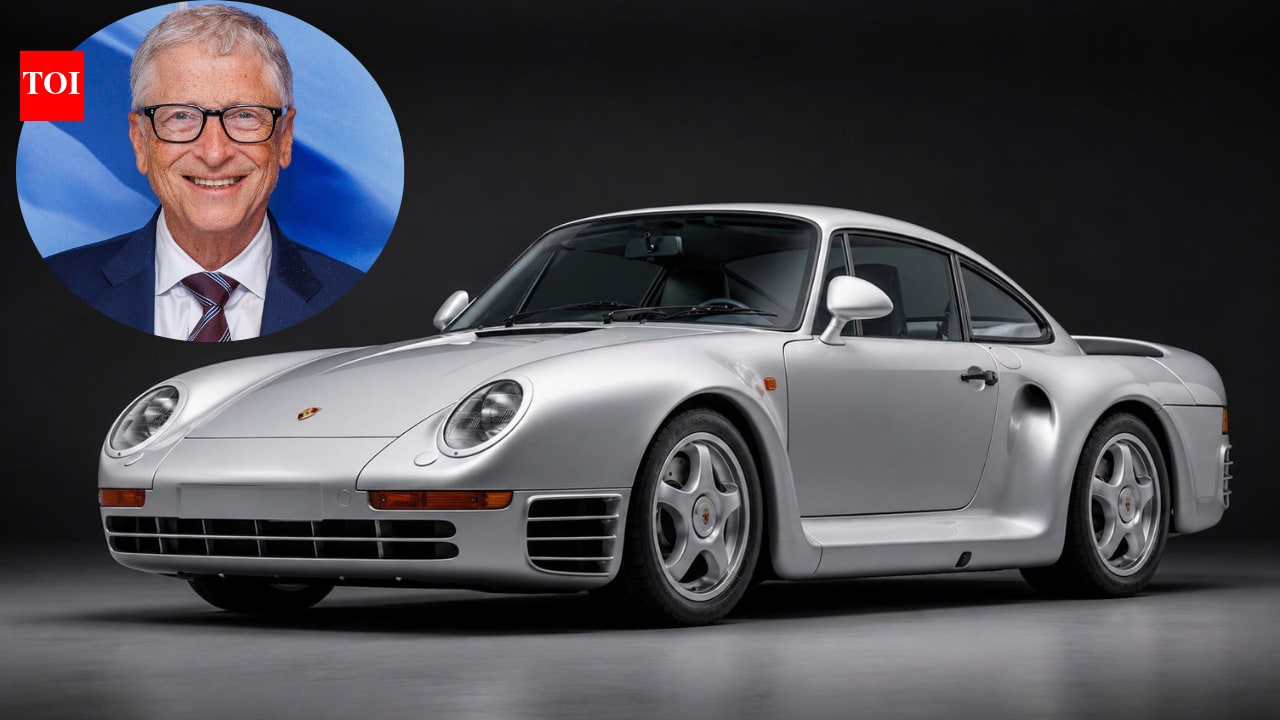
Bill Gates' acquisition of a rare Porsche 959 led to a 13-year legal standoff with US customs over safety and emissions standards. This struggle ultimately helped pave the way for the 'Show or Display' rule, allowing collectors to import historically significant vehicles.
The Porsche 959: A Technological Marvel in Limbo
When Microsoft co-founder Bill Gates purchased a Porsche 959 in 1988, he was acquiring more than just a vehicle; he was securing a piece of automotive history. The 959 was an engineering masterpiece, born from the grueling demands of rally racing and featuring a sophisticated twin-turbocharged flat-six engine paired with an advanced all-wheel-drive system. At the time of its release, it was arguably the most technologically advanced road car on the planet, representing a quantum leap for Porsche that would influence the design and mechanical architecture of their future lineups for decades.
The Regulatory Hurdle
Despite its brilliance, the 959 faced a massive obstacle upon reaching American shores. Because it had not been crash-tested or certified under the stringent safety and emissions regulations mandated by the United States, it was deemed ineligible for road use. Consequently, the car was impounded at a US customs facility. This situation left Gates and other prominent collectors in a state of limbo, with their multi-million dollar investments sitting idle in storage for over 13 years.
The Impact of Scarcity
Part of what made the 959 so desirable—and so difficult to manage from a regulatory standpoint—was its extreme scarcity. With only 292 road-going units ever produced, the vehicle was never intended for mass-market compliance. The lack of standard safety features that American authorities required for mass-produced cars made the 959 a square peg in a round hole, highlighting the tension between high-performance innovation and rigid government oversight.
A Victory for Automotive Enthusiasts
The persistent efforts of Gates and other wealthy enthusiasts to resolve this impasse were not in vain. By lobbying for a change in how the government viewed rare, historically significant, and technologically unique vehicles, these owners helped catalyze a shift in policy. This advocacy eventually contributed to the creation of the 'Show or Display' rule, a specific exemption that allows for the importation of vehicles that do not meet standard requirements but possess significant historical or technological value.
Legacy and Future Implications
Today, the 'Show or Display' rule serves as a vital pathway for collectors, ensuring that rare machines like the 959 can be preserved and occasionally operated on American roads. The saga of Gates’ Porsche 959 remains a seminal moment in car culture, illustrating how the intersection of extreme engineering and bureaucratic red tape can lead to long-term systemic changes. It stands as a testament to the fact that even the most powerful individuals must navigate the complexities of international trade and safety law when dealing with artifacts that defy conventional classification.