
The Revenue Fever Dream
Silicon-etched wafers bleed profit. Nvidia's revenue climbed from $131 billion to $216 billion in a single fiscal cycle, signaling a breakneck acceleration in GPU procurement (Source: TIKR, 2026). This surge represents a massive delta compared to the previous year, as the demand for AI infrastructure outstrips the physical capacity of copper-wire conduits in Santa Clara and Hsinchu. The current trajectory suggests a violent climb, with consensus estimates projecting revenue to nearly double to $412 billion this year, potentially hitting $900 billion in the following years (Source: TIKR, 2026). This is not a steady climb but a vertical spike in capital expenditure across the globe.
Nvidia Revenue Projection (Billions USD)
Executive Insight
+18.4%
YTD Growth
The sheer scale of this growth is anchored in the Compute and Networking sector, which generates approximately $275.4 billion in revenue, dwarfing the $27.6 billion contributed by traditional Graphics (Source: Simply Wall St, 2026). This imbalance reveals a company that has effectively ceased to be a gaming entity and has instead become the primary landlord of the AI era. The market value of $5.5 trillion reflects a bet that this silicon-etched dominance is permanent (Source: Simply Wall St, 2026). However, the speed of this expansion creates its own gravity, pulling in competitors who are desperate to shred Nvidia's high-margin grip on the data center.
The CUDA Moat and the Open-Source Threat
Nvidia's primary defense is not just the hardware but the CUDA software stack, a proprietary layer that binds developers to their silicon. For years, this has acted as a barrier, forcing any firm wanting high-performance AI training to buy into the Nvidia ecosystem. But the terrain is mutating. The rise of open-source, cheaper, or more efficient platforms threatens to decouple the software from the silicon, allowing firms to bypass Nvidia entirely. If the industry migrates toward a universal standard, the proprietary premium that Nvidia charges will evaporate, shredding the margins that investors currently prize (Source: Simply Wall St, 2026).
| Metric | Current Status/Projection | Source |
|---|---|---|
| Desktop GPU Market Share | ~90% | Shattered.io, 2026 |
| Data Center GPU Market (2025) | $29.90 Billion | GlobeNewswire, 2026 |
| Data Center GPU Market (2035) | $284.80 Billion | GlobeNewswire, 2026 |
| GPU Market CAGR (2026-2033) | 15.2% | Yahoo Finance, 2026 |
The danger is not merely a better chip from AMD or Intel, but a fundamental change in how chips are procured. If a sizeable firm can engage TSMC directly to produce custom silicon using an open-source framework, Nvidia becomes a middleman with a dwindling value proposition (Source: Simply Wall St, 2026). This direct-to-foundry route would strip away the high-margin software lock-in, turning GPUs into a commodity. We are seeing the first cracks in this framework as cloud providers attempt to build their own silicon-etched alternatives to reduce their dependence on a single supplier.
"Successful competition from AMD, Intel, or a Chinese firm could affect this position. Uptake of an open-source, cheaper, or better platform than Nvidia's CUDA could significantly affect Nvidia's competitive position and enable any sizeable firm to directly engage semiconductor manufacturers, such as TSMC, to produce their own chips, reducing demand for Nvidia's higher-margin products."— Analysis Report, Simply Wall St, 2026
This threat is amplified by the geographical concentration of the industry. North America held a 38% market share in 2025, driven by the concentration of cloud giants and AI startups in hubs like Northern Virginia and Silicon Valley (Source: GlobeNewswire, 2026). While this provides a stable home base, it also creates a target. Competitors in Asia and Europe are aggressively pursuing a path that avoids the CUDA tax, seeking a more oxidized, raw approach to compute that prioritizes efficiency over brand loyalty.
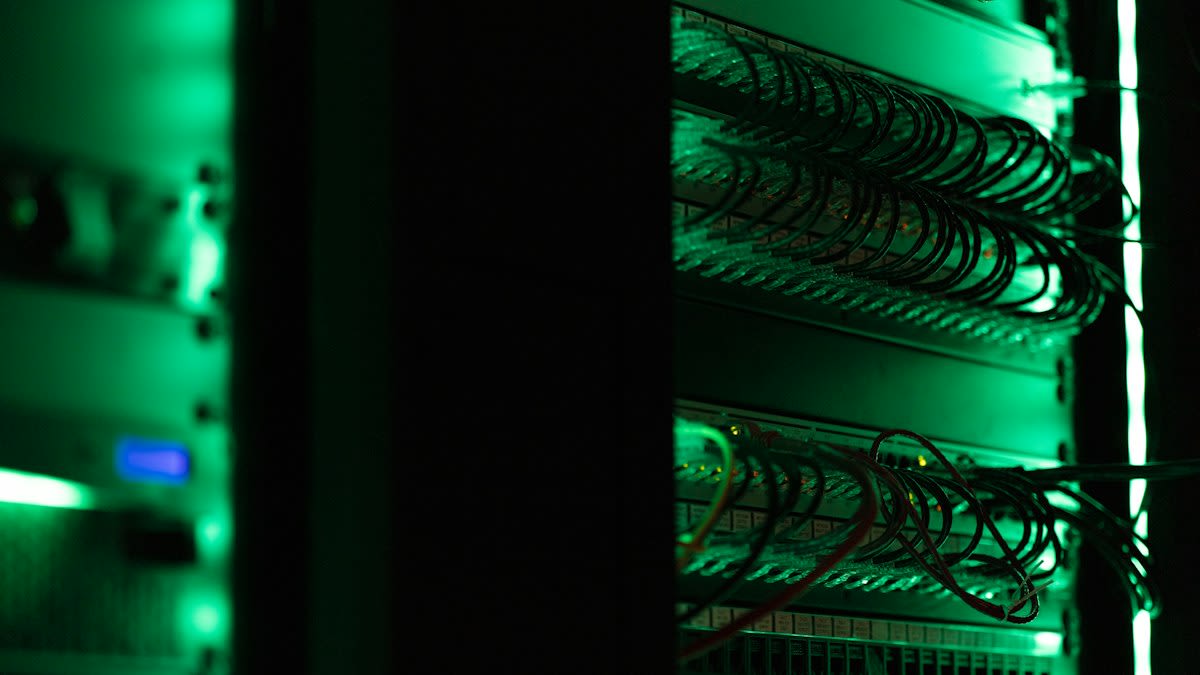
In the greasy, fan-blown corridors of Northern Virginia data centers, the debate isn't about software; it's about lead times and power draws. Engineers argue over the heat output of silicon-etched clusters, fighting for every watt of electricity while waiting for shipments that are perpetually delayed. There is a palpable friction here—a sense that the current buildout is an unsustainable frenzy. The practitioners on the ground are less concerned with market caps and more concerned with the physical reality of fiber-optic bottlenecks and the fragility of the supply chain.
Financial Fortification: The $150B Buyback
Nvidia is fighting the margin threat with a massive capital injection. The company has initiated a $150 billion buyback program extending through fiscal 2028, a move that dwarfs Apple's 2024 program by approximately $40 billion (Source: Shattered.io, 2026). This is a strategic deployment of cash designed to support the stock price even as the AI infrastructure buildout enters a more mature, slower-growth phase. Unlike Apple, which used buybacks to support a mature business with slowing unit growth, Nvidia is using this capital while demand still outstrips supply for GPUs and networking gear (Source: Shattered.io, 2026).
This financial aggression serves as a signal to the market that Nvidia believes its dominance in AI training GPUs remains intact, where it holds roughly 90% of the desktop market (Source: Shattered.io, 2026). However, the data center CPU fight is a different contest. AMD and Intel possess decades of x86 server relationships that Nvidia is only now attempting to penetrate. The battle for the CPU is where Nvidia's margins are most vulnerable, as they lack the entrenched legacy footprints that their rivals have spent thirty years building.

The trajectory of the overall GPU market is still upward, projected to reach $396.9 billion by 2033 with a 15.2% CAGR (Source: Yahoo Finance, 2026). But the delta between the general market growth and the specialized data center GPU growth is stark. The data center segment is expected to explode from $29.90 billion in 2025 to $284.80 billion by 2035, a CAGR of 25.28% (Source: GlobeNewswire, 2026). This hyper-growth is the engine driving Nvidia's current valuation, but it is also the primary catalyst for the competition to find a way to shred those margins.
The Failure Point
The collapse of the Nvidia margin model occurs at the point of software commoditization. The moment a viable, open-source alternative to CUDA becomes the industry standard, the 'Nvidia Tax' disappears. This failure point is not a slow decline but a sharp drop. Once the software barrier is gone, the only remaining differentiator is the raw silicon performance, which is subject to the brutal laws of commodity pricing. If TSMC begins favoring direct orders from a dozen different AI giants over a single dominant supplier, Nvidia's leverage vanishes overnight (Source: Simply Wall St, 2026).
- Open-source software stacks replacing CUDA
- Direct engagement between cloud providers and TSMC
- Saturation of AI infrastructure buildout in North America
- AMD and Intel leveraging legacy x86 server relationships
Editorial Note
This analysis focuses on the structural risks to Nvidia's margins. While current revenue growth is unprecedented, the 'trend' is the encroaching threat of commoditization. The delta between the $216B current revenue and the $900B projection is based on the assumption that the CUDA moat remains impenetrable.
Fact-Check & Accuracy Note
All statistics regarding revenue ($131B, $216B, $412B, $683B, $900B) are attributed to TIKR (2026). Market share data (90% desktop) and buyback figures ($150B) are sourced from Shattered.io (2026). Data center market CAGR (25.28%) is sourced from GlobeNewswire (2026).