Bit Shifting in Basic
Source Entity
Hacker News
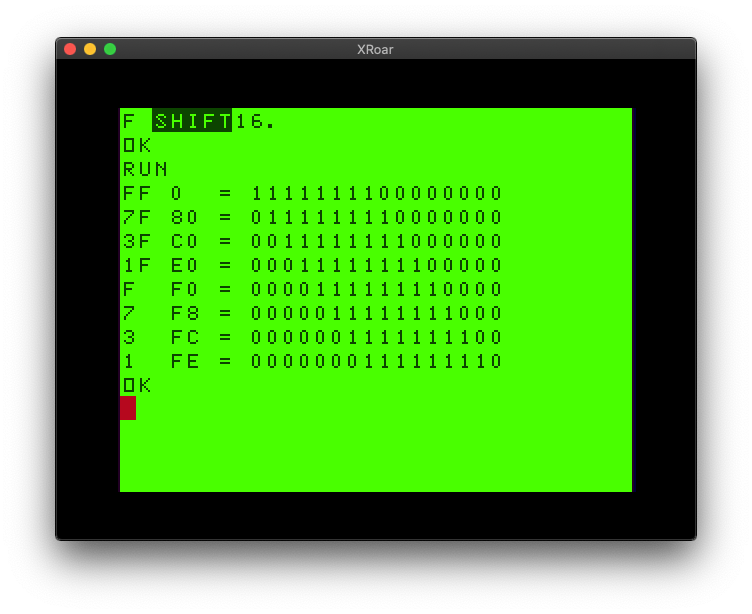
A developer explores the process of bit shifting within Commodore VIC-20 BASIC to automate the creation of 8x8 character graphics. This project highlights the technical challenges of retro programming and the creative use of low-level logic in legacy environments.
Automating Retro Graphics: The Art of Bit Shifting on the VIC-20
In the realm of retro computing, the Commodore VIC-20 remains a beloved platform for enthusiasts due to its unique constraints and character-based graphics system. Recently, a developer sought to streamline the creation of 8x8 character blocks by automating the generation of shifted frames. Rather than manually editing every offset position using modern development suites like CBM prg Studio, the project aimed to leverage the inherent computational power of the machine itself to perform the work.
The Challenge of BASIC Constraints
While bit shifting is a standard, native operation in high-level languages like C, it is notably absent as a direct operator in standard Commodore BASIC. For a programmer accustomed to modern syntax, this presents a significant hurdle. Bit shifting—the process of moving all bits in a byte or word to the left or right—is fundamental to graphics manipulation, yet in the VIC-20 environment, it requires a programmatic workaround to achieve the same result that a single C operator would provide.
Methodology and Implementation
To solve this, the developer shifted focus from manual design to algorithmic generation. By designing a single base character, the goal was to write a BASIC routine that could calculate and generate the subsequent shifted frames. This process mimics the way modern game engines handle sprite animation, but within the strict memory and processing limitations of a MOS Technology 6502-based machine. This highlights the ingenuity required to make legacy hardware perform tasks that are trivial on modern systems.
Historical Context of 8-bit Graphics
Historically, the VIC-20's graphics system relied heavily on character sets rather than a true pixel-addressable bitmap mode for most applications. Developers often had to 'hack' the character memory to create custom shapes. Understanding how to manipulate these bits at the byte level was, and remains, a core skill for anyone looking to push the boundaries of the VIC-20’s visual output. This project serves as a modern bridge, using contemporary curiosity to explore vintage logic.
Broader Implications for Retro Development
The shift toward using modern tools like CBM prg Studio versus writing native code on the hardware is a recurring theme in the retro-computing community. While tools make development more accessible, there is a distinct intellectual reward in understanding the low-level mechanics of the machine. By implementing bit shifting in BASIC, the developer essentially 're-invents' the logic that modern compilers handle automatically, reinforcing the educational value of retro computing.
Conclusion
Ultimately, this experiment in bit shifting demonstrates that the limitations of vintage languages like BASIC are not barriers, but rather invitations for creative problem-solving. By automating the creation of shifted character blocks, the developer successfully bridged the gap between modern design goals and 1980s-era computational constraints, proving that the spirit of experimentation remains alive in the retro-tech community.