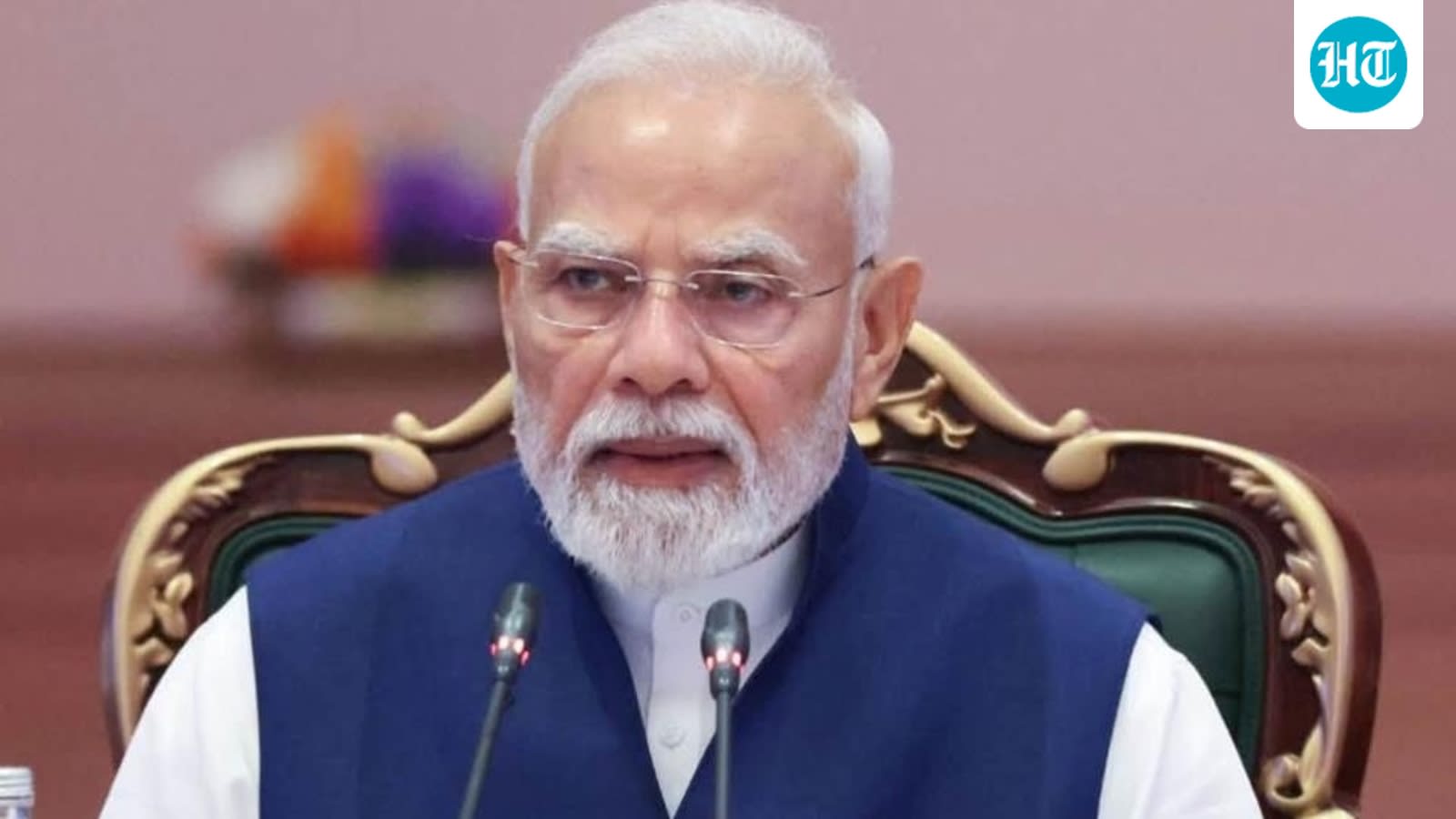
PM Modi's address today as BJP's campaign to mark his 25 years as head of govt concludes
Source Entity
Latest News: Todays Latest News Headlines from India & World | Hindustan Times | Hindustan Times
The Union Cabinet has approved the establishment of the Integrated Transport and Logistics Authority to unify national infrastructure planning across all major transport modes. Additionally, a new Rs 10,000 crore SME Growth Fund has been launched to bridge the equity gap for manufacturing enterprises in Tier-II and Tier-III cities.
Strategic Overhaul: India’s Infrastructure and SME Growth Initiatives
A Unified Vision for Logistics
The Union Cabinet's decision to establish the Integrated Transport and Logistics Authority (ITLA) marks a transformative shift in how India approaches infrastructure. By centralizing the planning and appraisal processes for roads, railways, ports, aviation, and waterways, the government aims to dismantle the silos that have historically hampered multi-modal efficiency. With the authority mandated to create a National Transport Master Plan spanning over a decade, India is signaling a move toward long-term, cohesive development rather than fragmented, mode-specific projects.
Empowering Multi-Modal Connectivity
The ITLA is not merely a planning body; it serves as a critical gatekeeper for national capital expenditure. By assuming the responsibility to appraise all government infrastructure projects valued at ₹500 crore or more, the authority ensures that new capacity is inherently multi-modal. This synchronization is vital, as Railway Minister Ashwini Vaishnaw highlighted that logistics demand grows at a rate of 10% for every 7% of GDP growth, making the efficiency of the supply chain a primary driver of the nation’s economic health.
Bridging the Equity Gap for SMEs
Parallel to its infrastructure reforms, the Cabinet has addressed a critical structural deficiency in the industrial sector by approving the ₹10,000 crore SME Growth Fund (SGF). While micro-enterprises have historically benefited from early-stage funding, small and medium manufacturing enterprises have often struggled to secure growth-stage equity. By targeting these specific segments, the government aims to stimulate industrial expansion where it is needed most.
Regional Development via Tier-II and III Focus
A defining feature of the new SGF is its deliberate focus on industrial clusters located in Tier-II and Tier-III cities. This strategy recognizes that the next wave of India’s manufacturing growth lies outside the saturated metropolitan hubs. By providing targeted equity support, the government is incentivizing businesses to scale operations in regional clusters, effectively fostering decentralized economic growth and job creation across the country.
Future Implications and Economic Resilience
These two initiatives—the ITLA and the SGF—work in tandem to build a more resilient economic framework. The ITLA creates the physical connectivity required for goods to move seamlessly, while the SME Growth Fund provides the capital necessary for firms to participate in these logistics networks. Together, these policies represent a proactive approach to managing the complexities of a rapidly growing economy, ensuring that infrastructure planning and private sector support are aligned for long-term sustainability.
Multiple Citing Sources
Verification Required?