EU chief opens door for Canada to become 'associate member'
Source Entity
BBC News
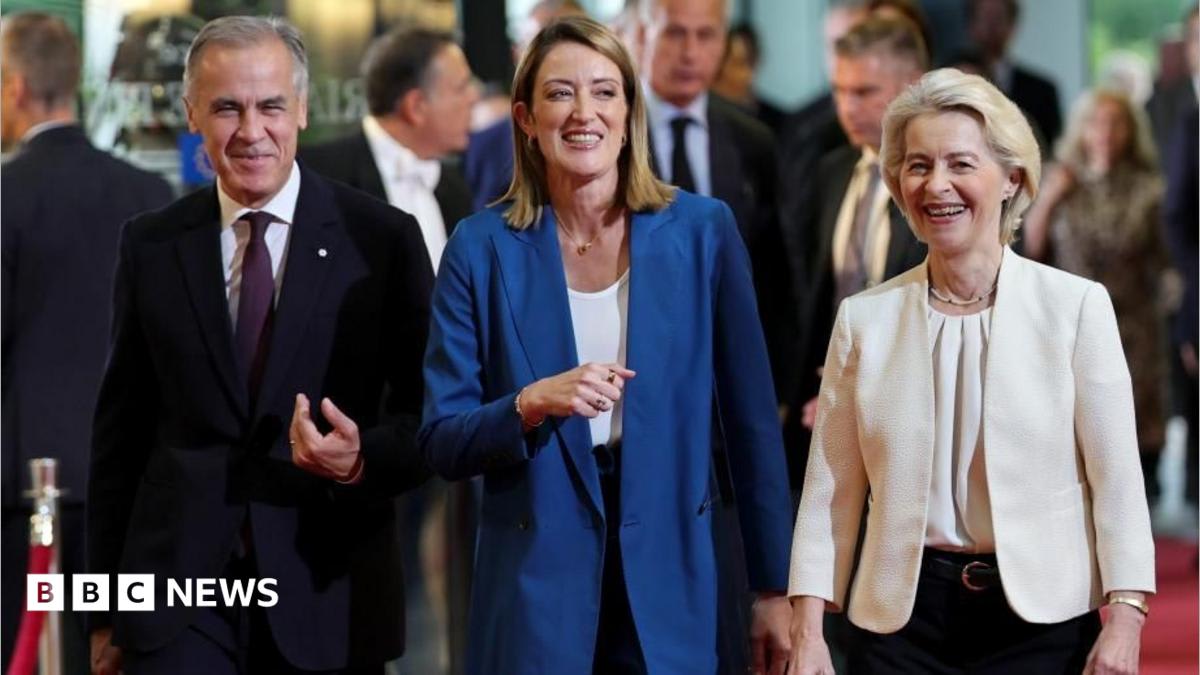
European Commission President Ursula von der Leyen has proposed Canada become the EU's first associate member to strengthen strategic ties. This initiative seeks to bolster international cooperation amidst shifting global dynamics and trade tensions.
A New Horizon for Transatlantic Relations
In a significant pivot for European diplomacy, European Commission President Ursula von der Leyen has officially proposed that Canada become the first-ever 'associate member' of the European Union. This announcement, delivered during her annual state of the European Union address in Strasbourg, signals a profound shift in how the 27-nation bloc envisions its external partnerships. By elevating Canada to this status, the EU aims to formalize a relationship that transcends traditional trade agreements, moving toward a deeper, more integrated geopolitical alliance.
Strategic Motivations and Global Context
The move comes at a time of heightened global uncertainty, with the European leadership emphasizing the urgency of reimagining partnerships. While the proposal is framed as a proactive effort to bolster common strength, it is also a response to fractures within the international rules-based system. By seeking a unique security and economic alliance, both the EU and Canada are positioning themselves to better navigate an increasingly volatile geopolitical landscape where traditional alliances are being tested by shifting national priorities.
The Role of Shifting Alliances
The impetus for this closer integration is partly rooted in the evolving diplomatic climate surrounding Ottawa. With Canada facing tense relations with the United States and the current administration of Donald Trump, the Canadian government—led by Mark Carney—has been actively pursuing alternative avenues for economic and security cooperation. This 'unique alliance' serves as a strategic hedge for Canada, allowing it to diversify its international dependencies beyond its North American neighbor.
Defining 'Associate Membership'
Though the specific mechanics of 'associate membership' remain to be fully codified, the proposal implies a framework that allows for deeper sectoral cooperation without requiring full EU membership. This distinction is crucial, as it provides a middle ground for countries that share European democratic values and economic interests but are geographically distinct. It represents a flexible model of governance that could serve as a blueprint for future EU partnerships with other democratic nations.
Implications for Global Trade and Security
President von der Leyen was careful to note that this partnership is 'not against anyone else,' but rather a move toward internal stability and collective resilience. However, the move is inherently significant given Canada’s current trade challenges. By aligning more closely with the EU, Canada is signaling a pivot toward a multilateral bloc that prioritizes the rules-based international order, potentially creating a new powerhouse of economic and security policy that can exert greater influence on the global stage.
Future Trends in European Integration
As the EU moves toward the potential creation of a European Security Council, the inclusion of Canada as an associate member could mark the beginning of a broader trend toward 'variable geometry' in European integration. If this partnership succeeds, it may encourage other nations to seek similar arrangements, effectively expanding the EU's sphere of influence and operational capacity without the complexities of full accession. The success of this endeavor will depend on the ability of both parties to balance national sovereignty with the requirements of a tightly integrated, cross-continental alliance.
Multiple Citing Sources