How Zhu Jiner turned struggles in India into taking China closer to Chess Olympiad gold
Source Entity
JYOTIRMOY HALDER
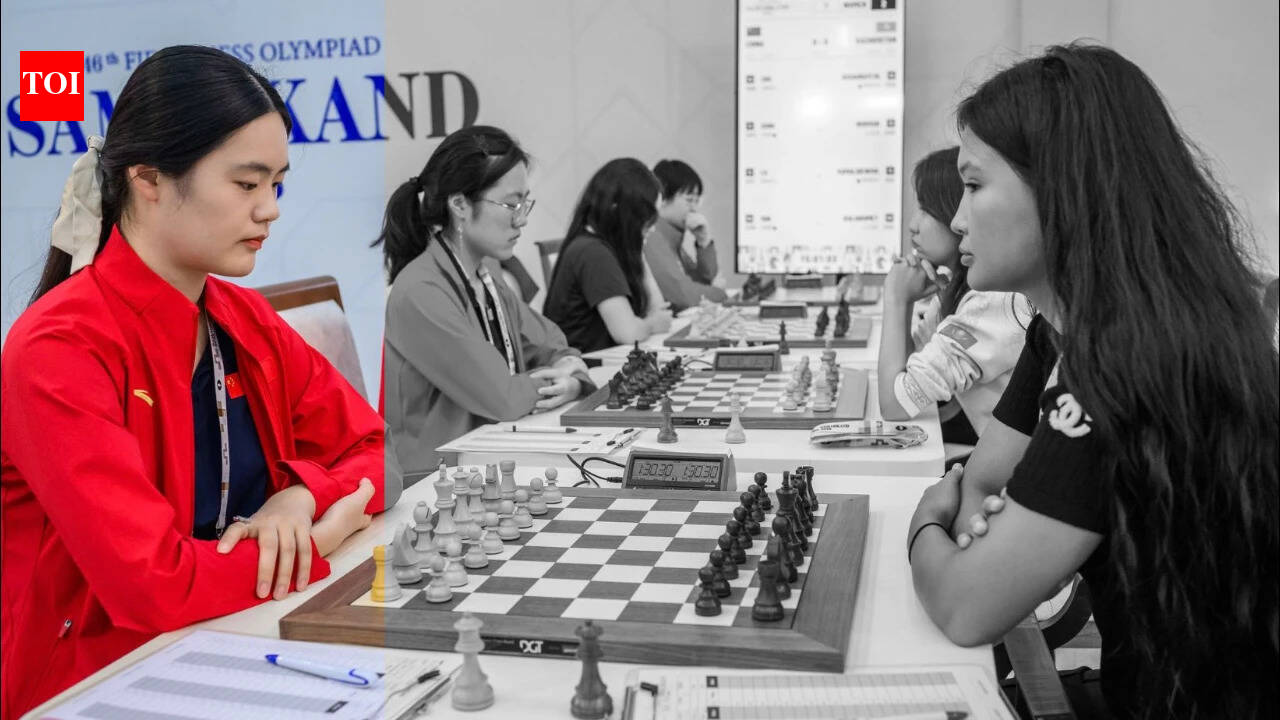
China leads the women's Chess Olympiad in Samarkand, bolstered by Zhu Jiner's resilience. Meanwhile, world champion D Gukesh secured a dramatic victory for India against Germany, keeping their gold medal defense alive.
The Chess Olympiad Intensifies: A Tale of Two Nations
The 46th Chess Olympiad in Samarkand, Uzbekistan, has reached a critical juncture, with the competition showcasing remarkable resilience and tactical brilliance from both the Chinese women’s team and the defending Indian men’s squad. As the tournament approaches its final rounds, the narratives surrounding these teams highlight the immense pressure and psychological depth inherent in elite international chess.
China’s Unexpected Dominance
In the women’s section, China has emerged as the clear frontrunner, currently leading the tournament despite the absence of their top three players. Central to this success is Zhu Jiner, who has stepped into the role of Board 1 with remarkable composure. Her performance is particularly noteworthy given her prior struggles during the Global Chess League (GCL) in Bengaluru. Her ability to pivot from that difficult campaign to an unbeaten streak in Samarkand reflects the volatile nature of professional chess and the importance of mental fortitude in high-stakes environments.
The 'Houdini' Act of D Gukesh
On the men's side, the focus has shifted to the defending champions, India, who narrowly avoided a devastating loss to Germany in the ninth round. World champion D Gukesh found himself in a precarious position against Alexander Donchenko, admitting that his knights were ineffective and his king was exposed. His ability to navigate a 54-move 'Houdini' performance—turning a near-certain defeat into a victory—demonstrates the unique tenacity required to maintain a gold-medal defense under immense pressure.
Tactical Resilience and Team Dynamics
Both the Chinese women's team and the Indian men's team are demonstrating how individual recovery and clutch performance influence collective success. While Zhu Jiner’s journey from a young learner to a national leader highlights the depth of the Chinese pipeline, Gukesh’s ability to remain focused while his teammates—Nihal Sarin, R Praggnanandhaa, and Arjun Erigaisi—held their ground shows the cohesive nature of the Indian squad. These performances are not merely technical; they are displays of endurance in the face of suffocating tactical pressure.
The Path to Gold
With only two rounds remaining, the standings remain highly competitive. India currently trails leaders Uzbekistan by a single point, placing them in a tight race alongside Uzbekistan 2 and Armenia. The margin for error has effectively evaporated. For the Chinese women, the goal is to maintain their current momentum to secure gold, while for the Indian men, the objective is to capitalize on the momentum generated by Gukesh’s miraculous win to close the gap on the leaders.
Concluding Outlook
As the Olympiad moves toward its climax, the stories of Zhu Jiner and D Gukesh serve as a testament to the unpredictable nature of the game. Whether it is rebounding from a difficult tournament in India or conjuring a win from a lost position in the final hours of play, these athletes are defining the competitive spirit of the 46th Olympiad. The final rounds will undoubtedly test whether this current form can be sustained to reach the podium.
Multiple Citing Sources