'Beast Mode': Why China's 'fully loaded' J-16 fighter is setting off alarm bells
Source Entity
TOI DEFENCE DESK
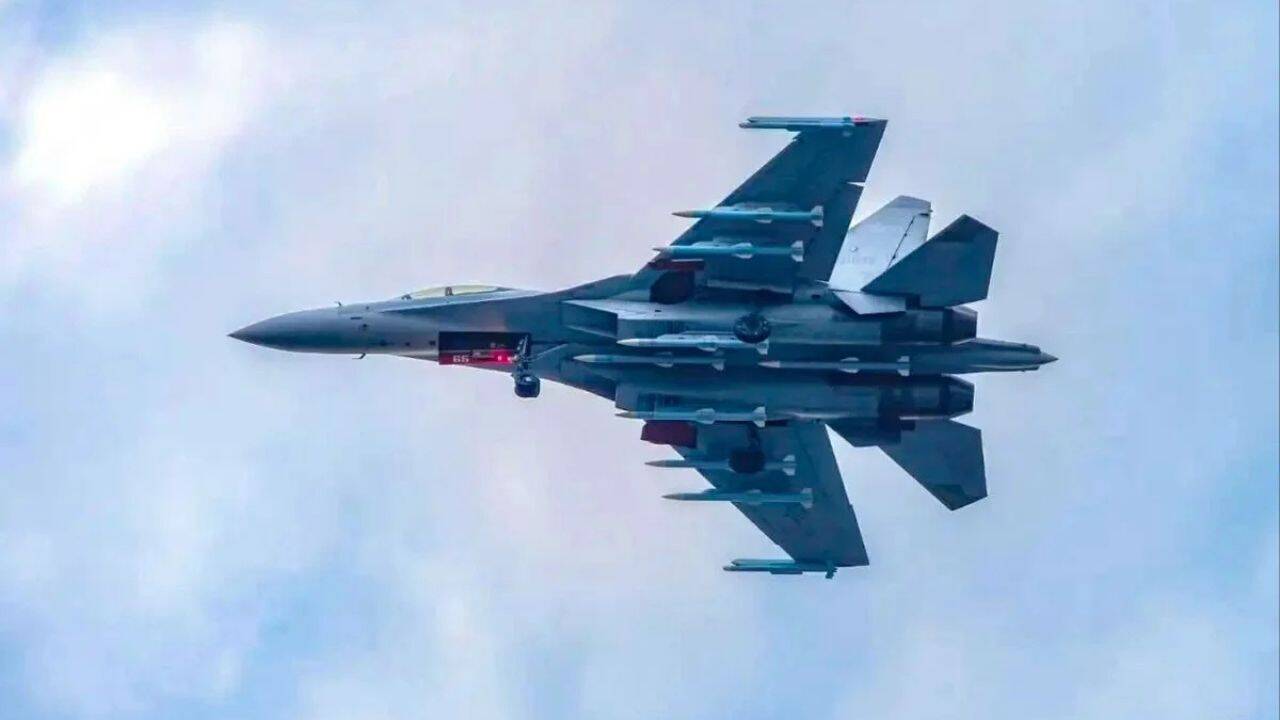
The J-16 fighter jet of China now features an impressive weapons loadout, enhancing its operational prowess. This new configuration allows it to function as a formidable missile platform in aerial engagements. Meanwhile, the People's Liberation Army Air Force is swiftly advancing its combat aircraft modernization efforts, alongside upgrades to its long-range support capabilities with improved transport and refueling assets, underscoring a strategic shift towards military dominance.
The Strategic Evolution of China's Aerial Power
The emergence of the 'fully loaded' J-16 fighter jet represents a critical inflection point in the People's Liberation Army Air Force's (PLAAF) trajectory. By transitioning the J-16 into a high-capacity missile platform, China is not merely upgrading a single aircraft model but is fundamentally altering its aerial combat doctrine. This 'Beast Mode' configuration suggests a shift toward maximizing payload and lethality, allowing a single sortie to deliver a devastating array of munitions, which reduces the number of aircraft needed to achieve a specific strike objective while increasing the risk to opposing forces.
Enhancing Lethality through Weapons Integration
The focus on an 'impressive weapons loadout' indicates that the J-16 is being optimized for multi-role dominance, capable of switching between air-to-air superiority and precision ground strikes. By functioning as a formidable missile platform, the J-16 can now carry a more diverse and heavier set of ordnance, potentially including long-range anti-ship missiles or advanced air-to-air weaponry. This capability is designed to create a 'no-go zone' for adversaries, leveraging the aircraft's range and firepower to project power far beyond China's immediate borders, effectively challenging the existing air superiority of regional competitors.
The Broader PLAAF Modernization Framework
This development does not exist in a vacuum; it is a core component of a wider, systemic modernization effort within the PLAAF. Historically, the Chinese air force was designed for territorial defense and short-range interceptions. However, the current trajectory shows a move toward an 'offensive-defensive' posture. The modernization of combat aircraft is being paired with the integration of advanced avionics and sensor suites, turning the J-16 into a node within a larger, network-centric warfare environment where data is shared in real-time between satellites, ground radar, and airborne assets.
Logistics as a Force Multiplier
Crucially, the report highlights the simultaneous upgrade of long-range support capabilities, specifically transport and refueling assets. In military strategy, a fighter jet is only as effective as its reach. The development of advanced aerial refueling tankers transforms the J-16 from a regional asset into a strategic one, allowing it to maintain presence in contested airspace for longer durations and penetrate deeper into enemy territory. These support assets act as force multipliers, ensuring that the 'fully loaded' J-16s can be deployed across the vast distances of the Indo-Pacific without relying solely on vulnerable forward operating bases.
Geopolitical Implications and 'Alarm Bells'
The 'alarm bells' mentioned in the context refer to the destabilizing effect this rapid escalation has on the regional balance of power. The ability to deploy heavily armed fighters with extended range complicates the deterrence strategies of neighboring nations and the United States. It suggests that China is preparing for high-intensity conflict scenarios where the ability to overwhelm an opponent's defenses through sheer volume of fire (the 'missile platform' approach) is paramount. This creates a security dilemma where other nations may feel compelled to accelerate their own arms races to maintain parity.
Future Trends in Chinese Air Superiority
Looking forward, the evolution of the J-16 is likely a precursor to the integration of unmanned wingmen and AI-driven combat systems. As China perfects the art of the 'fully loaded' manned fighter, the next step will likely be the synchronization of these platforms with stealth drones to act as scouts or missile carriers. This will further extend the operational envelope of the PLAAF, moving toward a future where the J-16 serves as a command-and-control hub for a swarm of autonomous weapons, further cementing its goal of military dominance in the skies.
Summary
In conclusion, the enhancement of the J-16 fighter jet is a calculated move to increase the PLAAF's strike capability and operational reach. By combining a massive weapons payload with improved refueling and transport logistics, China is successfully transitioning its air force into a global power-projection tool. This strategic shift underscores a broader ambition to dominate the regional airspace and presents a significant challenge to the established security architecture of the Indo-Pacific.