CIA officer admits to creating fake top secret government program to steal over $190 million, including gold bars
Source Entity
Zack Whittaker
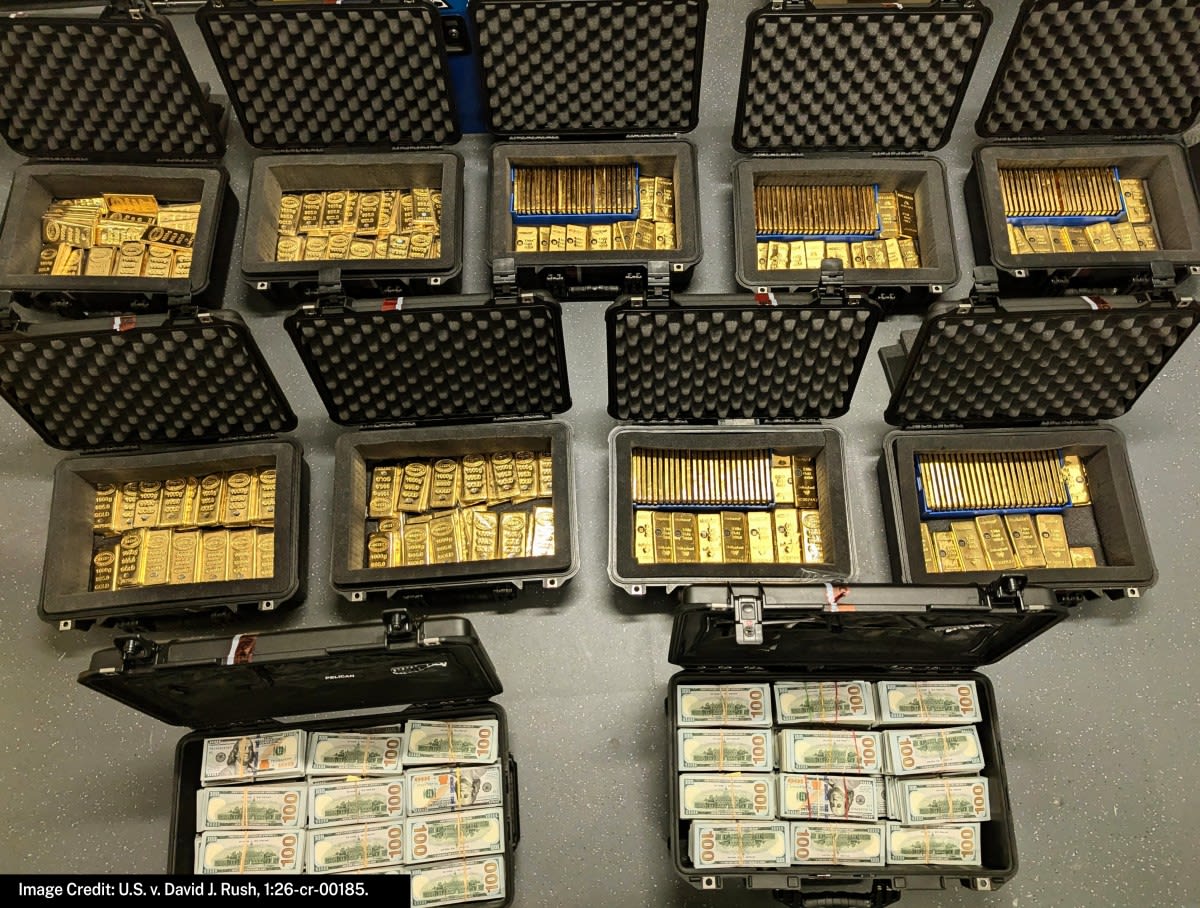
Former CIA officer David J. Rush has pleaded guilty to wire fraud after orchestrating a scheme to embezzle nearly $200 million. He used his position to fabricate a top-secret government program to siphon funds and gold bars.
A Breach of Trust: The David J. Rush Embezzlement Scandal
The Anatomy of the Fraud
The recent admission of guilt by David J. Rush, a former Central Intelligence Agency (CIA) officer, marks a significant failure in internal vetting and financial oversight. According to the U.S. Department of Justice, Rush orchestrated a sophisticated wire fraud scheme by fabricating a fictitious, highly compartmentalized, and top-secret government program. By leveraging his insider access, he successfully funneled nearly $200 million in government assets—including a substantial cache of gold bars—into his own possession.
Deception at the Entry Point
The scope of this scandal is compounded by the revelation that Rush’s entire career at the agency was predicated on a lie. Prosecutors confirmed that Rush falsified his educational background and military experience to secure his role within the intelligence community. This initial deception suggests a critical vulnerability in the recruitment and background check processes, allowing an individual to infiltrate a highly sensitive environment and eventually exploit it for personal gain.
The Mechanics of Compartmentalization
In the world of intelligence, 'compartmentalization' is a security measure designed to restrict information access to only those who strictly need it for their specific tasks. Ironically, Rush utilized this very concept to hide his fraudulent program from oversight. By framing his fake operation as a top-secret initiative, he likely shielded his activities from standard auditing procedures that might have otherwise flagged the massive outflow of funds and physical assets like gold.
Implications for National Security
Beyond the staggering $190 million loss, this incident raises profound questions regarding the financial accountability of intelligence programs. When an insider can create a 'ghost' operation that successfully siphons taxpayer money, it highlights a dangerous gap in the oversight of classified spending. This breach not only damages the financial integrity of the CIA but also compromises the security of the very programs intended to protect national interests.
Future Trends and Oversight Reforms
This case will almost certainly trigger a comprehensive review of internal auditing and security clearance protocols within the intelligence community. We can expect future trends to include more rigorous verification of historical credentials and the implementation of automated, cross-departmental financial monitoring systems that cannot be bypassed by a single operator, regardless of their clearance level. The recovery of the stolen gold and the subsequent legal proceedings will serve as a stark reminder of the risks posed by 'insider threats' within the highest tiers of government.
Conclusion
The guilty plea of David J. Rush stands as a sobering example of how an individual can manipulate institutional trust for criminal ends. As the Department of Justice moves forward with the prosecution, the case will continue to serve as a catalyst for systemic reform, ensuring that the mechanisms designed to hide secrets from adversaries are not used to hide crimes from the American public.