Congress demands accountability for deaths of tribal children, hooch tragedy victims in M.P.
Source Entity
India Latest News: Top National Headlines Today & Breaking News | The Hindu
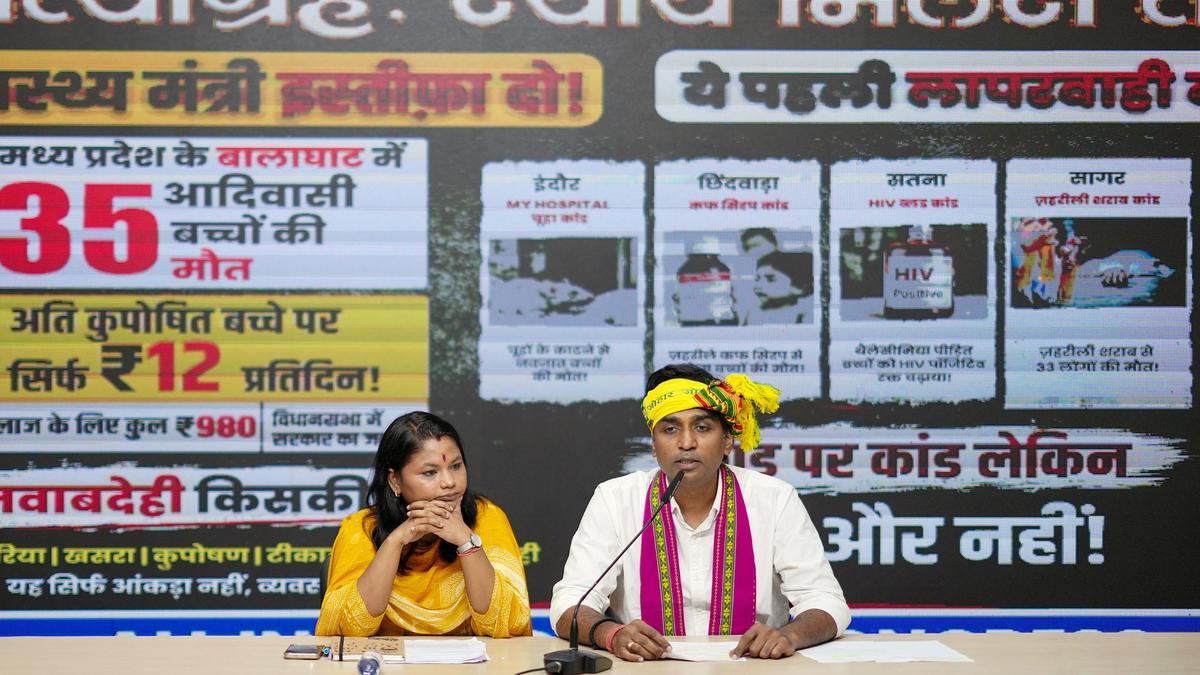
The Congress party has demanded the resignation of two Madhya Pradesh Deputy Chief Ministers following the deaths of 35 tribal children and 50 hooch tragedy victims. The party is calling for significant financial compensation and government employment for the affected families.
Political Turmoil in Madhya Pradesh: A Crisis of Governance
The political landscape in Madhya Pradesh has been severely destabilized following recent catastrophic failures in public health and administrative oversight. The Congress party, acting as the primary opposition, has leveled grave accusations against the ruling BJP government, specifically targeting Deputy Chief Ministers Rajendra Shukla and Jagdish Devda. The demand for their resignations stems from the tragic loss of over 35 tribal children in Balaghat and the death of more than 50 individuals in a spurious liquor (hooch) tragedy in Sagar.
The Human Cost and Administrative Negligence
At the heart of these demands is the assertion that these tragedies were not merely accidents, but the direct result of systemic failure. The Adivasi Congress, led by chairperson Vikrant Bhuria and media panelist Sadhna Bharti, has framed these events as a complete breakdown of the state’s healthcare infrastructure and excise enforcement mechanisms. The loss of life among tribal populations in Balaghat points to a deep-seated deficiency in rural healthcare accessibility and pediatric care, while the Sagar hooch tragedy highlights an inability to curb the illicit liquor trade that frequently plagues the state.
Demands for Restitution
Beyond political accountability, the Congress party has set specific benchmarks for state intervention. By demanding ₹1 crore in compensation for each victim's family and a guaranteed government job for a surviving relative, the opposition is attempting to force the government to acknowledge the long-term economic devastation these deaths cause to marginalized households. This move is designed to shift the discourse from bureaucratic excuses to tangible state responsibility.
Broader Implications for State Policy
These events underscore a recurring struggle in Madhya Pradesh regarding the protection of vulnerable communities. The tribal population in regions like Balaghat often relies heavily on government-run health centers, which, according to the Congress, are currently failing to provide basic life-saving services. Similarly, the persistence of spurious liquor syndicates in districts like Sagar indicates a failure in regulatory oversight by the Excise Department, which remains under the purview of the state leadership.
Future Trends and Political Fallout
The demand for the resignation of two Deputy Chief Ministers suggests that the Congress is escalating its strategy to challenge the BJP’s hold on the state’s administrative narrative. As public scrutiny intensifies, the government will face increasing pressure to conduct transparent investigations or risk further erosion of public trust. The outcome of these demands will likely dictate the legislative agenda in the coming sessions, as the opposition seeks to turn these tragedies into a referendum on the current administration’s competency.
Conclusion
In summary, the situation in Madhya Pradesh represents a critical juncture where failure in governance has led to profound human tragedy. The Congress party's insistence on ministerial accountability and significant financial restitution highlights the urgency of reforming the state's health and excise sectors. Whether the current administration chooses to address these demands or resist them will be a defining factor in the state’s political trajectory through the remainder of the year.
Verification Required?