'Why remove mata Sita's name?' Congress slams BJP over 'Jai Shri Ram' remark
Source Entity
AADRITA HALDER
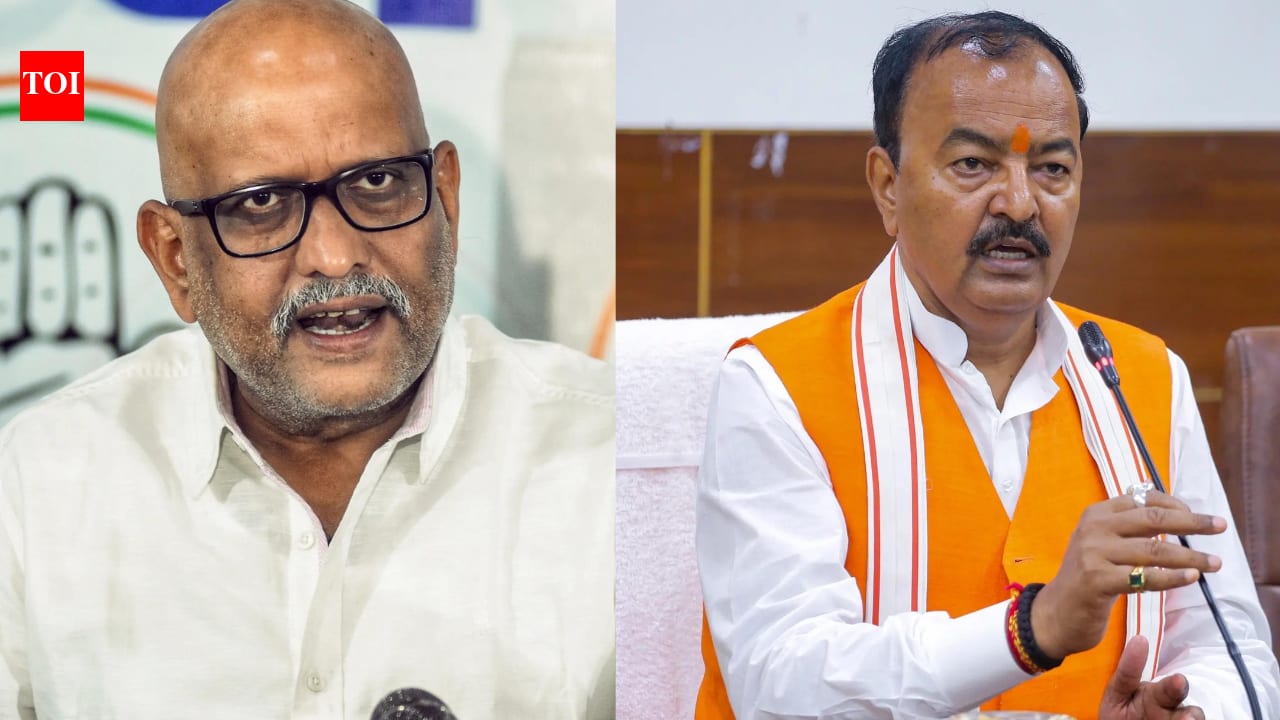
The Congress party has criticized the BJP for excluding Mata Sita's name in their 'Jai Shri Ram' slogan. This political disagreement highlights deeper tensions regarding cultural symbolism and gender representation in religious rhetoric.
The Intersection of Religion and Political Rhetoric
The recent controversy sparked by the Congress party's criticism of the BJP regarding the 'Jai Shri Ram' slogan brings to the forefront the complex relationship between religious iconography and political discourse in India. By questioning why Mata Sita's name is excluded from the chant, the Congress party is effectively challenging the gendered nature of popular religious slogans that have become central to modern political campaigning.
The Symbolic Importance of Mata Sita
In the traditional narrative of the Ramayana, the union of Lord Ram and Mata Sita is considered inseparable, symbolizing the ideal balance of masculine and feminine virtues. The Congress party's critique underscores a perceived imbalance in the BJP's rhetoric, suggesting that the omission of Sita marginalizes the feminine divine. This critique is not merely linguistic; it is an attempt to reposition the political conversation around inclusive cultural representation.
Political Strategy and Cultural Identity
For the BJP, the 'Jai Shri Ram' slogan has served as a powerful mobilizing tool, rooted in the party's broader ideological framework. By isolating the slogan as a subject of debate, the Congress party is attempting to reclaim the narrative space surrounding Hindu cultural symbols. This maneuver reflects a broader trend in Indian politics where parties compete to establish themselves as the true custodians of cultural and religious heritage.
Historical and Social Context
Historical interpretations of the Ramayana have long been used in political discourse to define social values and national identity. The shift from a devotional chant to a political rallying cry has invited scrutiny from opposition parties, who argue that the appropriation of religious figures for electoral politics necessitates a more holistic and inclusive approach. The current debate is a continuation of these long-standing tensions over how religious history is utilized in the secular state.
Broader Implications and Future Trends
This incident signals a shift toward more granular debates over the specific language used by political parties during campaigns. As voters become more attuned to the nuances of political messaging, we can expect to see increased scrutiny of how historical and religious figures are invoked. The debate over the inclusion of Mata Sita is likely to persist as a point of contention, highlighting the ongoing struggle to define the boundaries between religious devotion and political identity in a pluralistic democracy.