Pre-auth RCE in Nginx HTTP/2 handling
Source Entity
Hacker News
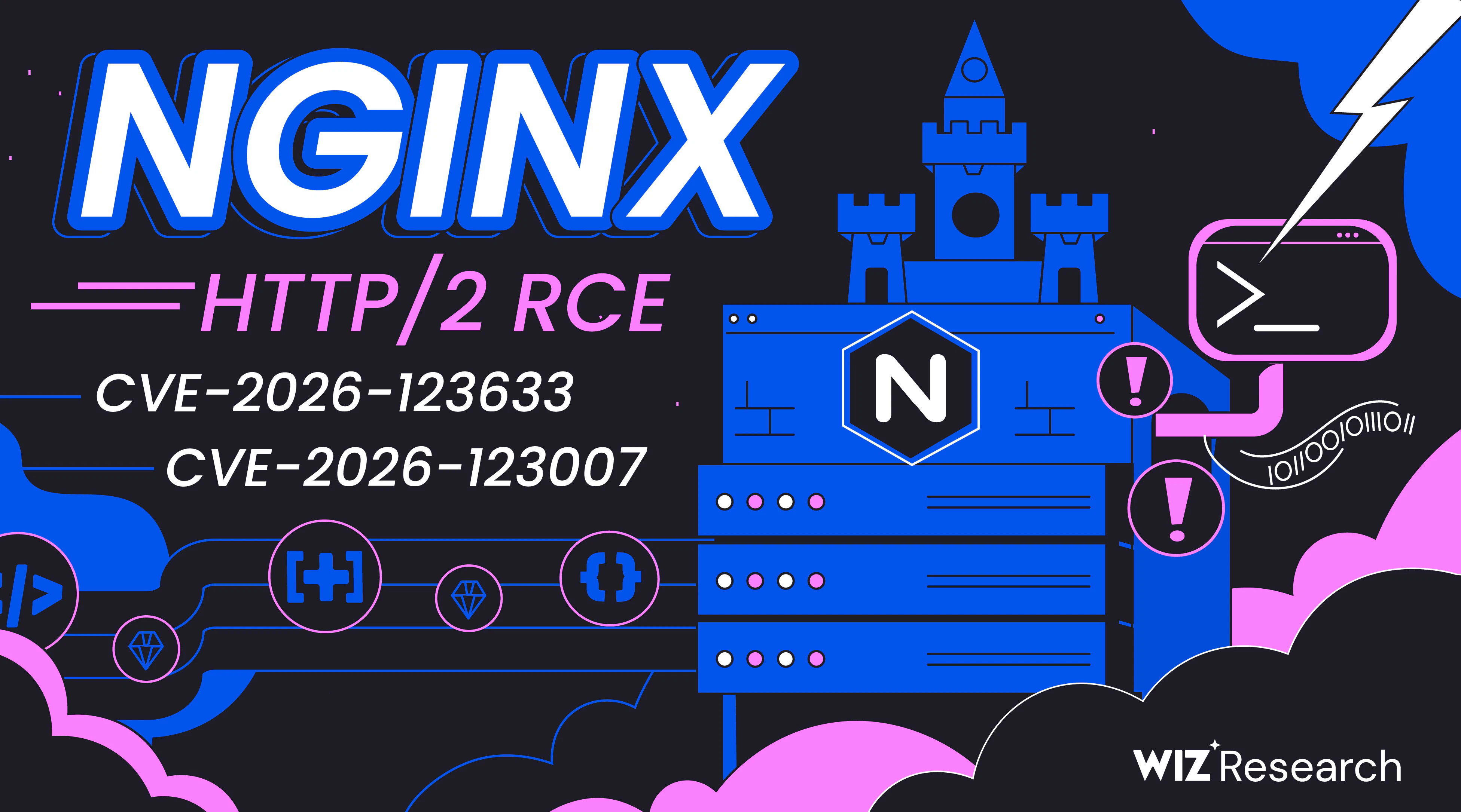
Researchers have identified critical vulnerabilities in NGINX and KVM, posing major risks to web infrastructure and cloud security. These flaws allow for remote code execution and guest-to-host escapes, potentially compromising millions of servers and data privacy.
Critical Vulnerabilities Threaten Web and Cloud Security
Recent security findings have unveiled significant weaknesses in two foundational pillars of modern digital infrastructure: the NGINX web server and the KVM hypervisor. A consortium of security researchers, including Wiz Research, Ikotas Labs, Metnir, and Rapid7, has identified two critical Remote Code Execution (RCE) vulnerabilities within NGINX. Simultaneously, researchers have demonstrated a dangerous guest-to-host escape vulnerability in KVM, tracked as CVE-2026-99312. These findings represent a substantial escalation in the threat landscape for both cloud providers and independent server operators.
The NGINX RCE Threat
NGINX serves as the 'front door' for over 225 million websites, making it one of the most widely deployed open-source web servers globally. The newly discovered vulnerabilities, CVE-2026-123633 and CVE-2026-123007, have been assigned a critical CVSS 4.0 score of 9.2. Because these flaws exist within the core software responsible for routing HTTPS traffic, successful exploitation grants an attacker the ability to bypass authentication, execute arbitrary code, steal sensitive data, or completely disrupt service availability. Given NGINX’s ubiquity in modern web architectures, the potential attack surface is immense.
Breaking the Cloud Boundary
In a separate but equally alarming discovery, the KVM hypervisor—the engine powering many cloud environments—has been found vulnerable to a guest-to-host escape. The vulnerability, which involves a failure to reset the MMU context during INIT emulation, effectively shatters the isolation that is the cornerstone of cloud computing. By demonstrating the ability to read and write to the host’s kernel memory, researchers have proven that an attacker could theoretically compromise not only the host machine but also the data and processes of other tenants residing on the same physical infrastructure.
Broader Implications for Cloud Tenants
Cloud computing relies heavily on the 'multi-tenant' model, where customers trust the hypervisor to keep their virtual machines (VMs) isolated from neighbors. The demonstration of CVE-2026-99312 on a DigitalOcean droplet highlights that this isolation is not absolute. The ability to access 127 GB of host RAM and perform arbitrary writes to the host kernel represents a catastrophic failure of the virtual boundary, enabling potential cross-tenant attacks that could expose private data across an entire data center.
Historical Context and Future Trends
Historically, vulnerabilities in core infrastructure software like NGINX and KVM are rare but carry outsized impact. As web architecture continues to consolidate around these specific tools, the focus of sophisticated threat actors has shifted toward these foundational layers. We can expect a future trend where security audits will increasingly target hypervisors and load balancers rather than individual application code. Organizations must prioritize rapid patching cycles and adopt 'defense-in-depth' strategies that do not rely solely on the underlying server or virtualization platform for security.
Conclusion
These vulnerabilities underscore the fragility of the shared digital ecosystem. Whether it is the NGINX RCE flaws or the KVM escape mechanism, the message to IT security professionals is clear: the underlying software stack is a high-value target. Immediate remediation, including rigorous patch management and monitoring for unusual kernel-level activity, is essential to maintaining the integrity of production environments against these critical threats.