'Animals', Hand of God and Beckham - Argentina and England's World Cup rivalry
Source Entity
BBC News
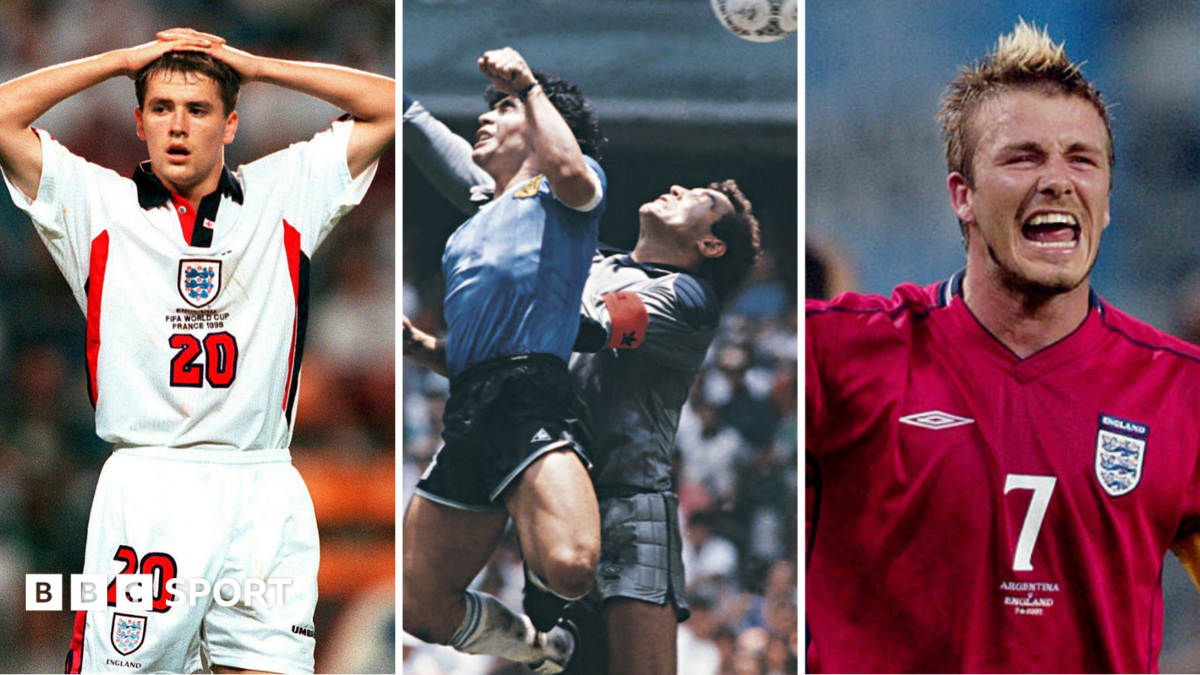
As England and Argentina prepare to go head-to-head in Wednesday's World Cup semi-final, BBC Sport looks at their footballing rivalry.
The Weight of History: England vs. Argentina
As England and Argentina prepare to clash in the World Cup semi-finals, the match transcends a mere sporting event, evolving into a collision of national identities and historical grievances. This fixture is rarely just about the ninety minutes on the pitch; it is burdened by decades of psychological warfare and sporting trauma. The intensity of this rivalry is unique in international football, driven by a cycle of perceived injustices and triumphant moments that have been passed down through generations of fans and players alike.
The Ghost of 1986: The 'Hand of God'
Central to the animosity is the 1986 World Cup quarter-final, a match that remains etched in the consciousness of both nations. The duality of Diego Maradona's performance—scoring the infamous 'Hand of God' goal via a blatant handball and shortly after scoring the 'Goal of the Century'—created a lasting dichotomy. For Argentina, it was a symbol of cunning and genius; for England, it was a symbol of cheating and robbery. This specific event established a narrative of 'us versus them' that persists today, ensuring that every subsequent meeting is viewed through the lens of that unresolved injustice.
The Beckham Catalyst and Modern Tension
The rivalry was further inflamed during the 1998 World Cup, where David Beckham's red card after a clash with Argentina's Michael Faye sparked a national crisis in England. The subsequent backlash against Beckham was visceral, while in Argentina, the event was celebrated as a rightful punishment. This incident shifted the rivalry from a purely historical grievance to a modern one, demonstrating how individual players can become lightning rods for national sentiment. These flashpoints ensure that the psychological pressure on the players in the current semi-final is immense, as they are not just playing for a trophy, but for the honor of their footballing heritage.
Tactical Psychology and the 'Grudge Match' Dynamic
From a tactical perspective, the England-Argentina dynamic often results in a 'grudge match' atmosphere where emotional volatility can override strategic discipline. Historically, these matches are characterized by high foul counts and intense confrontations. The challenge for both managers in this semi-final will be to maintain tactical composure while leveraging the passion that this specific rivalry ignites. The tendency for these matches to devolve into battles of will rather than battles of skill adds an unpredictable layer to the competition, making the mental fortitude of the squad as important as their technical ability.
Broader Implications for Global Football
Beyond the immediate result, this semi-final serves as a case study in how sports can mirror geopolitical and cultural tensions. The rivalry highlights the contrast between the perceived 'stiff upper lip' of English football and the 'garra' (grit/passion) of Argentine football. A victory for either side in this high-stakes encounter would not only bring them closer to the World Cup trophy but would also provide a symbolic 'redemption' or 'validation' of their respective footballing philosophies on the world's biggest stage.
Conclusion: More Than a Game
In summary, the upcoming semi-final between England and Argentina is a confluence of sport, history, and emotion. From the shadows of Maradona to the legacy of Beckham, the baggage accompanying this match is heavier than almost any other fixture in the tournament. While the objective is to reach the final, the underlying drive for both teams is to assert dominance in a rivalry defined by controversy and brilliance. Regardless of the scoreline, the result will be written into the long, complex chronicle of one of football's most enduring feuds.