Various Projects Find Hidden SDR Capabilities in ESP32 Microcontrollers
Source Entity
Hacker News
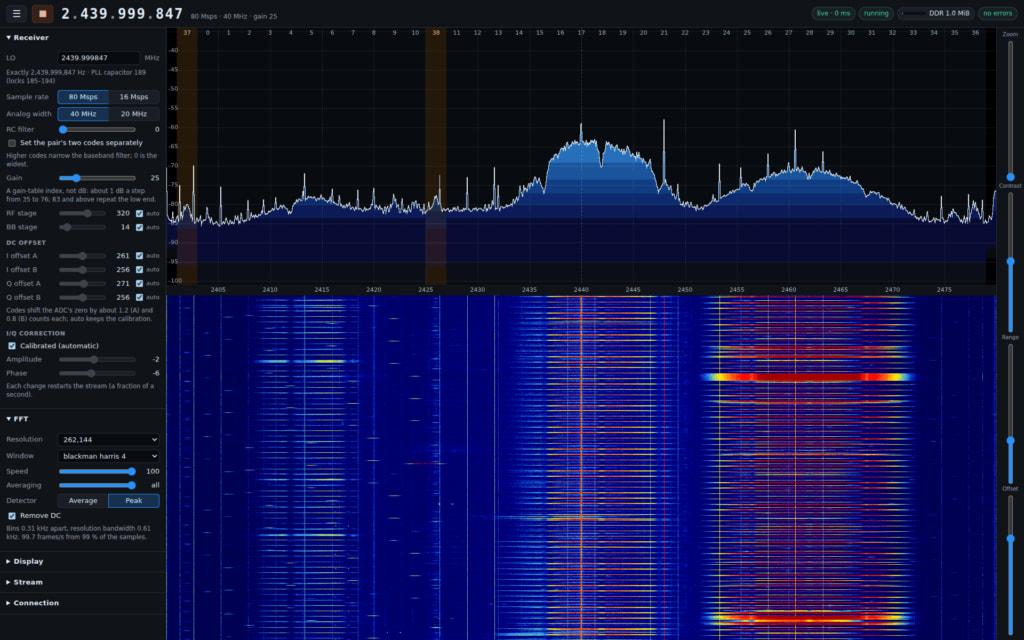
Researchers have discovered undocumented capabilities in ESP32 microcontrollers that allow them to function as Software Defined Radios (SDR). This breakthrough enables raw IQ baseband sampling across multiple frequency bands, opening new possibilities for low-cost signal analysis.
The SDR Revolution: Unlocking ESP32 Potential
Recent findings from the ESPARGOS team have unveiled a significant breakthrough in embedded systems engineering. By bypassing the rigid, manufacturer-defined WiFi and Bluetooth protocols, researchers have successfully repurposed standard ESP32 microcontrollers into capable Software Defined Radios (SDR). This discovery transforms these ubiquitous, low-cost chips from mere communication controllers into powerful tools for radio frequency signal processing.
From Phased Arrays to SDR
The foundation for this discovery lies in the previous development of ESPARGOS, a sophisticated phased array system utilizing patch antennas connected to ESP32 modules. Originally designed for WiFi direction-finding and augmented reality heatmapping, the ESPARGOS project served as the catalyst for deeper investigation into the chip's silicon capabilities. The team identified that the underlying hardware architecture possesses undocumented features that allow developers to access raw IQ baseband samples directly, effectively stripping away the abstraction layers typically imposed by standard firmware.
Technical Specifications and Frequency Coverage
The newly discovered SDR capabilities are remarkably versatile depending on the specific ESP32 model utilized. These chips can now monitor frequency ranges spanning 2.2–2.7 GHz, with the ESP32-C5 model extending this utility into the 4.8–6.0 GHz range. With sample rates reaching up to 80 MS/s and analog bandwidths ranging from 13 to 54 MHz, these microcontrollers are positioned to disrupt the entry-level SDR market, which has historically been dominated by more expensive, dedicated hardware components.
Implications for Embedded Systems and Security
The ability to capture raw RF data on a mass-produced microcontroller has profound implications for the fields of telecommunications and cybersecurity. By providing developers with an affordable platform for signal analysis, this discovery lowers the barrier to entry for researchers to study WiFi, Bluetooth, and other protocols operating within these ISM bands. It essentially turns every existing ESP32-based IoT device into a potential sensor node for spectrum monitoring, provided the firmware is modified to leverage these hidden features.
Challenges and Future Trends
Despite the excitement surrounding these capabilities, significant engineering hurdles remain. Most notably, using these chips as general-purpose, PC-connected SDRs is limited by the current output bandwidth constraints, which may hinder high-fidelity signal streaming to external devices. Future development will likely focus on optimizing data throughput and creating middleware that allows these chips to interface more effectively with popular SDR software suites, potentially establishing a new standard for low-cost, distributed radio sensing networks.