BJP leader's son run over by flower-showering bulldozer at Akhilesh's Gorakhpur 'rath yatra'
Source Entity
ABHISHEK MISHRA
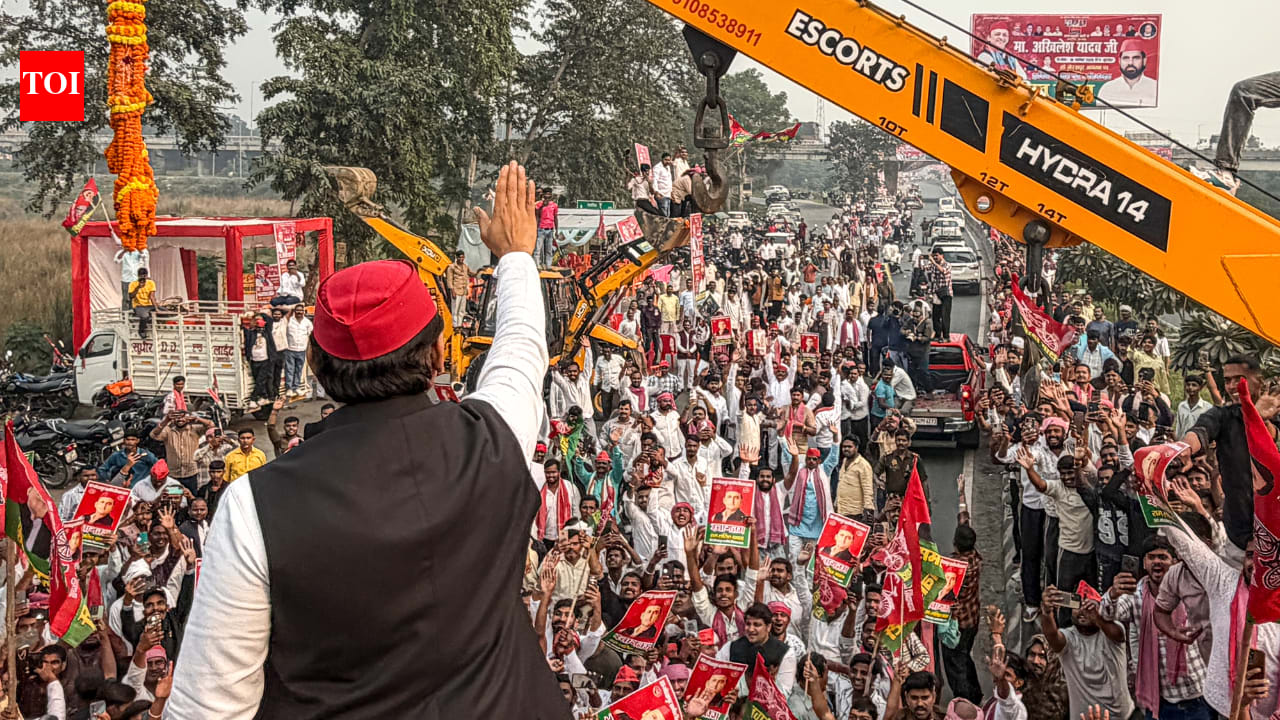
A tragic accident involving a flower-showering bulldozer during an Akhilesh Yadav roadshow in Gorakhpur resulted in the death of a BJP leader's son. The incident has ignited a fierce political confrontation between the Samajwadi Party and Chief Minister Yogi Adityanath.
The Gorakhpur Tragedy: Political Symbolism Turns Fatal
A tragic incident unfolded in Gorakhpur during a Samajwadi Party roadshow led by Akhilesh Yadav, where a young boy—identified as the son of a BJP leader—was run over by a bulldozer decorated to shower flowers on the procession. The event, intended to be a display of political strength in the Chief Minister’s political stronghold, rapidly descended into chaos and mourning, highlighting the inherent risks associated with high-profile campaign spectacles in crowded urban environments.
The Symbolism of the 'Bulldozer'
The choice of a bulldozer as a central element in the roadshow is steeped in contemporary Uttar Pradesh political symbolism. Chief Minister Yogi Adityanath has frequently been referred to as 'Bulldozer Baba,' a moniker derived from his administration's use of heavy machinery to demolish properties associated with alleged criminals and illegal encroachments. By incorporating a bulldozer into his own rally, Akhilesh Yadav’s party inadvertently stepped into a narrative space defined by their political rival, leading to a complex optics battle once the accident occurred.
Political Fallout and the Blame Game
Following the fatality, the incident immediately transformed into a high-stakes political slugfest. Chief Minister Adityanath utilized the tragedy to launch a scathing critique of the Samajwadi Party, framing the accident as a failure of the organizers and a direct consequence of the rally's conduct. The narrative quickly shifted from a local tragedy to a statewide political issue, as both parties sought to control the discourse surrounding the safety and responsibility of campaign events.
Divergent Responses and Accountability
In response to the accusations, Akhilesh Yadav expressed deep sorrow, stating that the party was "deeply saddened" by the loss of life. He urged against the politicization of the tragedy, attempting to distance the party from the blame game. However, the Samajwadi Party’s own attempt to clarify the timeline—claiming the mishap occurred after the roadshow concluded—has been met with skepticism by political opponents who are keen to leverage the incident ahead of the upcoming polls.
Broader Implications for Campaign Safety
This incident raises critical questions regarding the management of political rallies and the use of heavy machinery in public demonstrations. As political parties compete for visibility and public attention, the safety of bystanders and participants often takes a backseat to theatrical displays. The Gorakhpur tragedy serves as a grim reminder of the need for stricter protocols to ensure that political campaigning does not come at the cost of human life.
Conclusion: A Precarious Political Climate
Ultimately, the death of the boy has cast a long shadow over the political landscape in Gorakhpur. As the state moves closer to elections, this incident is likely to remain a flashpoint in the rhetoric between the BJP and the Samajwadi Party. The event highlights how even accidental tragedies are swiftly absorbed into the machinery of political warfare, further polarizing the electorate and intensifying the scrutiny on how political parties conduct their public outreach.