Tech stocks skid, bond yields rise as Gulf conflict sends oil surging
Source Entity
Yahoo Finance
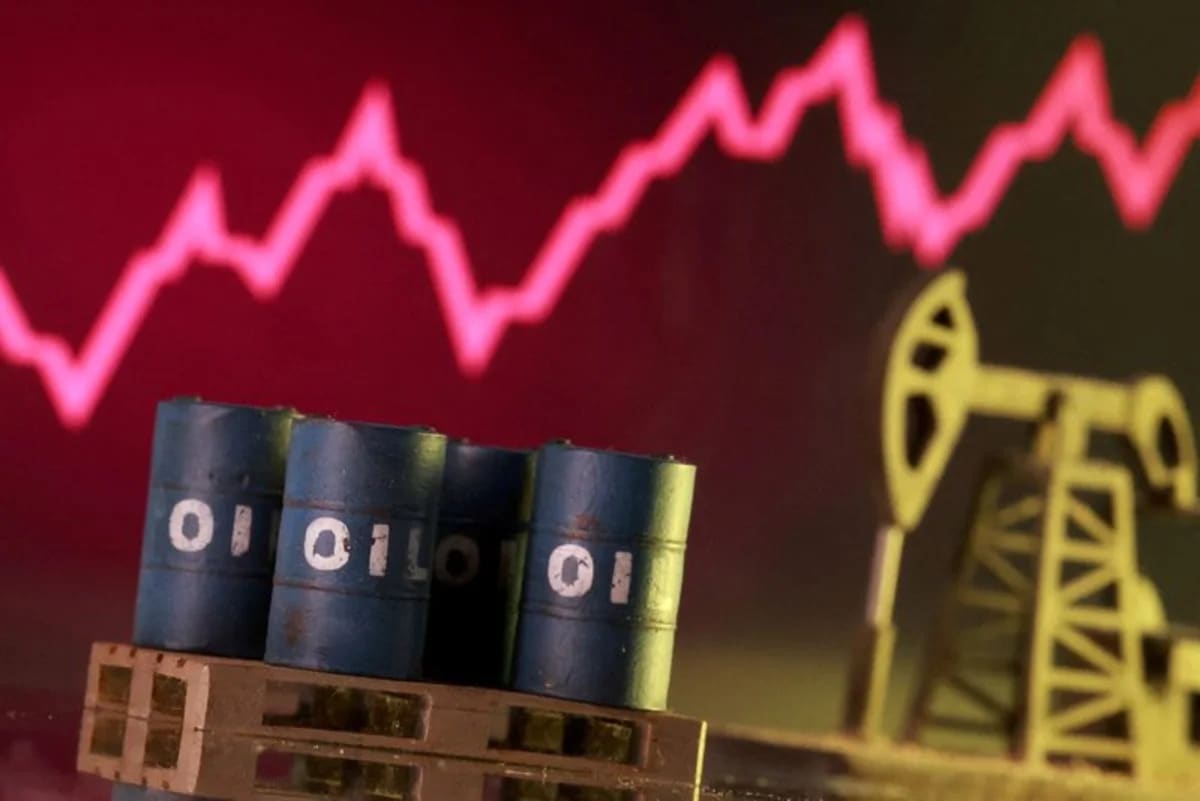
By Stefano Rebaudo and Wayne Cole July 13 (Reuters) - Tech stocks fell sharply and government bond yields rose on Monday as investors grappled with concerns over a fresh escalation in the Middle East...
Market Volatility Amidst Gulf Escalation: A Comprehensive Analysis
The global financial landscape has reacted sharply to a fresh escalation in the Middle East, creating a ripple effect that spans from energy markets to the high-growth technology sector. The core of the current market movement is a classic 'risk-off' sentiment, where investors flee volatile assets in favor of safety or hedge against inflation. As tensions in the Gulf intensify, the immediate surge in oil prices has acted as a catalyst, destabilizing investor confidence and shifting the valuation metrics for both equities and fixed-income securities.
The Energy-Inflation Nexus and Bond Yields
One of the most critical dynamics at play is the direct correlation between surging oil prices and rising government bond yields. When oil—a fundamental input for nearly every sector of the global economy—increases in price, it typically drives up the Consumer Price Index (CPI) by increasing transportation and manufacturing costs. This inflationary pressure forces bond markets to price in a higher likelihood that central banks will maintain elevated interest rates to combat inflation. Consequently, bond yields rise as investors demand higher returns to compensate for the eroding purchasing power of future fixed payments. This creates a challenging environment where the cost of borrowing increases across the board, further squeezing corporate margins.
Why Tech Stocks are Bearing the Brunt
The sharp skid in technology stocks is not coincidental but is a mathematical result of rising yields. Tech companies, particularly those in the growth phase, are often valued based on the Discounted Cash Flow (DCF) model, which projects future earnings back to their present value. When bond yields (which serve as the risk-free rate in these calculations) rise, the discount rate increases, which significantly lowers the present value of those future earnings. Furthermore, the tech sector is highly sensitive to 'risk-off' environments; when geopolitical instability peaks, investors rotate their portfolios away from high-multiple growth stocks and toward 'safe havens' or commodities like oil and gold.
Historical Context of Geopolitical Risk Premiums
Historically, the Gulf region has been the primary source of 'geopolitical risk premiums' in the oil market. Similar patterns were observed during previous conflicts in the region, where the mere threat of supply disruption—regardless of whether actual production ceased—was enough to send prices soaring. This phenomenon reflects the market's anxiety over the 'chokepoints' of global oil transit, such as the Strait of Hormuz. The current volatility mirrors historical shocks where energy spikes acted as a regressive tax on global consumption, slowing economic growth while simultaneously driving up prices, a precarious state that often leads to broader market corrections.
Broader Economic Implications and Supply Chain Strain
Beyond the immediate stock market reaction, the escalation in the Gulf threatens to disrupt global supply chains already fragile from recent years of instability. Higher energy costs increase the price of shipping and logistics, which can lead to 'cost-push inflation.' For the broader economy, this means that while energy companies may see short-term profit gains, the general consumer and the industrial sector face higher operational costs. If oil prices remain elevated for an extended period, it could stifle capital expenditure (CapEx) in other sectors, as companies divert funds to cover basic energy overheads, potentially slowing overall GDP growth.
Future Trends and Market Predictions
Looking forward, the trajectory of the markets will depend heavily on whether this escalation is a short-term spike or a long-term structural shift. If diplomatic resolutions are reached, we can expect a rapid 'mean reversion' where oil prices stabilize and tech stocks recover as the risk premium fades. However, if the conflict persists, we may see a permanent shift in investment strategies, with a renewed emphasis on energy independence and an accelerated transition to renewable energy to mitigate the volatility associated with Gulf geopolitics. Investors should monitor the Federal Reserve's reaction closely; if the Fed views the oil surge as a permanent inflationary threat, interest rates may stay 'higher for longer,' keeping a ceiling on tech valuations.
Summary of Market Impact
In conclusion, the current market reaction is a textbook example of the interdependence between global politics and financial markets. The surge in oil prices serves as the primary trigger, which then transmits through the economy via inflation expectations, driving bond yields upward and pulling technology valuations downward. The situation underscores the vulnerability of the global economy to regional instability in the Middle East and highlights the fragile balance between energy security and monetary stability.