Wrong solar power unit causes fire twice, buyer wins Rs 30,000 payout
Source Entity
Vineet Upadhyay
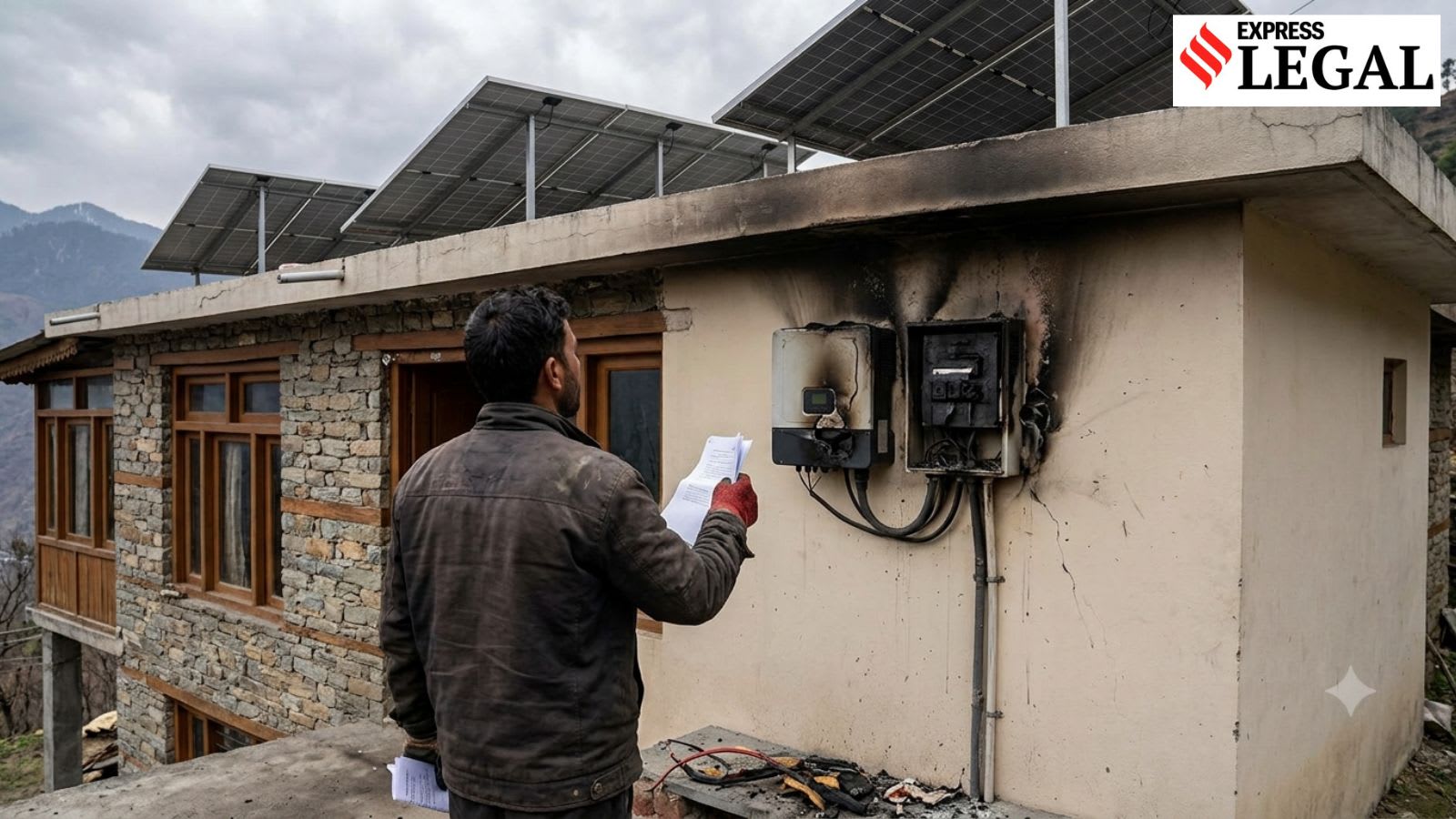
A man who paid Rs 2.5 lakh for a government-backed 5 kilowatt rooftop solar power system was instead fitted with a 3 kilowatt inverter that caught fire twice, prompting a Himachal Pradesh consumer com...
Consumer Negligence and Safety Failures in Solar Installations
In a significant ruling regarding consumer protection and technical negligence, a consumer court in Himachal Pradesh has ordered a payout of Rs 30,000 to a resident who suffered multiple fire incidents due to a faulty solar power installation. The case highlights a critical failure in quality control where a consumer, who paid Rs 2.5 lakh for a government-backed 5 kilowatt (kW) rooftop solar system, was instead provided with a 3kW inverter. This discrepancy in capacity not only diminished the system's efficiency but created a severe safety hazard, resulting in the inverter catching fire on two separate occasions.
The Technical Danger of Capacity Mismatch
From a technical perspective, the installation of a 3kW inverter in a system designed for 5kW is a grave error. In a solar power setup, the inverter is responsible for converting the Direct Current (DC) generated by the panels into Alternating Current (AC) for home use. When the power generation capacity of the panels (5kW) exceeds the handling capacity of the inverter (3kW), the inverter is subjected to chronic overloading. This leads to excessive heat buildup within the internal circuitry, which, if not managed by adequate safety trip-switches, can lead to thermal runaway and electrical fires. In this specific case, the repeated fires serve as a stark warning about the dangers of mismatched electrical components.
Legal Recourse and Consumer Rights
The intervention of the Himachal Pradesh consumer court underscores the importance of legal safeguards for citizens investing in green energy. By awarding a payout of Rs 30,000, the court acknowledged the mental agony and physical risk posed to the consumer. This ruling reinforces the principle that vendors and contractors are strictly liable for the specifications promised during the sale. For many homeowners, government-backed schemes provide the financial incentive to switch to solar, but this case demonstrates that government backing does not automatically guarantee the quality of the private contractors executing the installation.
Systemic Risks in the Green Energy Transition
This incident points to a broader systemic issue within the rapid rollout of solar energy initiatives across India. As the government pushes for aggressive targets to increase rooftop solar adoption through subsidies and incentives, there is an influx of third-party vendors. The pressure to complete installations quickly can lead to shortcuts in quality assurance and the deployment of under-specified equipment. When vendors prioritize profit margins over safety—such as installing a cheaper 3kW unit instead of a 5kW unit—it undermines public trust in renewable energy transitions and poses a genuine risk to residential safety.
Future Trends and Preventative Measures
Moving forward, this case suggests a need for more stringent certification and audit processes for solar installers. Future trends in the industry will likely see a push toward 'smart' monitoring systems that can alert users if the inverter is being overloaded or if there is a mismatch in system components. Consumers are encouraged to perform independent verification of equipment specifications and demand installation certificates that match the paid invoice. Furthermore, the integration of mandatory third-party inspections before government subsidies are released could prevent such negligence from occurring.
Conclusion
The Himachal Pradesh consumer court's decision is a victory for consumer awareness and safety. While the transition to solar energy is vital for environmental sustainability, it must not come at the cost of human safety or financial exploitation. This case serves as a critical reminder for both vendors and consumers: technical precision in electrical installations is non-negotiable, and accountability must be maintained to ensure that the path to a greener future is also a safe one.