Show HN: Fast deterministic natural language search for OpenStreetMap data
Source Entity
Hacker News
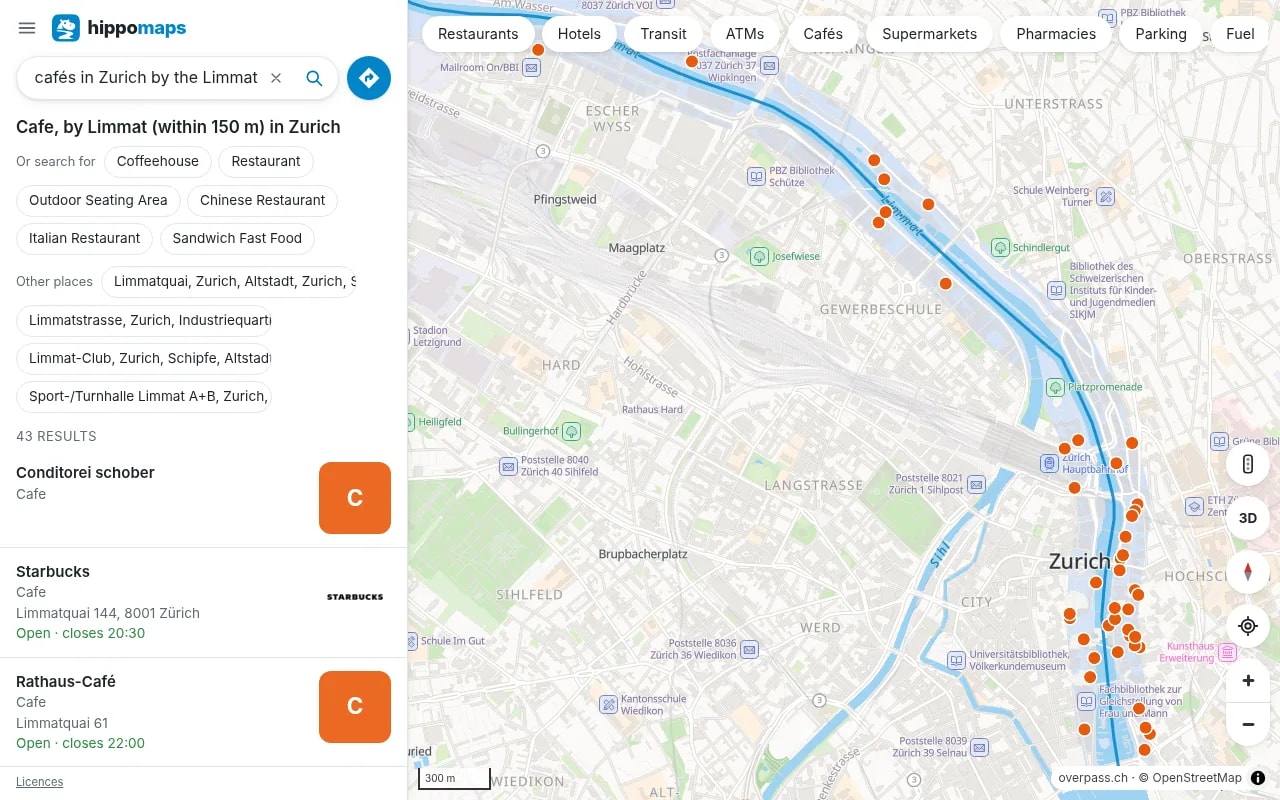
A new tool called hippomaps has been introduced to the Hacker News community, offering fast, deterministic natural language search capabilities for OpenStreetMap data. The project emphasizes a streamlined approach to geospatial querying, though it currently requires JavaScript for full functionality.
Bridging the Gap: Natural Language and Geospatial Data
The introduction of 'hippomaps' on Hacker News marks an interesting development in the intersection of geospatial data and natural language processing (NLP). By offering a deterministic search interface for OpenStreetMap (OSM), the tool attempts to simplify how users interact with complex geographic datasets. OpenStreetMap has long been a vital, community-driven alternative to proprietary mapping services, yet querying its vast, unstructured datasets often requires a steep learning curve involving complex query languages like Overpass QL.
The Mechanics of Deterministic Search
Unlike probabilistic LLM-based search engines that may hallucinate or provide inconsistent results, a deterministic approach ensures that the same input consistently yields the same, verifiable output. This is crucial for map data, where accuracy—such as finding a specific street, amenity, or boundary—is non-negotiable. By leveraging natural language, hippomaps aims to make these precise queries accessible to non-technical users, potentially lowering the barrier to entry for urban planners, researchers, and hobbyists alike.
Challenges of Web-Based Geospatial Tools
As noted in the project details, the tool currently requires JavaScript to function. This dependency highlights a broader trend and challenge in modern web development: the trade-off between rich, interactive user experiences and accessibility. While JavaScript enables the dynamic rendering of map overlays and complex filtering, it also creates hurdles for low-bandwidth environments or users relying on screen readers and non-standard browsing tools. The project's structure—featuring dedicated sections for guides and functionality—suggests a focus on usability, yet it remains tied to the modern browser stack.
Broader Implications for Open Data
OpenStreetMap serves as a foundational layer for the global digital economy. Tools like hippomaps play a significant role in democratizing access to this data. If natural language search becomes the standard for interacting with OSM, it could lead to a surge in community-led mapping projects and more sophisticated data analysis by individuals who previously felt excluded by the technical complexity of geographic information systems (GIS).
Future Trends and Scalability
The future of geospatial search lies in the balance between speed and semantic understanding. As hippomaps evolves, the challenge will be scaling its deterministic model to handle the global scale of OSM data without sacrificing performance. If the developers can maintain this speed while expanding the depth of the search index, it could become an essential utility for those who find traditional GIS software overly bloated or needlessly complex.
Conclusion
In summary, the emergence of hippomaps is a testament to the ongoing innovation within the open-source community. By simplifying the search experience for OpenStreetMap, the tool addresses a tangible pain point for data users. While it is still in its nascent stages, the focus on deterministic, natural language-driven search positions it as a promising experiment in the evolution of how we navigate and analyze the world through open data.