High drama at Rahul-led CEC protest - how it unfolded
Source Entity
AADRITA HALDER
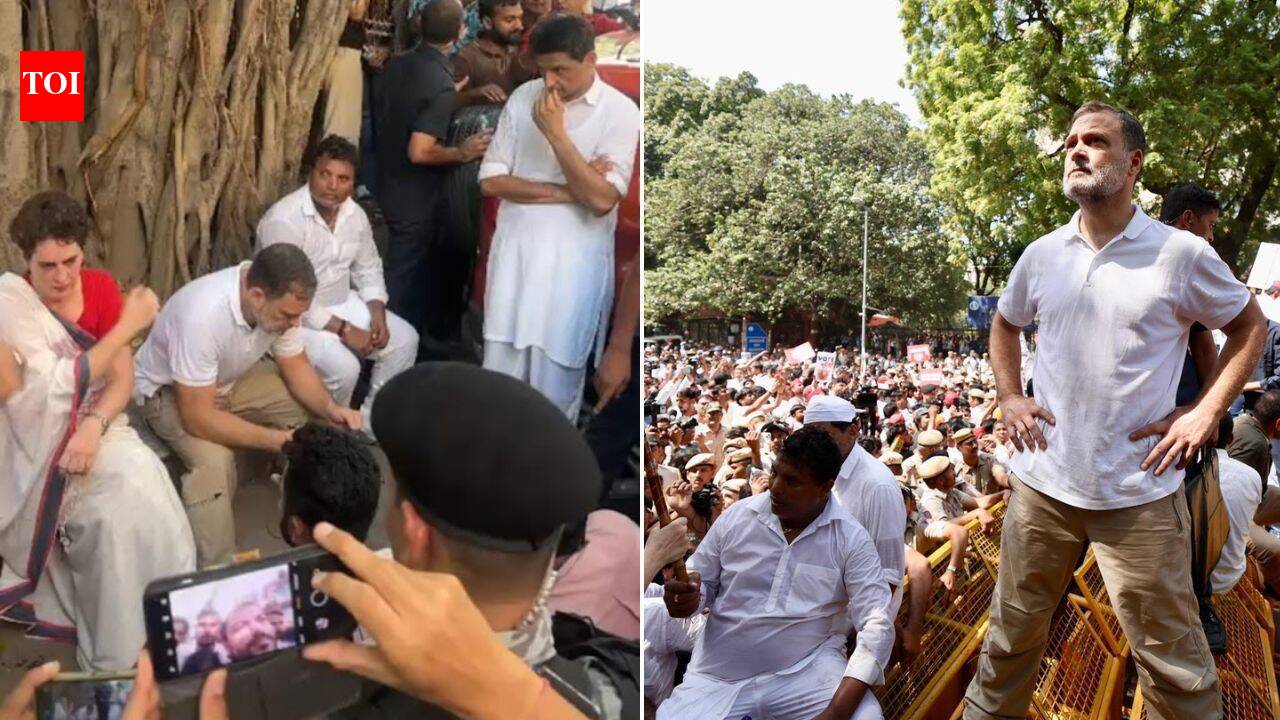
INDIA bloc MPs, led by Rahul and Priyanka Gandhi, staged a protest march toward the Election Commission of India to demand the resignation of CEC Gyanesh Kumar. The demonstration, centered on concerns over the Special Intensive Revision exercise, faced police barricades and resulted in a sit-in protest.
Tensions Escalate: INDIA Bloc Confronts the Election Commission
The political landscape in New Delhi witnessed a significant escalation on Tuesday as leaders from the INDIA bloc, including Leader of Opposition Rahul Gandhi and Congress MP Priyanka Gandhi Vadra, marched from the Parliament House complex toward the Election Commission of India (ECI) headquarters. The march, which aimed to challenge the electoral integrity of the current administration, was met with heavy security deployment and strategic barricading by police forces, effectively halting the movement near the NITI Aayog office.
The Core Grievances: SIR and Institutional Impartiality
At the heart of this confrontation lies the opposition's vocal objection to the Election Commission's Special Intensive Revision (SIR) exercise. The INDIA bloc has expressed deep-seated concerns that the current electoral processes are being manipulated to favor the ruling party. By targeting the office of the Chief Election Commissioner (CEC) Gyanesh Kumar, the opposition is signaling a broader distrust in the constitutional body's neutrality, alleging that the commission has become an extension of partisan political interests.
Symbolism and Protest Tactics
During the demonstration, the imagery used by the opposition was pointed and highly charged. MPs carried cutouts depicting CEC Gyanesh Kumar in an RSS uniform, a move intended to visually link the commission's leadership to the ideological roots of the ruling BJP. Slogans such as “BJP hai CEC hai” and “Democracy not for sale” were chanted, reflecting the intensity of the standoff. The act of sitting on a dharna on the road between NITI Aayog and Akashvani Bhavan served as a physical manifestation of the perceived democratic impasse.
The Security Response and Institutional Friction
The heavy-handed response from law enforcement, involving barricades at multiple strategic points, underscores the heightened sensitivity surrounding institutional accountability in India. By preventing the MPs from reaching the ECI headquarters, the state has effectively created a barrier between the political opposition and the election management body. This friction highlights a growing trend where political grievances are increasingly played out on the streets rather than through traditional parliamentary dialogue.
Broader Implications for Indian Democracy
This event is not merely a localized protest but a reflection of a deepening institutional crisis in India. When the opposition feels compelled to demand the resignation of a constitutional authority, it suggests a breakdown in the bipartisan consensus that typically governs election management. The long-term implications could include a further erosion of public faith in electoral outcomes and a hardening of political stances that may hinder future legislative collaboration.
Future Trends and Outlook
Moving forward, the opposition's focus on the ECI is likely to persist as a central theme in their ongoing political strategy. By framing the CEC as a political actor, the INDIA bloc is attempting to mobilize public opinion around the concept of 'electoral fairness.' As the political climate remains volatile, the ECI will face increasing pressure to demonstrate transparency. Whether this leads to genuine reforms or a continued cycle of protest and confrontation remains the defining question for the stability of India's democratic institutions.
Multiple Citing Sources