How an Ethiopian’s finishing kick outclassed India’s Gulveer Singh in 10,000m
Source Entity
Mihir Vasavda
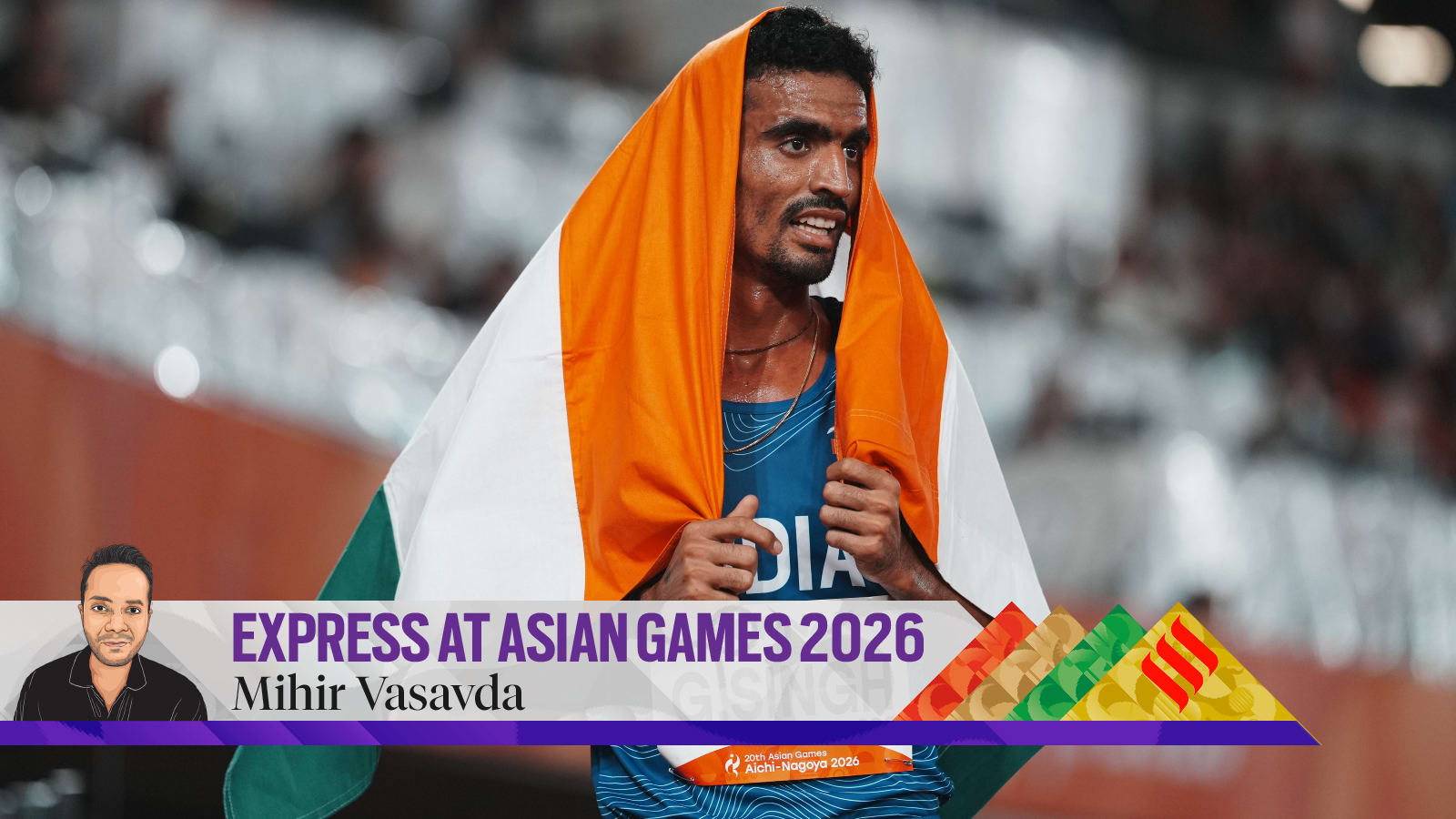
Indian athletes are excelling at the Asian Games, highlighted by a record-breaking gold in shooting and a silver in the 10,000m. Meanwhile, Tejaswin Shankar's successful transition to decathlon showcases the rigorous physical evolution required for elite multi-event competition.
A Golden Redemption: Resilience in Shooting
The recent success of Suruchi Phogat and Kamaljeet Singh at the Asian Games serves as a powerful testament to the psychological fortitude required in elite sports. After suffering personal disappointment in their individual events, the duo found themselves paired together in the 10m air pistol mixed team event. Their victory, which involved setting an Asian Games record with 484.6 points, highlights the importance of mental resets and team dynamics in overcoming individual setbacks.
The Contrast of Preparation and Recovery
The divergent pre-competition experiences of Phogat, who slept for 13 hours, and Singh, who managed only four hours of restless sleep, illustrate that there is no singular path to peak performance. While traditional sports science often emphasizes uniform recovery protocols, the ability of these two athletes to synchronize their efforts despite such starkly different states of physical readiness underscores the adaptability inherent in world-class competitors.
Athletics Surge: A Broader Trend
Beyond the shooting range, India’s presence on the podium is expanding across diverse disciplines. Gulveer Singh’s silver medal in the 10,000m, coming on the heels of Seema Kumari’s bronze in the same event, signals a growing depth in Indian long-distance running. This trend suggests that the nation’s athletic infrastructure and training pipelines are yielding consistent results in endurance sports, moving beyond historical reliance on a few isolated stars.
The Physiological Evolution of Tejaswin Shankar
In a different sphere of athletic development, Tejaswin Shankar’s transition from a high jumper to a decathlete offers a masterclass in sport-specific physical engineering. Since his arrival at Kansas State University in 2017, Shankar has undergone a deliberate transformation. Increasing his weight from 78kg to 90kg while simultaneously lowering his body fat percentage reflects a strategic shift in training focus, moving away from the lean, high-center-of-mass requirements of high jumping toward the robust, muscular endurance needed for the ten-event gauntlet of the decathlon.
Strength, Conditioning, and Future Implications
Expert insights from figures like Wayne Lombard reveal that such transitions are not merely about effort but about radical anatomical shifts. By modifying his muscle mass and aerobic capacity, Shankar has effectively rebuilt his body to withstand the varied demands of sprinting, throwing, and jumping. His success is indicative of a broader professionalization in Indian sports, where athletes are increasingly utilizing sophisticated data and science-led training to extend their competitive lifespans.
Conclusion: A New Era for Indian Sports
Whether through the emotional resilience of shooters or the systematic physical transformation of multi-event track athletes, India's performance at the Asian Games marks a significant evolution in its sporting landscape. These achievements are not isolated incidents but the result of improved mental conditioning, strategic team pairings, and scientific approaches to physical development. As these athletes continue to refine their craft, the precedent set by these records suggests that India's trajectory on the global stage is firmly pointed upward.
Multiple Citing Sources