ISRO successfully carries out tests of Gaganyaan crew module systems
Source Entity
India Latest News: Top National Headlines Today & Breaking News | The Hindu
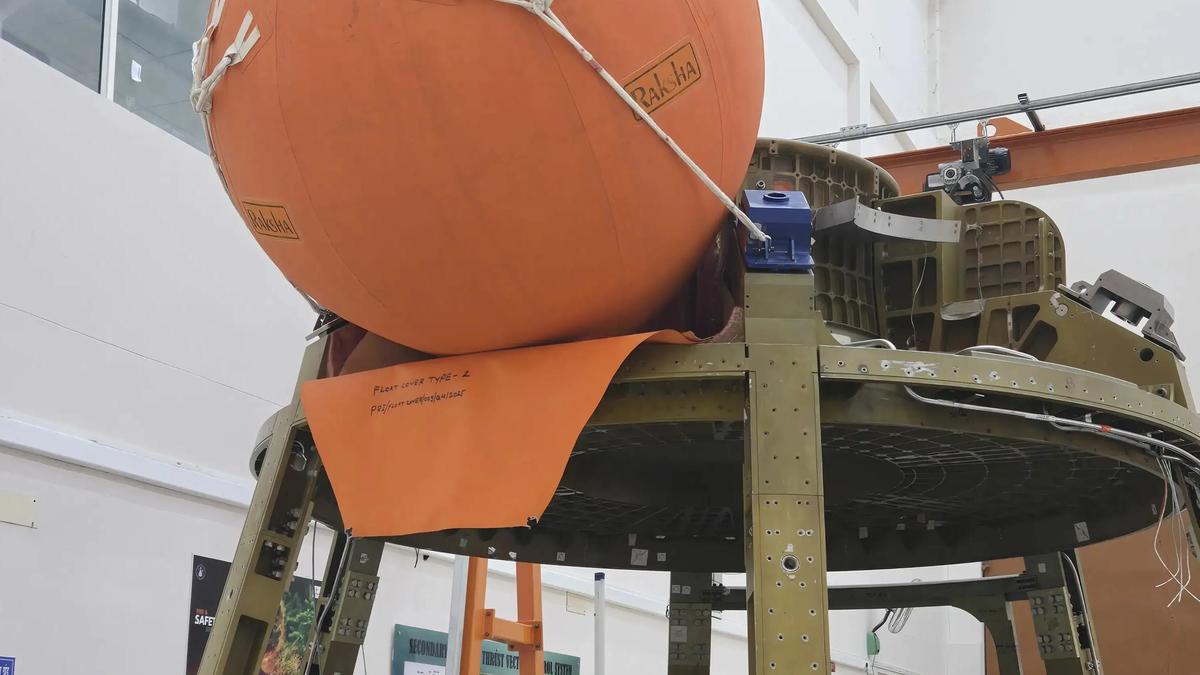
One of the tests involved separation of the ‘umbilical mechanism’ that serves as a link between the crew module, where astronauts live, and the service module that provides propulsion, says the agency
Advancing India's Human Spaceflight: Analysis of ISRO's Gaganyaan Module Tests
The Indian Space Research Organisation (ISRO) has reached a pivotal technical milestone in its ambitious Gaganyaan mission with the successful testing of the crew module's systems. Specifically, the agency confirmed the successful separation of the ‘umbilical mechanism,’ a critical component that serves as the lifeline between the crew module—the pressurized habitat for astronauts—and the service module, which houses the propulsion and power systems. This test is not merely a mechanical success but a validation of the complex synchronization required to ensure astronaut safety during the most volatile phases of a space mission.
The Technical Significance of the Umbilical Mechanism
To understand the gravity of this test, one must analyze the role of the umbilical mechanism. In spaceflight architecture, the umbilical serves as the conduit for electricity, data transmission, and fluid transfer between different stages of the spacecraft. For the Gaganyaan mission, the seamless separation of this link is non-negotiable. If the umbilical fails to detach cleanly during the descent or transition phases, it could lead to catastrophic structural failure or prevent the crew module from correctly orienting itself for re-entry into Earth's atmosphere. By successfully executing this separation, ISRO has mitigated one of the primary risks associated with the interface between the habitat and the propulsion systems.
Historical Context and the Path to Human Rating
India's journey toward human spaceflight is a transition from being a provider of satellite launch services to developing 'human-rated' technology. Unlike cargo missions, human-rated systems require a significantly higher margin of safety and redundancy. The Gaganyaan program builds upon decades of experience with the Polar Satellite Launch Vehicle (PSLV) and the Geosynchronous Satellite Launch Vehicle (GSLV), but the current tests represent a leap into a new domain. The integration of the LVM3 rocket with a specialized crew module requires rigorous testing of life support systems and escape mechanisms, making the umbilical test a critical link in the chain of reliability.
Strategic and Geopolitical Implications
Successfully executing these tests places India on the verge of becoming only the fourth nation to independently launch humans into space, joining the ranks of the United States, Russia, and China. Beyond the prestige, this capability grants India strategic autonomy in space exploration. The ability to maintain a human presence in Low Earth Orbit (LEO) allows for sophisticated microgravity experiments and the development of indigenous space technologies that cannot be replicated by robotic probes. This strengthens India's position in the global space economy and enhances its capability to collaborate on international missions, such as the Artemis accords or future lunar gateways.
Risk Mitigation and Engineering Rigor
The focus on the crew module systems highlights ISRO's iterative approach to safety. Before a human ever boards the craft, the agency is conducting a series of unmanned flights and subsystem tests to ensure that every failure point is identified. The umbilical separation test is part of a broader suite of validations, including the Crew Escape System (CES) and the thermal protection shields. By isolating the separation mechanism for testing, ISRO is applying a 'fail-safe' philosophy, ensuring that the mechanical detachment occurs precisely when commanded, regardless of the external environmental pressures or gravitational forces acting on the craft.
Future Trends: Toward a Space Station and Beyond
This success paves the way for the eventual manned mission, but the long-term vision extends far beyond a single trip to orbit. The mastery of crew module separation and docking is a prerequisite for the 'Bharatiya Antariksha Station,' India's planned indigenous space station. Once the Gaganyaan crew module is fully operational, the focus will likely shift toward long-duration habitation and the ability to ferry crews back and forth from orbit. This creates a scalable infrastructure that will eventually support India's goal of landing a human on the moon by 2040.
Conclusion: A Giant Leap for Indian Space Science
In summary, the successful test of the umbilical mechanism is a vital victory for ISRO, ensuring that the critical link between the crew's living quarters and the spacecraft's engine can be severed safely and reliably. While it may seem like a niche engineering detail, it is a foundational element of mission success. As ISRO continues to refine these systems, the transition from unmanned test flights to a crewed mission becomes a tangible reality, signaling a new era of scientific exploration and technological sovereignty for India.
Verification Required?