On Second Thought, Never Mind: Here’s Why ORCL’s Larry Ellison Just Canceled $7.5 Billion Stock Sale
Source Entity
Yahoo Finance
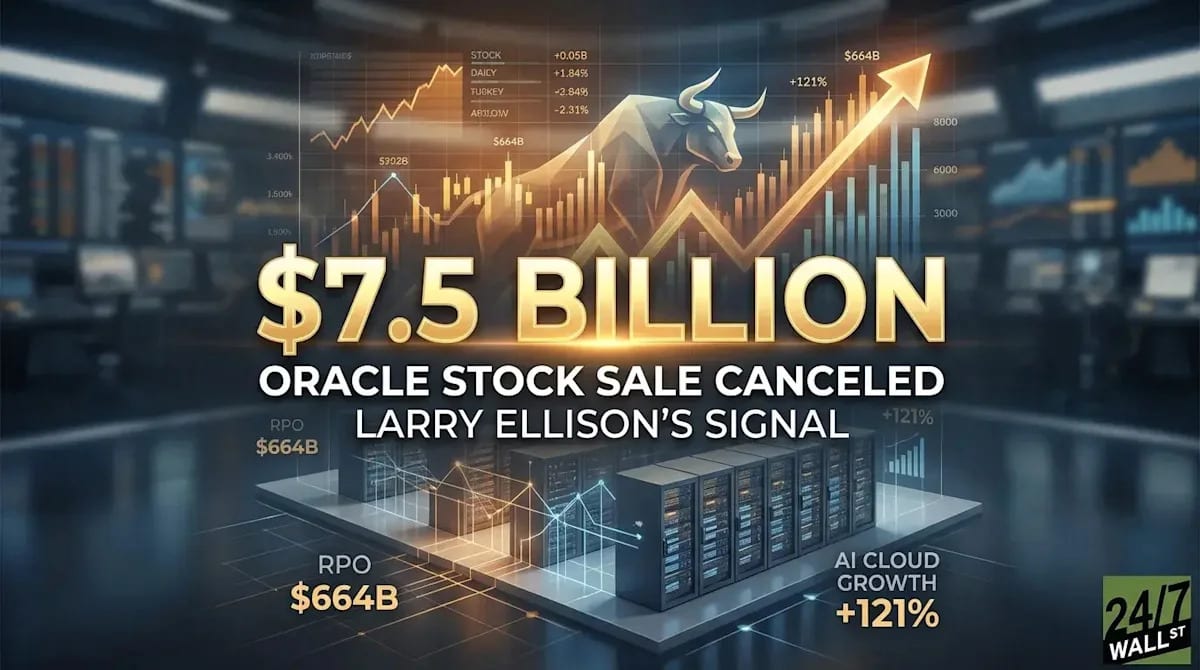
Oracle co-founder Larry Ellison has abruptly canceled a plan to sell 50 million shares worth $7.5 billion. The decision suggests confidence in the company's valuation despite recent stock volatility and highlights regulatory differences between US and European trading rules.
The Sudden Reversal: Larry Ellison Abandons $7.5 Billion Stock Sale
In a move that has captured the attention of market analysts and investors alike, Oracle co-founder and Chief Technology Officer Larry Ellison has officially canceled a high-stakes plan to divest 50 million shares of his company. The proposed sale, which would have been valued at approximately $7.5 billion based on current market prices, was terminated just one day after it was publicly disclosed via a regulatory filing. Oracle confirmed that no shares were sold under the 10b5-1 trading plan, which had been established in June and was slated to remain active until October 24.
Understanding the 10b5-1 Trading Mechanism
The trading plan in question, known as a Rule 10b5-1 plan, is a common mechanism used by corporate executives in the United States to sell shares without violating insider trading laws. By setting up a pre-determined schedule for trades, executives can demonstrate that they are not acting on material, non-public information. However, the abrupt nature of this cancellation—occurring within 24 hours of disclosure—has sparked significant debate regarding the flexibility of these plans compared to more rigid regulatory frameworks found in Europe, where similar executive trading windows are often more strictly governed by market-abuse regulations.
Market Valuation and Strategic Confidence
Market observers suggest that Ellison’s decision to pull the plug on the sale may signal a strong belief that Oracle’s stock is currently undervalued. The company has experienced a 22% decline in share price year-to-date, a trend that may have prompted the billionaire to retain his holdings rather than liquidate at a lower valuation. This sentiment is bolstered by the company's pivot toward artificial intelligence; Oracle has successfully transitioned from a legacy software provider into a critical pillar of AI infrastructure. With the AI cloud business reporting a 121% year-over-year growth, Ellison’s move could be interpreted as a long-term bet on the company’s future revenue potential.
Operational Pressures and Financial Context
Despite the optimism surrounding its AI initiatives, Oracle is not without its challenges. The company is currently navigating a period of increased job-cut costs, which has weighed on investor sentiment. Furthermore, while the company has projected full-year revenue guidance of $90 billion and reported substantial Remaining Performance Obligations of $664 billion, analysts remain cautious about the broader competitive landscape. The cancellation of the stock sale serves as a critical signal to the market that the company's founder, who still controls over 40% of the firm, remains deeply committed to its long-term strategic trajectory.
Future Implications and Investor Outlook
Moving forward, the decision by the 82-year-old executive to retain his shares removes a potential source of downward pressure on Oracle’s stock price. By opting out of a multi-billion dollar liquidation, Ellison has effectively signaled to shareholders that he views the current market volatility as a temporary hurdle rather than a reflection of the company's underlying health. As Oracle continues to scale its AI infrastructure, the market will likely look to Ellison's continued ownership as a bellwether for the company's performance in an increasingly competitive cloud-computing sector.
Conclusion
Ultimately, Larry Ellison’s reversal on the $7.5 billion stock sale is more than just a procedural change; it is a profound vote of confidence in Oracle’s future. By walking away from a massive cash-out, Ellison has underscored his role as a long-term architect of the company’s transition into the AI era. While the regulatory nuances of 10b5-1 plans will continue to be a topic of discussion, the primary takeaway for the market is that the founder's interests remain firmly aligned with the company’s long-term growth and stability.