No one has right to pollute rivers in name of religion: Court flags dumping after rituals
Source Entity
Vineet Upadhyay
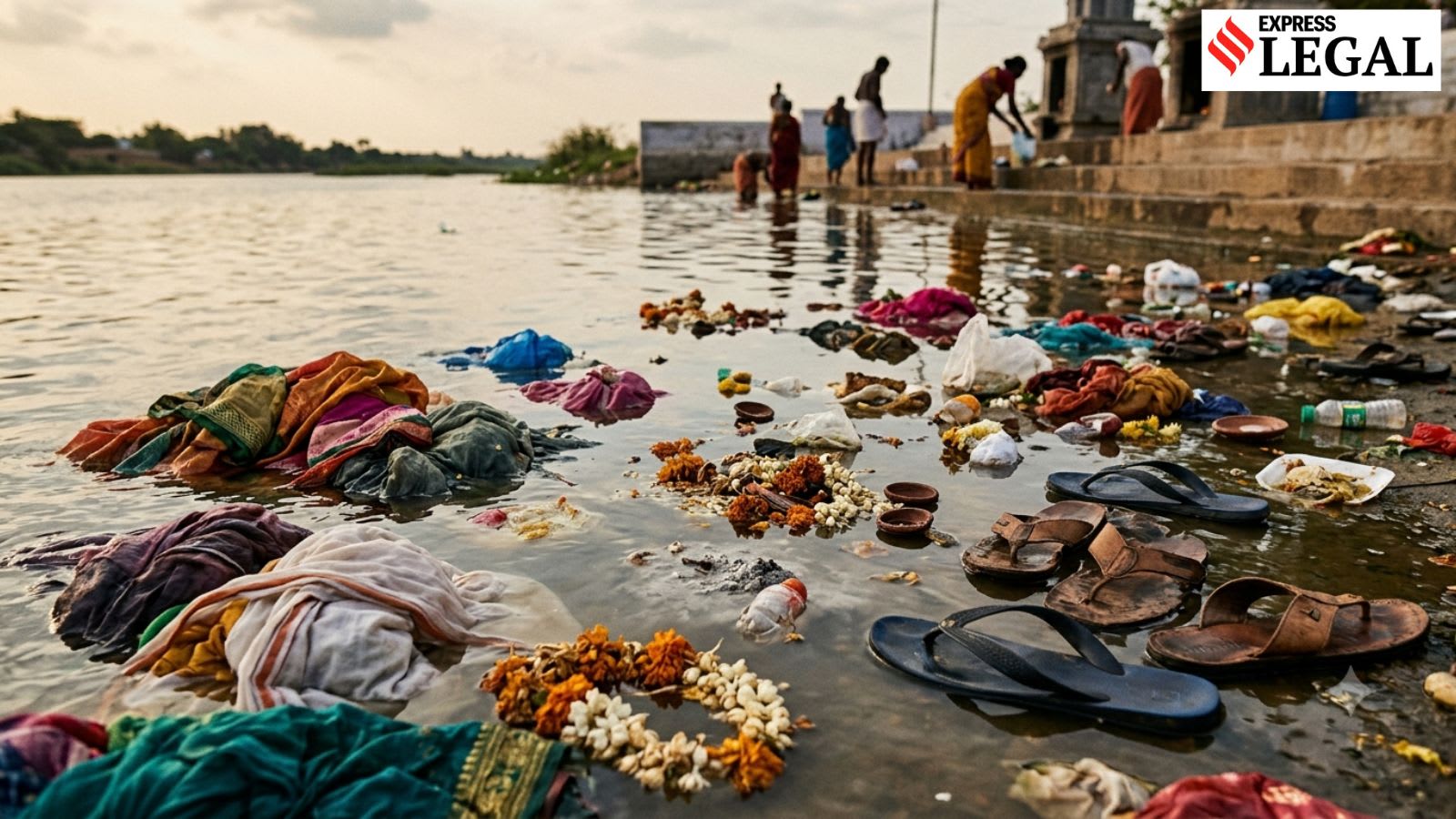
Moving to curb the practice of devotees throwing clothes, slippers and other ritual items into the Tamirabarani river after performing last rites and ancestral rituals, the Madras High Court has held ...
Balancing Faith and Ecology: The Madras High Court's Stand on River Pollution
In a significant judicial intervention, the Madras High Court has addressed the intersection of religious tradition and environmental conservation. The court explicitly ruled that no individual or community possesses the right to pollute rivers under the guise of religious observance. This decision comes as a direct response to the persistent practice of devotees discarding ritual items—including clothing, slippers, and various offerings—into the Tamirabarani river following the performance of last rites and ancestral rituals. By prioritizing the ecological health of the water body over traditional disposal methods, the court has reinforced the principle that environmental sustainability is a non-negotiable public good.
The Environmental Toll of Ritualistic Dumping
Impact of Non-Biodegradable Waste
The core of the court's concern lies in the nature of the materials being discarded. While some ritual offerings are organic, the inclusion of synthetic clothing and rubber slippers introduces non-biodegradable pollutants into the aquatic ecosystem. These materials do not decompose; instead, they break down into microplastics that contaminate the water column and enter the food chain, affecting fish populations and the birds that prey on them. The accumulation of such debris also obstructs the natural flow of the river, potentially exacerbating flooding during monsoon seasons and creating stagnant pockets where pollutants concentrate.
The Vitality of the Tamirabarani River
To understand the gravity of this ruling, one must consider the role of the Tamirabarani river. As a perennial river in Tamil Nadu, it serves as the lifeline for thousands of farmers and residents who rely on it for irrigation and drinking water. When ritual waste is dumped upstream, it compromises the water quality for everyone downstream. The court's intervention is not merely about aesthetics or a critique of faith, but a necessary measure to protect a critical public resource from systemic degradation caused by outdated disposal habits.
Legal Precedents and the Public Trust Doctrine
This ruling aligns with the broader legal framework of the 'Public Trust Doctrine,' which posits that certain resources—like air, sea, and rivers—are preserved for public use and that the state has a duty to protect them. By flagging the dumping of ritual items, the Madras High Court is applying the logic that the 'Right to Religion' guaranteed under the Indian Constitution is not absolute and cannot be exercised in a manner that violates the 'Right to Life,' which includes the right to a clean and healthy environment. This creates a legal precedent where environmental laws take precedence over customs that cause tangible ecological harm.
Social Implications and the Path Forward
Changing deep-seated religious behaviors is a complex sociological challenge. For generations, the act of releasing items into a river has been seen as a symbolic transition or a gesture of surrender to the divine. However, the court's ruling serves as a catalyst for a necessary cultural shift. To ensure compliance, local authorities and religious leaders must collaborate to provide sustainable alternatives. This could include the installation of designated disposal bins for ritual items or the promotion of biodegradable materials that do not harm the river's chemistry.
Future Trends in Environmental Jurisprudence
Looking ahead, this decision is likely to trigger similar legal scrutinies across other holy rivers in India, such as the Ganga and the Yamuna, where similar practices are prevalent. We can expect an increase in 'green litigation' where courts act as the primary enforcers of environmental standards against traditional practices. The trend suggests a movement toward 'Eco-Spirituality,' where the act of worship is redefined to include the protection of the natural elements being honored. In the long term, the integration of environmental education into religious discourse will be essential to prevent the riverbeds of India from becoming repositories of ritual waste.
Conclusion
The Madras High Court's ruling is a landmark assertion that the sanctity of a river is maintained by its purity, not by the rituals performed upon its banks. By decoupling faith from pollution, the court has set a clear boundary: religious freedom ends where environmental destruction begins. The protection of the Tamirabarani river now depends on the willingness of the community to evolve their traditions in harmony with the needs of the planet.