Migrants using longer, more dangerous routes across Channel
Source Entity
BBC News
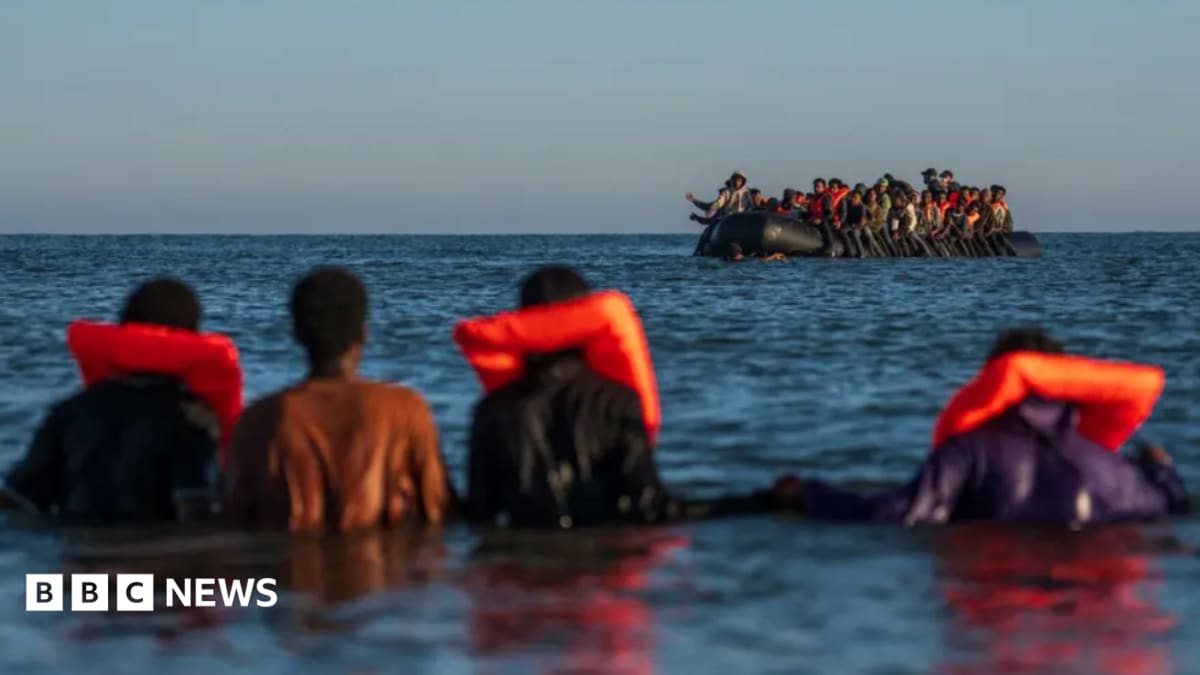
Migrants are increasingly utilizing longer, more dangerous routes across the English Channel, shifting away from traditional departure points near Calais. While overall arrival figures have decreased, the widening geographical scope of smuggling operations presents new challenges for border authorities.
The Shifting Geography of Channel Crossings
The English Channel remains a focal point of intense geopolitical and humanitarian debate as migration patterns undergo a significant spatial shift. Recent reports indicate that while the total volume of small boat crossings has seen a decline, the routes being utilized are becoming increasingly perilous. Migrants, often driven by the desperation of their circumstances, are now attempting departures from locations further south and west of the traditional hubs of Calais and Dunkirk, including beaches in Normandy.
The Escalation of Danger
This shift to longer, more hazardous routes is exemplified by a recent incident where a vessel spent over 30 hours at sea before being intercepted by the UK Border Force. Such prolonged exposure to the volatile conditions of the Channel significantly increases the risk of loss of life. Authorities in the Seine-Maritime region have reported a marked increase in attempts, with 58 recorded this year compared to 30 in the previous year, highlighting that the danger is not merely a theoretical risk but a growing operational reality.
Government Strategy and Border Security
The UK government maintains that its current policies are effectively 'bearing down' on illegal crossings, citing a sharp drop in overall arrivals this year. This narrative of success is predicated on increased surveillance and enforcement. However, the widening of the smuggling corridor suggests that enforcement pressure in traditional hotspots is prompting criminal networks to adapt by seeking less monitored stretches of coastline, thereby forcing migrants into more dangerous waters.
The Mechanics of Smuggling Networks
Smuggling networks are highly adaptive entities. As authorities reinforce security at primary departure points, these networks exploit the vastness of the French coastline to evade detection. The recent report of a boat being intercepted near the Isle of Wight, following a long journey from the continent, underscores the logistical evolution of these operations. This movement toward the western Channel complicates the coordination between French and British authorities, as the search-and-rescue perimeter expands significantly.
Humanitarian and Policy Implications
The humanitarian stakes of these longer journeys are profound. Longer time at sea leaves migrants vulnerable to hypothermia, dehydration, and the unpredictable maritime weather of the Channel. Furthermore, the expansion of the smuggling footprint creates a 'whack-a-mole' dynamic for border agencies, where securing one beach merely displaces the activity to another. Moving forward, the challenge for both French and British authorities will be to address these evolving tactical shifts without compromising the safety of those at sea.
Future Trends in Channel Migration
Looking ahead, it is likely that the trend of decentralized departure points will continue as long as the demand for transit remains high. If authorities continue to focus exclusively on tightening traditional ports, the smuggling routes will likely continue to drift further west. This necessitates a more comprehensive approach that combines intelligence-led disruption of criminal networks with enhanced maritime rescue capabilities to mitigate the life-threatening risks posed by these longer, more desperate voyages.