Millcreek Fire update: Huge blaze at Parley’s Historic Nature Park across from Tanner Park in Utah; scary videos emerge
Source Entity
Latest News: Today's Latest News Headlines from India & World | Hindustan Times | Hindustan Times
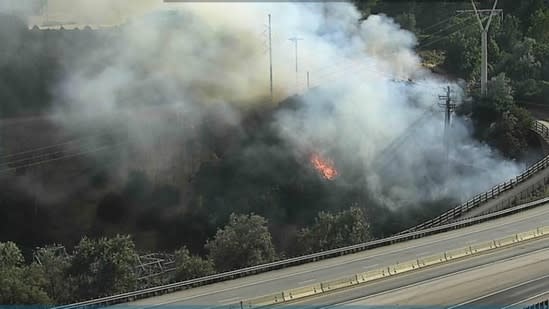
A massive vegetation fire was reported on Sunday at Parley's Historic Nature Park in Utah and was dubbed the Millcreek Fire.
Analysis of the Millcreek Fire at Parley's Historic Nature Park
On a recent Sunday, Utah witnessed the outbreak of a massive vegetation fire known as the Millcreek Fire. The blaze centered on Parley's Historic Nature Park, a location situated directly across from Tanner Park. The event gained rapid attention not only through official reports but through the dissemination of alarming videos showing the scale and intensity of the fire, highlighting the volatility of the vegetation in the region.
The Danger of the Wildland-Urban Interface
One of the most critical aspects of the Millcreek Fire is its location. Parley's Historic Nature Park exists within a 'wildland-urban interface,' where undeveloped natural land meets residential and recreational areas. The proximity to Tanner Park suggests that the fire was not isolated in a remote wilderness but occurred in a space frequently used by the public. When vegetation fires occur in such areas, the risk of rapid spread to residential structures increases significantly, necessitating swift evacuation orders and high-intensity firefighting efforts to create containment lines.
Ecological and Historical Implications
As the event occurred within a 'Historic Nature Park,' the implications extend beyond immediate safety to ecological loss. Nature parks in Utah often preserve specific native flora and fauna that are critical to the local ecosystem. A massive vegetation fire can strip the land of its organic topsoil and destroy old-growth vegetation that takes decades to recover. Furthermore, the 'historic' designation implies that the land may hold cultural or archaeological significance, which could be permanently damaged by the extreme heat of a large-scale blaze.
The Role of Real-Time Digital Documentation
The mention of "scary videos" emerging from the scene underscores the modern role of social media in emergency management. While official channels provide verified updates, citizen-captured footage often provides the first glimpse of the fire's scale. This real-time documentation can serve as a double-edged sword: it provides immediate situational awareness for residents in the vicinity, but it can also incite panic if the footage is shared without proper context or updated safety instructions from local authorities.
Regional Context and Climate Vulnerability
Utah, like much of the American West, has been grappling with prolonged periods of drought and rising average temperatures. These conditions turn native grasses and shrubs into highly combustible fuel, making the region a tinderbox during the dry season. The Millcreek Fire is a manifestation of this broader environmental trend, where vegetation fires are becoming more frequent and more intense. The speed at which this blaze became "massive" is characteristic of current climate patterns in the Intermountain West.
Future Trends in Fire Management
Looking forward, events like the Millcreek Fire will likely prompt local governments to re-evaluate land management strategies around Parley's Historic Nature Park and similar sites. We can expect an increase in prescribed burns to reduce fuel loads and the implementation of more rigorous fire-wise zoning laws for properties adjacent to nature parks. Additionally, the integration of AI-driven early detection systems—such as satellite monitoring and smoke-detection cameras—will become essential to prevent small vegetation sparks from evolving into massive blazes.
Conclusion
The Millcreek Fire serves as a stark reminder of the precarious balance between urban expansion and natural preservation in Utah. The blaze at Parley's Historic Nature Park not only threatened local biodiversity and historic landscapes but also highlighted the vulnerability of the community to rapid-onset vegetation fires. As climate volatility increases, the lessons learned from the response to this fire will be vital for the future protection of Utah's natural landmarks.
Verification Required?