How Narendra Modi government mounts a new bid for women’s Bill: DMK, NCP(SP) outreach to abstentions
Source Entity
Liz Mathew
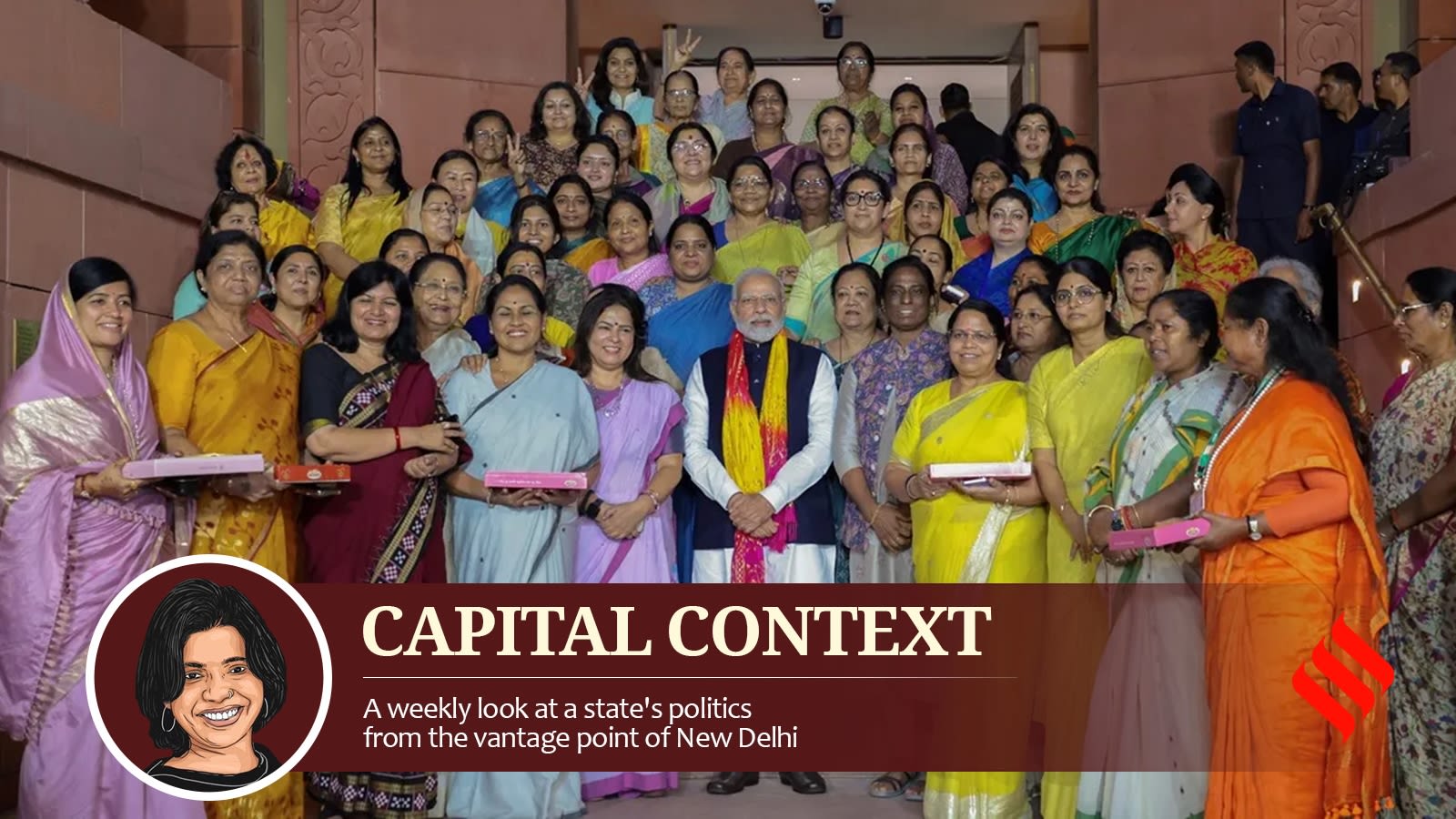
With the Monsoon Session of Parliament scheduled to begin on July 20, the BJP-led NDA government has stepped up its efforts to muster a two-thirds majority to push a fresh constitutional amendment Bil...
Strategic Maneuvering for Gender Parity: The Push for the Women's Reservation Bill
The Indian government, led by Prime Minister Narendra Modi and the NDA coalition, is currently engaged in a high-stakes political exercise to ensure the passage of a constitutional amendment aimed at reserving seats for women in the legislature. With the Monsoon Session of Parliament slated to begin on July 20, the government's primary objective is to secure a two-thirds majority, a rigorous threshold required for any constitutional change. The current strategy involves targeted outreach to opposition entities, most notably the DMK and the NCP(SP), who have previously shown hesitation or opted for abstention.
The Mathematical Challenge of a Two-Thirds Majority
Passing a constitutional amendment is fundamentally different from passing a standard bill; it requires a supermajority that transcends simple partisan lines. While the NDA holds a significant number of seats, it cannot reach the two-thirds mark in isolation. This necessity has forced the government into a mode of 'consensus politics,' where it must negotiate with regional powerhouses. The focus on the DMK and NCP(SP) is strategic; these parties hold pivotal blocks of votes that could tip the scale. By courting those who have abstained in the past, the government hopes to convert neutrality into passive or active support, thereby neutralizing the risk of the bill being blocked by a coordinated opposition front.
Addressing Opposition Concerns and Regional Dynamics
The reluctance of parties like the DMK and NCP(SP) often stems from deeper structural concerns rather than a blanket opposition to women's empowerment. A recurring point of contention in the discourse surrounding the Women's Reservation Bill has been the demand for a 'quota within a quota'—specifically, reservations for women from Other Backward Classes (OBCs) and minorities. By engaging in direct outreach, the Modi government is likely attempting to bridge the gap between the bill's current framework and the specific demands of these regional parties. The success of this outreach depends on whether the government can offer sufficient assurances that the bill will be inclusive and representative of India's diverse social strata.
Historical Context and the Long Road to Legislation
To understand the urgency of this current bid, one must look at the decades-long history of the Women's Reservation Bill. For years, similar proposals languished in Parliament, often defeated by the very political class that would be most affected by the redistribution of seats. The current push is not merely a legislative goal but a symbolic move to signal a paradigm shift in Indian governance. By framing this as a 'Nari Shakti' (Women's Power) initiative, the government is attempting to create a political environment where opposing the bill becomes a liability for any party claiming to support gender equality.
Broader Implications for Indian Democracy
If successful, this constitutional amendment will fundamentally alter the demographic composition of the Lok Sabha and state assemblies. Increasing the number of women legislators is expected to shift the legislative focus toward issues such as maternal health, childcare, and gender-based violence, which have historically been underrepresented in policy debates. Furthermore, it would challenge the traditional patriarchal structures of political party nominations, forcing parties to cultivate and promote female leadership from the grassroots level up, rather than relying on 'dynastic' female candidates.
Predicting Future Trends and Political Outcomes
Looking ahead, the outcome of the Monsoon Session will serve as a litmus test for the NDA's ability to build a broad-based coalition for social reform. If the government successfully brings the DMK and NCP(SP) on board, it will demonstrate a rare moment of bipartisan agreement on a landmark social issue. However, if the outreach fails, the government may be forced to delay implementation or modify the bill further to appease critics. Regardless of the immediate result, the momentum generated by this bid ensures that women's representation will remain a central pillar of the political discourse leading up to future electoral cycles.
Conclusion
The Modi government's current outreach to the DMK and NCP(SP) is a calculated move to overcome the mathematical hurdles of a constitutional amendment. While the goal is the legislative passage of the women's reservation bill, the process reveals the complex interplay between national ambition and regional political demands. The upcoming Monsoon Session will determine whether India is ready to formally institutionalize gender parity in its highest legislative bodies.