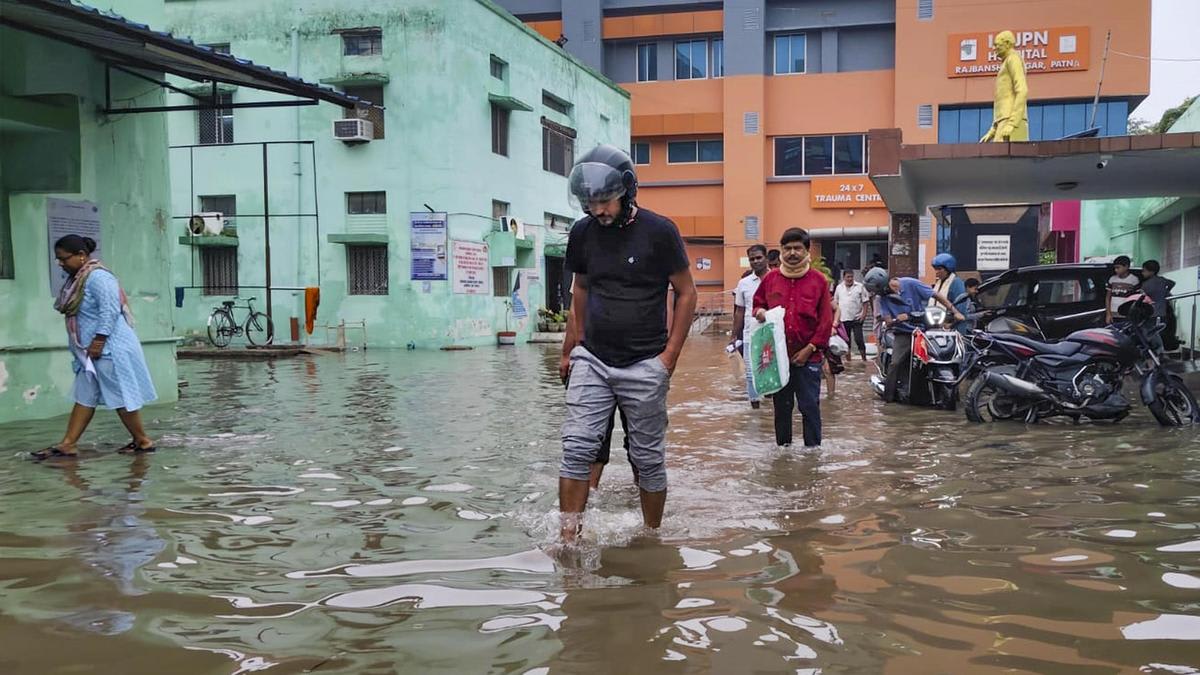
Monsoon tracker LIVE: Cloudburst floods hotels, houses in Pahalgam; heavy to very heavy rain lash parts of India
Source Entity
India Latest News: Top National Headlines Today & Breaking News | The Hindu
Continuous heavy rainfall on July 11 triggered a major landslide scare in Shimla’s Sanjauli area, forcing residents of Bothwell Estate to remain outdoors since around 3 a.m amid fears that their houses could collapse
Monsoon Fury: Analyzing the Climate Crisis in Northern India
The Indian monsoon, while essential for the nation's agrarian economy, has once again manifested its destructive potential across the fragile landscapes of the Himalayas. Recent reports indicate a series of high-intensity weather events, most notably a cloudburst in Pahalgam and a severe landslide threat in Shimla. These incidents are not isolated occurrences but are symptomatic of a broader pattern of climatic instability affecting the Jammu & Kashmir and Himachal Pradesh regions. The suddenness of these events leaves local populations and infrastructure with little time to react, resulting in significant displacement and economic loss.
The Pahalgam Cloudburst and Infrastructure Vulnerability
In Pahalgam, the occurrence of a cloudburst—a localized event of extreme precipitation—has led to flash flooding that has inundated both residential houses and commercial hotels. The impact on the hospitality sector is particularly concerning, as Pahalgam is a primary hub for tourism. When hotels are flooded, it not only disrupts the local economy but also poses an immediate risk to tourists who may be unfamiliar with the terrain and emergency protocols. The surge of water typically carries debris and silt, which can compromise the structural integrity of buildings, making the recovery process slow and costly.
The Sanjauli Landslide Scare: A Human Crisis
Simultaneously, in Shimla's Sanjauli area, the situation at Bothwell Estate highlights the precarious nature of urban settlement in hill stations. The report of residents being forced to remain outdoors since 3 a.m. on July 11 underscores a state of high alert and psychological distress. Landslide scares in such densely populated areas are often the result of soil saturation, where continuous heavy rainfall lubricates the slip planes of the mountain slopes. The fear of total collapse is a rational response to the geological instability that characterizes the Shimla ridge and its surrounding valleys, where unplanned expansion has often ignored natural drainage patterns.
Geological Context and Anthropogenic Factors
The recurring nature of these disasters in the Himalayas can be attributed to a combination of natural geological volatility and human interference. The Himalayas are 'young' mountains, characterized by steep slopes and seismic activity, making them naturally prone to landslides. However, the intensity of the current crisis is exacerbated by deforestation and the construction of heavy concrete structures on unstable slopes. In areas like Sanjauli, the removal of deep-rooted vegetation to make way for estates and roads reduces the soil's cohesive strength, turning a heavy rain event into a potential catastrophe.
Broader Implications and Future Trends
Looking forward, these events suggest a trend toward more frequent and erratic 'extreme weather events' rather than steady seasonal rain. Climate change is increasing the moisture-holding capacity of the atmosphere, which leads to more concentrated bursts of rainfall (cloudbursts) rather than distributed showers. For the Northern hill states, this means that traditional building codes and disaster management strategies are becoming obsolete. There is an urgent need for 'climate-resilient infrastructure' and stricter zoning laws to prevent residential construction in high-risk landslide zones.
Conclusion: The Path Toward Resilience
In summary, the flooding in Pahalgam and the evacuation in Shimla serve as a stark reminder of the vulnerability of India's mountain ecosystems. While immediate relief and evacuation efforts are critical for saving lives, the long-term solution lies in integrating geological surveys with urban planning. Until there is a shift toward sustainable development that respects the fragile topography of the Himalayas, the annual monsoon will continue to bring a cycle of fear and destruction to these picturesque but perilous regions.
Verification Required?