Don’t surrender the environment
Source Entity
Latest News: Today's Latest News Headlines from India & World | Hindustan Times | Hindustan Times
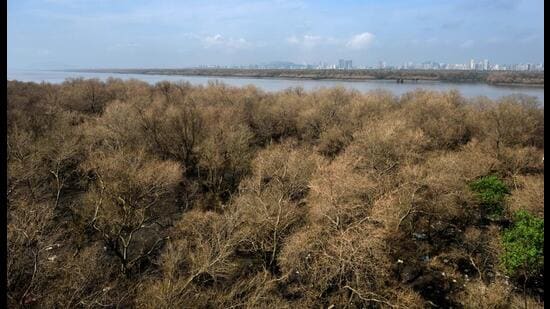
Approvals given by the National Board for Wildlife to projects in forest areas must demonstrate robust assessment
Safeguarding the Wild: The Imperative of Robust NBWL Assessments
The tension between industrial expansion and ecological preservation has reached a critical juncture in India's developmental trajectory. The call to "not surrender the environment" serves as a poignant reminder that the National Board for Wildlife (NBWL), as the apex body for wildlife conservation, holds a fiduciary duty to the planet. When developmental projects—ranging from highways and dams to mining operations—seek entry into protected forest areas, the approval process cannot be a mere bureaucratic formality. Instead, it must be a rigorous, science-based interrogation of the project's long-term viability and its impact on biodiversity.
The Critical Role of the National Board for Wildlife
Oversight and Governance
The NBWL is tasked with the monumental responsibility of ensuring that the biological integrity of wildlife sanctuaries and national parks remains intact. In the context of the provided report, the emphasis on "robust assessment" suggests a concern that current approval mechanisms may be too lenient or insufficiently scrutinized. A robust assessment involves more than just a checklist; it requires comprehensive Environmental Impact Assessments (EIAs) that account for migratory corridors, apex predator territories, and the delicate balance of local flora and fauna. Without this, the board risks granting permissions that lead to irreversible habitat fragmentation.
The Risk of Habitat Fragmentation
One of the most significant dangers of poorly assessed forest projects is habitat fragmentation. When a road or a power line bisects a forest, it does not simply take up the space of the asphalt; it creates an "edge effect" that alters the microclimate and exposes deep-forest species to external threats. By demanding a more stringent assessment process, the call for environmental vigilance aims to ensure that the NBWL considers the cumulative impact of multiple projects rather than viewing each proposal in isolation, which often leads to a "death by a thousand cuts" for the ecosystem.
Broader Implications: Development vs. Conservation
The Policy Conflict
This issue highlights a broader systemic conflict within national policy: the drive for "Ease of Doing Business" versus the commitment to the Sustainable Development Goals (SDGs). While infrastructure is essential for economic growth, the cost of environmental degradation is often an "externality" that is not factored into the project's budget. If the NBWL surrenders its rigor to expedite projects, the long-term economic cost—manifesting as zoonotic disease outbreaks, loss of carbon sinks, and increased human-wildlife conflict—will far outweigh the short-term industrial gains.
Historical Precedents and Judicial Scrutiny
Historically, India has seen numerous instances where forest clearances were granted based on flawed data, only to be overturned later by the National Green Tribunal (NGT) or the Supreme Court. This legal volatility creates uncertainty for investors and developers. Therefore, a robust, transparent, and scientifically sound assessment process at the NBWL stage actually benefits the developmental sector by ensuring that projects are viable and legally defensible from the outset, rather than facing costly litigation and shutdowns mid-construction.
Future Trends and the Path Forward
Looking ahead, the evolution of environmental approvals will likely move toward the integration of real-time satellite monitoring and AI-driven biodiversity mapping. The NBWL must transition from static reports to dynamic monitoring systems that can track the health of a forest area before, during, and after a project's implementation. There is also a growing trend toward "Net Positive Impact" (NPI) requirements, where developers must not only mitigate damage but actively improve the surrounding ecology.
Conclusion
The plea to not surrender the environment is a call for intellectual and ethical honesty in governance. The National Board for Wildlife must act as the final line of defense for India's natural heritage. By ensuring that every approval is backed by a robust, transparent, and independent assessment, the state can move toward a model of development that coexists with nature rather than consuming it. The survival of countless species and the stability of the regional climate depend on the board's willingness to prioritize ecological integrity over expedited industrialization.
Verification Required?