Nita Ambani receives Most Powerful Women honour draped in ‘Gulab Holi’ inspired Banarasi
Source Entity
The Indian Express
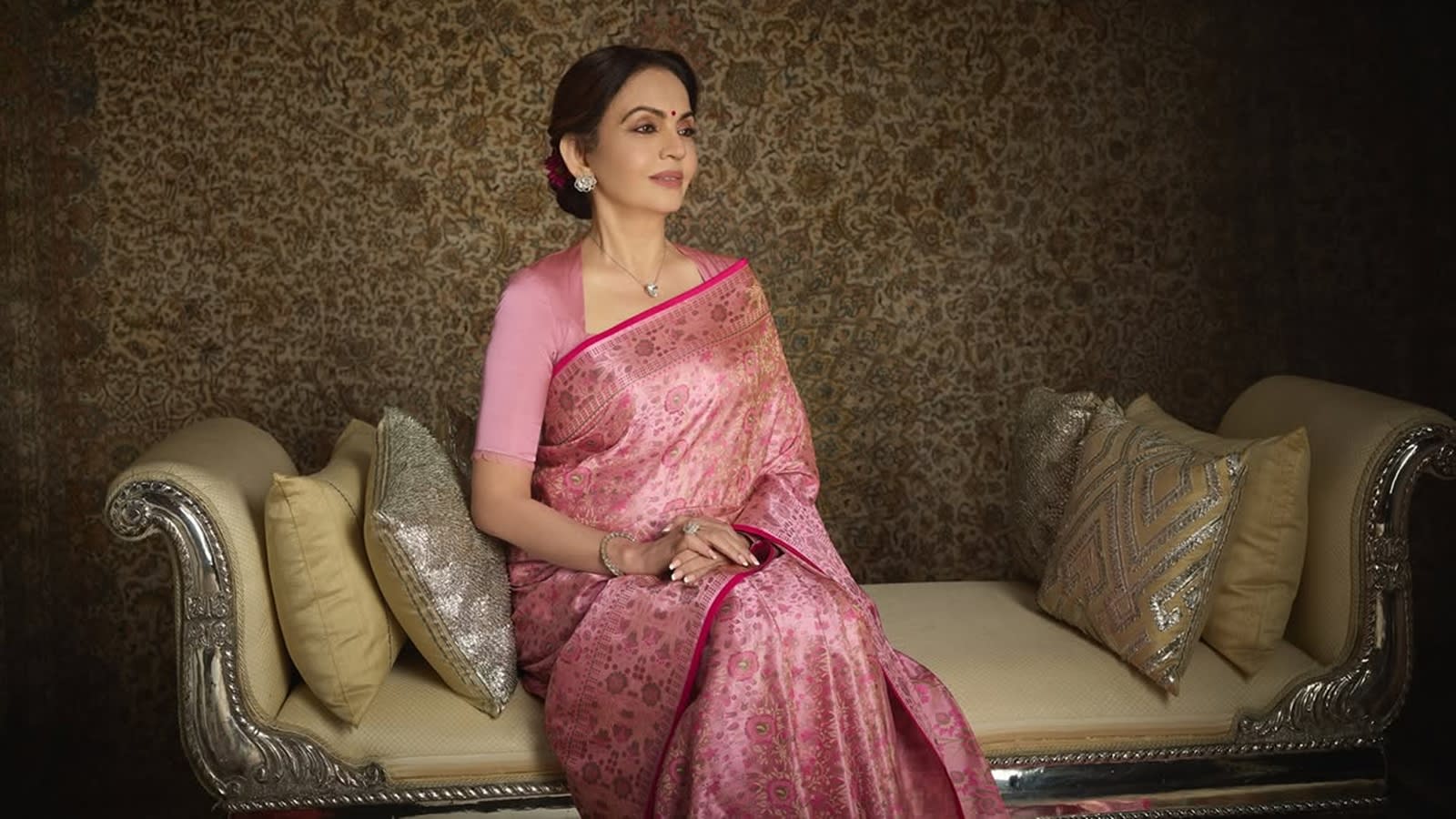
Nita Ambani, who ranked number one on the Fortune Most Powerful Women list, opted for an exquisite Tanchoi Banarasi silk sari from Swadesh to receive the special award. The Chairperson of Reliance Ind...
The Intersection of Global Power and Cultural Heritage
Nita Ambani's achievement of ranking number one on the Fortune Most Powerful Women list represents a significant milestone in the global recognition of Indian corporate and philanthropic leadership. This honor is not merely a reflection of wealth but a testament to her strategic influence as the Chairperson of Reliance Industries and her extensive work in sports, education, and healthcare. The event serves as a powerful symbol of how leadership roles are evolving, with figures like Ambani bridging the gap between industrial management and societal impact on a global scale.
Strategic Branding through 'Swadesh' and Tanchoi Silk
The choice of attire—a 'Gulab Holi' inspired Tanchoi Banarasi silk sari from Swadesh—is a calculated and meaningful gesture. By opting for a garment from Swadesh, a Reliance initiative dedicated to promoting Indian artisans, Ambani effectively utilized a high-visibility global platform to champion the 'Make in India' ethos. The Tanchoi technique, characterized by its intricate, dense weaving that creates a satin-like finish without the use of traditional floats, is a sophisticated art form. By wearing this specific weave, Ambani highlighted the technical excellence of Indian textiles to an international audience, transforming a celebratory moment into a masterclass in cultural diplomacy.
The Historical Significance of Banarasi Weaving
To understand the weight of this choice, one must look at the historical context of Banarasi silk. Originating from Varanasi, these textiles have been prized for centuries for their opulence and complexity, often associated with royalty and spiritual significance in India. The 'Gulab Holi' inspiration adds a layer of seasonal and emotional resonance, evoking the vibrancy and inclusivity of the festival of colors. By integrating these traditional elements into a modern context of corporate power, Ambani reinforces the idea that progress and modernization do not require the abandonment of ancestral heritage, but rather its elevation.
Broader Implications for Corporate Soft Power
This event underscores a growing trend where corporate leaders use 'soft power'—culture, fashion, and art—to enhance their global standing. When a leader ranks at the top of a list like Fortune's, their every choice becomes a signal. Ambani's decision to avoid Western formal wear in favor of a traditional Banarasi sari sends a clear message about confidence in one's identity. It suggests that the new global elite are increasingly comfortable asserting their cultural roots as a source of strength and distinction rather than conforming to a homogenized global business aesthetic.
Future Trends in Luxury and Artisanal Support
Looking forward, this event is likely to trigger a surge in interest for high-end, artisanal Indian textiles among the global elite. As more Indian leaders ascend to top positions in international rankings, the 'luxury ethnic' trend will likely evolve from occasional wear to a legitimate form of corporate power dressing. We can expect to see a deeper integration of sustainable, hand-woven fabrics in high-profile settings, as the world pivots toward slow fashion and ethical luxury, further benefiting the weaving communities of Varanasi and beyond.
Conclusion
Nita Ambani's recognition by Fortune is a dual victory: it validates her professional standing as one of the most influential women in the world and serves as a high-profile endorsement of Indian craftsmanship. Through the strategic use of the 'Gulab Holi' Tanchoi Banarasi sari, she successfully merged the worlds of high finance and traditional art, proving that true power lies in the ability to represent one's culture while leading on a global stage.