Parveen Hooda’s redemption arc: Boxer assures medal four years after suspension
Source Entity
Nitin Sharma
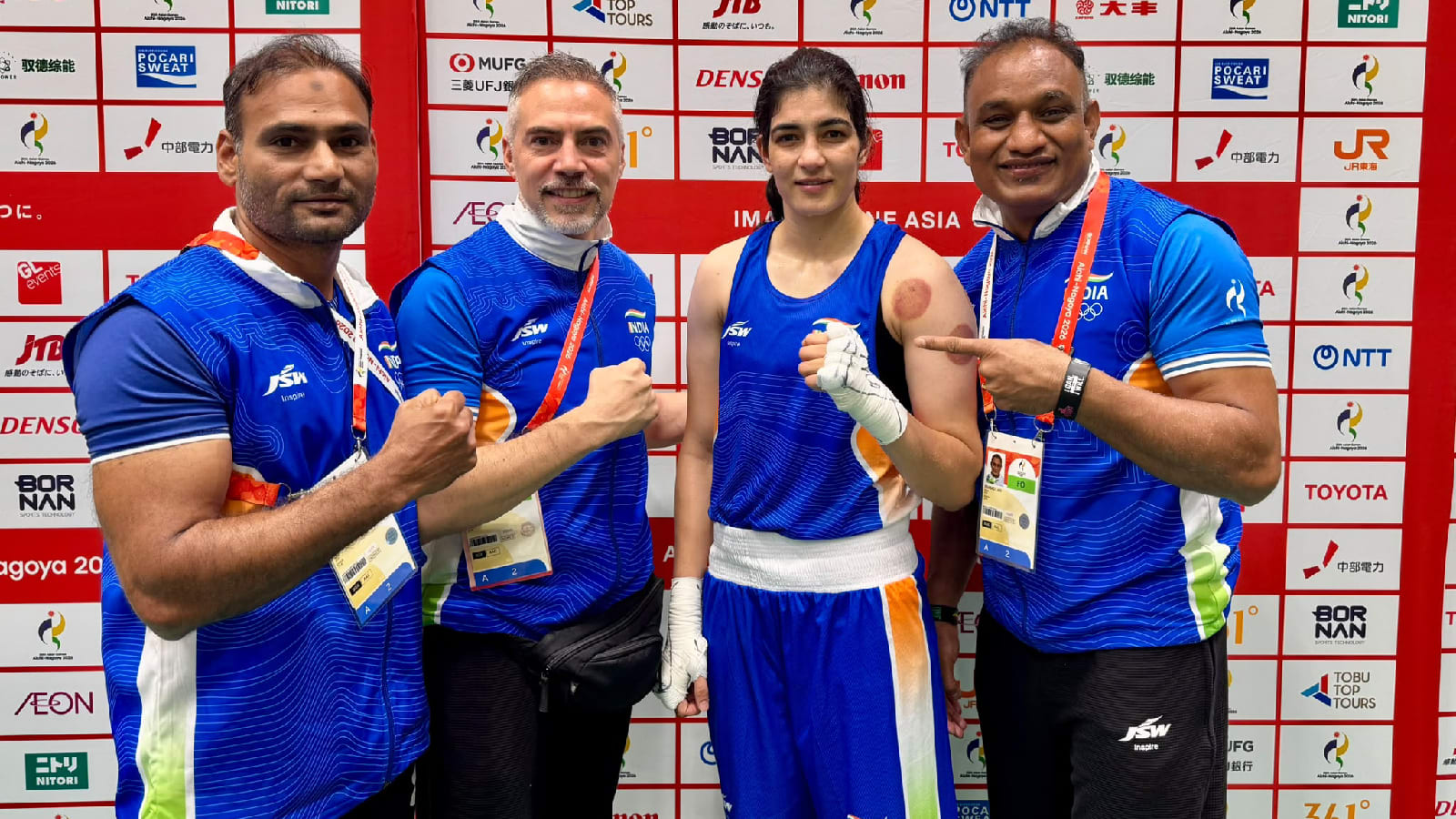
Indian boxers Parveen Hooda, Ankush Panghal, and Narender Berwal have secured semi-final spots at the Aichi-Nagoya Asian Games, guaranteeing at least three medals for India. Parveen Hooda’s victory is particularly significant, marking a personal redemption arc following her previous suspension.
A Resurgent Campaign at Aichi-Nagoya
The Indian boxing contingent has delivered a commanding performance at the Aichi-Nagoya Asian Games, with three athletes securing their spots in the semi-finals and guaranteeing at least three medals for the nation. The success of Parveen Hooda, Ankush Panghal, and Narender Berwal underscores the depth of talent currently emerging from the Indian boxing circuit. By defeating formidable international opponents, these athletes have demonstrated both technical superiority and the mental fortitude required to excel on the continental stage.
Parveen Hooda: A Narrative of Redemption
The most compelling story emerging from the ring is that of Parveen Hooda. Her unanimous 5-0 victory over Uzbekistan’s Navbakhor Khamidova—a 2025 World Championships silver medallist—is more than just a quarter-final win; it represents a profound redemption arc. Hooda previously faced a significant setback when her medal from the Hangzhou Asian Games was revoked following a suspension by the International Testing Agency due to whereabouts failures. Her return to form and dominance in the 65kg category serves as a testament to her resilience and dedication to the sport despite past administrative hurdles.
Tactical Dominance and Rising Stars
Alongside Hooda, the performances of Ankush Panghal and Narender Berwal have solidified India's standing in the tournament. Ankush, an army man from Hisar, Haryana, made a stellar Asian Games debut by dominating Tajikistan’s Nekruz Salimov in a 5-0 unanimous decision. Coming off a gold-medal performance at the Glasgow Commonwealth Games, his transition to the Asian Games level has been seamless. Similarly, Narender Berwal utilized his experience as a Commonwealth Games silver medallist to secure a victory via Referee Stops Contest (RSC) against Thailand’s Adthapong Saengtep, showcasing the aggressive style that has become a hallmark of the Indian team.
The Broader Implications for Indian Boxing
These results arrive at a pivotal moment for Indian boxing, as the nation seeks to maintain its momentum following success in other international arenas like Glasgow. The ability to consistently produce podium-contenders in both the men’s and women’s categories indicates a robust training infrastructure and a high level of tactical preparation. While the campaign saw the exit of Sachin Siwach against Japan's Shunsuke Kitamoto, the collective success of the remaining trio highlights a high ceiling for the team as they head into the medal rounds.
Future Outlook and Strategic Trends
The success in Aichi-Nagoya suggests that Indian boxing is shifting toward a more disciplined, high-IQ approach to the sport. By defeating established world-class medalists like Khamidova, Indian boxers are proving that they can dismantle elite defensive strategies. Moving forward, the focus will likely remain on maintaining this consistency, particularly for athletes like Hooda, who are balancing the pressure of past controversies with the high stakes of current international competition. As these boxers advance to the semi-finals, they carry the hopes of the nation, with each bout serving as a critical step toward cementing India's reputation as a global boxing powerhouse.