Road rage | Politics of renaming a street in Bengal
Source Entity
India Latest News: Top National Headlines Today & Breaking News | The Hindu
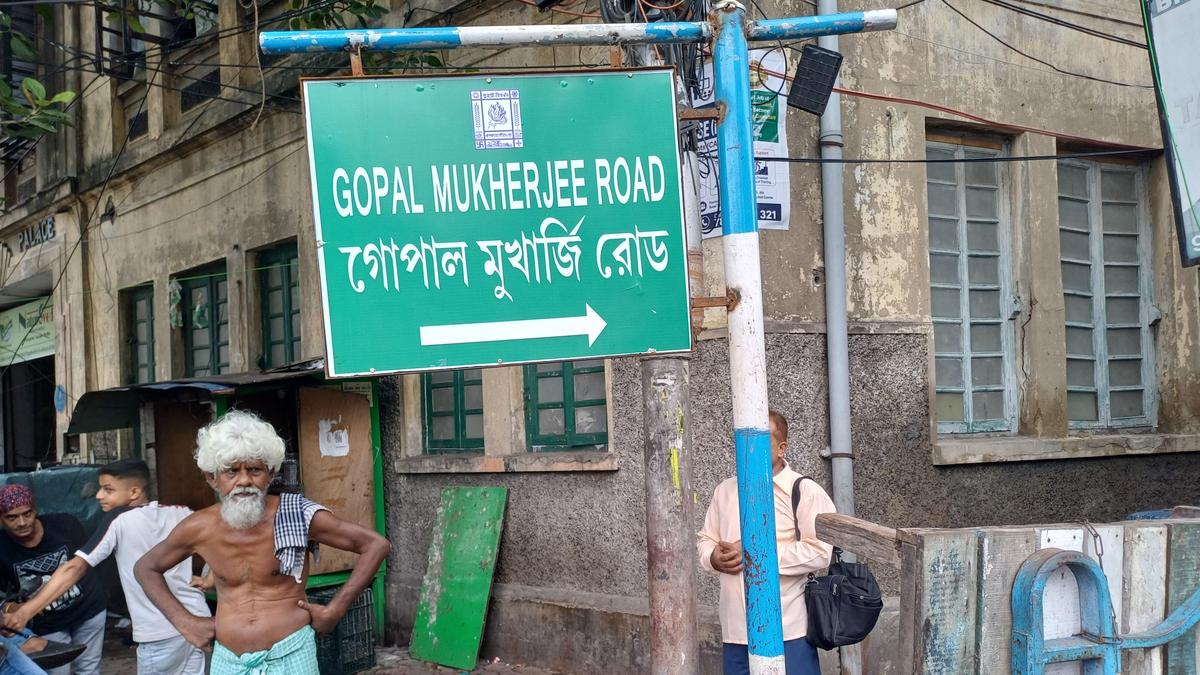
Soon after the BJP government renamed Kolkata’s Suhrawardy Avenue as Gopal Mukherjee Road, there was public outcry — and historical evidence — that the street was originally named not after the man whom the government blames for killings, but rather the first Muslim V-C of Calcutta University. Here’s why the renaming of the street marks a crucial moment in Bengal politics
The Toponymy of Power: Analyzing the Renaming of Suhrawardy Avenue
The act of renaming a street is rarely a mere administrative update; it is often a calculated political statement intended to reshape the collective memory of a city. In Kolkata, the decision by the BJP government to rename Suhrawardy Avenue as Gopal Mukherjee Road serves as a potent example of how urban geography is utilized as a battlefield for ideological warfare. This move reflects a broader trend of 'symbolic reclamation,' where current political regimes attempt to erase the legacy of figures they deem problematic while elevating those who align with their specific nationalist or ideological vision.
The Clash of Narratives: Ideology vs. History
At the heart of this controversy is a fundamental disagreement over the identity of the street's original namesake. The government's rationale for the renaming appears rooted in a narrative that associates the name 'Suhrawardy' with political figures linked to the violence and tragedy of the Partition. By framing the renaming as a necessary correction to honor Gopal Mukherjee, the administration seeks to align the city's landscape with a narrative of indigenous heroism and anti-colonial struggle.
However, this narrative has been met with stiff resistance from historians and the public. Evidence suggests that the street was not named after the political figure the government targets, but rather in honor of the first Muslim Vice-Chancellor of Calcutta University. This distinction is critical; it shifts the conversation from one of political culpability to one of academic and institutional achievement. The erasure of a figure who represented the intellectual synthesis of Bengal's multicultural history suggests a preference for a polarized historical memory over a nuanced one.
The Broader Pattern of Political Renaming in India
This event does not occur in a vacuum but is part of a wider national pattern observed across various Indian states under BJP governance. From the renaming of Allahabad to Prayagraj to the attempts to rename cities like Gurugram, there is a consistent effort to 'decolonize' or 'purify' the map of India. These actions are designed to signal a break from the past—specifically a past associated with Islamic or British influence—and to instill a sense of cultural pride centered on a specific interpretation of Hindu heritage. In the context of West Bengal, this strategy is particularly volatile given the state's long-standing tradition of secularism and its distinct regional identity.
Implications for Bengal's Social Fabric
In West Bengal, where the 'Bhadralok' culture emphasizes intellectualism and historical continuity, such renaming efforts often trigger an intense backlash. The outcry over Suhrawardy Avenue is not merely about a street sign, but about the perceived assault on the city's pluralistic identity. When a government ignores historical evidence—such as the identity of the university VC—in favor of a political narrative, it risks alienating the intelligentsia and creating deep-seated social friction. This 'road rage' of a political nature illustrates the tension between a centralized ideological push and a localized, historically rooted resistance.
Future Trends: The Battle for Historical Memory
Looking forward, it is likely that the renaming of streets and landmarks will continue to be a primary tool for political signaling in India. As political parties seek to consolidate their bases, the 'politics of the past' will become increasingly central to electoral strategies. We can expect more disputes where archival research clashes with political decrees, leading to a fragmented understanding of urban history. The Suhrawardy Avenue case serves as a warning that when history is treated as a tool for political expediency, the result is often a loss of objective truth and an increase in societal polarization.
Conclusion
Ultimately, the transition from Suhrawardy Avenue to Gopal Mukherjee Road is a microcosm of the larger struggle for India's soul. While honoring national heroes like Gopal Mukherjee is a valid pursuit, doing so by erasing or misrepresenting the contributions of others undermines the very fabric of a diverse society. The controversy underscores the necessity of grounding political actions in empirical historical fact to avoid the pitfalls of revisionism and social discord.
Verification Required?