'A lot of it is connected': Rahul links India, France, US to global economic shifts
Source Entity
KANCHAN YADAV
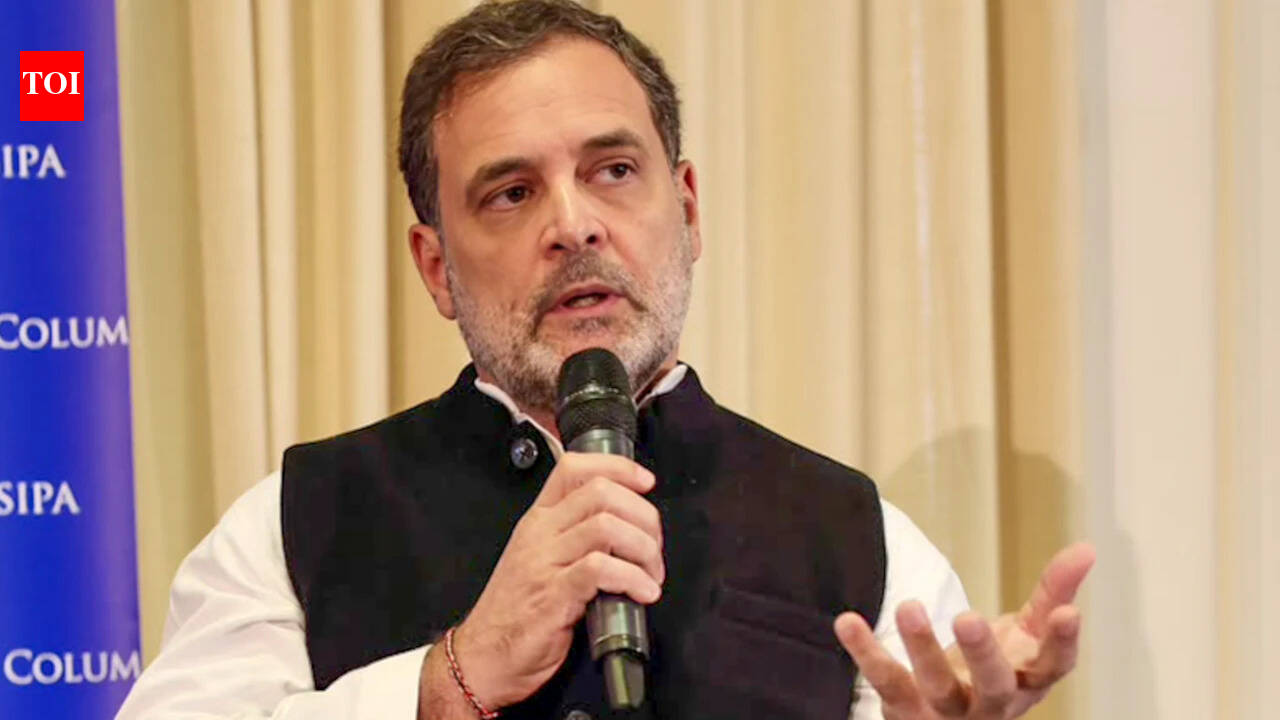
Rahul Gandhi has warned of an economic disaster in India, citing unemployment and manufacturing failures during a Columbia University visit. The JD(U) has strongly rebutted these claims, asserting that India's growth rates significantly outpace global averages.
The Clash Over India’s Economic Narrative
The recent discourse between Leader of the Opposition Rahul Gandhi and the Janata Dal (United) highlights a deepening polarization regarding India’s current economic trajectory. During a fireside chat at Columbia University on November 17, 2026, Mr. Gandhi presented a critical assessment of the nation’s fiscal health, describing India as sitting on an "economic disaster" characterized by systemic unemployment and a fractured manufacturing sector. His critique extended to flagship government programs like 'Make in India' and 'Start-up India,' which he argued have failed to provide the necessary impetus for sustained growth.
The Opposition’s Critique: Structural Concerns
Mr. Gandhi’s arguments centered on the perceived disconnect between current policy initiatives and the actual needs of the Indian workforce. He emphasized that the nation’s economic model has struggled to produce results over the last decade, leading to widespread frustration among the youth. By highlighting the "broken" state of the manufacturing base and deep-rooted issues within the education system, he underscored a narrative that suggests the current economic framework is failing to generate sufficient, high-quality employment for a growing demographic of young professionals.
The Government’s Defense: Data-Driven Rebuttal
In swift response, JD(U) spokesperson Rajeev Ranjan Prasad challenged these assertions, accusing Mr. Gandhi of attempting to tarnish India’s international reputation. The JD(U)’s defense relies heavily on macroeconomic indicators, specifically pointing out that India’s growth rate currently stands at more than double the global average. This rebuttal suggests that the government views domestic economic challenges as manageable and part of a broader, successful development trajectory that is being unfairly characterized by the opposition on the global stage.
The Role of SMEs and Agriculture
Beyond criticizing existing government programs, Mr. Gandhi identified small and medium-sized businesses (SMEs) and the agricultural sector as the essential "backbone" of the Indian economy. He argued that these sectors are critical for job creation and that the current strategy has neglected these foundations in favor of models that have not yielded the promised results. This focus on decentralized economic power contrasts sharply with the government's emphasis on large-scale industrialization and national-level initiatives.
Broader Implications and Future Trends
This debate at Columbia University reflects a wider trend in Indian politics where international platforms are increasingly used to shape domestic narratives. As both parties continue to contest the definition of "economic success," the electorate is presented with two starkly different visions: one that emphasizes high-level GDP growth and state-backed initiatives, and another that highlights structural inequality and localized unemployment. Looking ahead, the ability of either side to gain traction will depend on how these economic indicators translate into the daily realities of the Indian populace.
Conclusion
The tension between the opposition's warnings of an "economic disaster" and the ruling coalition's focus on robust growth rates demonstrates a fundamental disagreement on the state of India's development. While the government maintains that its policies are outperforming global standards, the opposition continues to leverage international forums to advocate for a pivot toward labor-intensive sectors and educational reform. This ongoing dialogue will likely remain a central theme in Indian political discourse as the nation navigates its future economic path.
Multiple Citing Sources