Rajnath Singh Launches First India-Made Fleet Support Ship In Vizag
Source Entity
NDTV News Search Records Found 1000
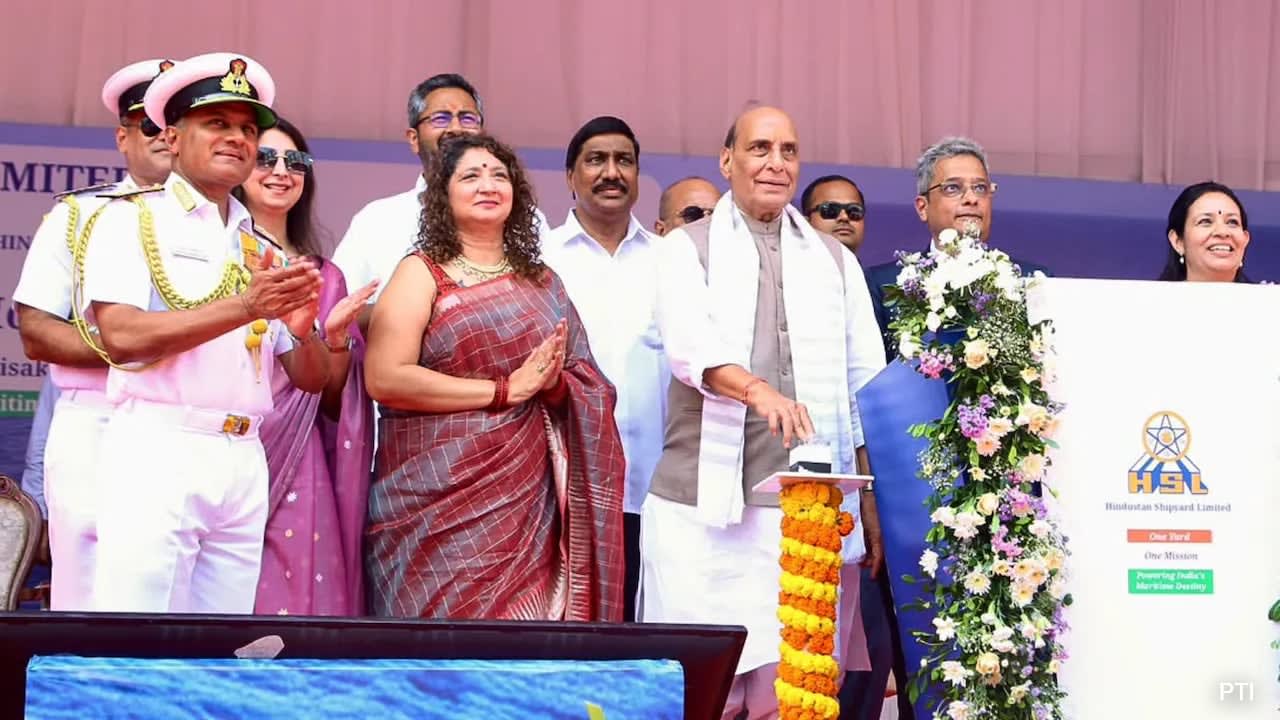
Defence Minister Rajnath Singh launched India's first indigenous Fleet Support Ship, 'Surya', at Hindustan Shipyard Limited in Visakhapatnam. The project marks a significant milestone in naval self-reliance, with the ship boasting 82% indigenous content.
Strengthening Maritime Sovereignty: The Launch of INS Surya
On October 6, 2026, Defence Minister Rajnath Singh presided over a landmark event at Hindustan Shipyard Limited (HSL) in Visakhapatnam, marking a pivotal shift in India's naval logistics capabilities. The launch of the first indigenous Fleet Support Ship (FSS), named 'Surya', signifies a major step toward self-reliance in the maritime sector. With a displacement of 43,500 tonnes and an impressive 82% indigenous content, the vessel represents the culmination of efforts to reduce dependence on foreign technology and bolster local shipbuilding prowess.
Strategic Importance of Fleet Support Ships
Fleet Support Ships are the unsung heroes of naval power projection. By providing at-sea refueling and resupply capabilities, these vessels allow warships to maintain extended operational deployments without the tactical disadvantage of returning to port. Currently, the Indian Navy manages a fleet comprising INS Shakti, INS Jyoti, INS Deepak, and INS Aditya. The addition of 'Surya' not only expands this capacity but also modernizes the logistical backbone of both the Eastern and Western Naval Commands, ensuring the fleet remains agile and combat-ready across the Indian Ocean Region.
HSL: A Pillar of National Maritime Capability
During the ceremony, Rajnath Singh highlighted Hindustan Shipyard Limited’s role as the custodian of India's maritime capability. By inaugurating upgraded infrastructure at the site and simultaneously laying the keel for the fifth ship in the FSS series (FSS-5), the government is signaling a long-term commitment to industrializing naval production. This systematic approach—moving from the launch of the first vessel to the keel-laying of the fifth—demonstrates a robust production pipeline designed to meet the growing demands of a blue-water navy.
Integration and Engine Production
Beyond the vessel launch, the Defence Minister announced the establishment of a second production line for Shakti engines in Koraput. This strategic expansion is directly linked to the broader goal of indigenous naval shipbuilding, ensuring that the critical powerplants required for these massive vessels are manufactured domestically. This integration of engine production with shipyard output creates a localized supply chain that mitigates the risks associated with global logistics volatility.
Future Trends and Regional Implications
As India continues to modernize its naval fleet, the focus on 'Atmanirbhar Bharat' (Self-Reliant India) in defense manufacturing becomes increasingly critical. The 'Surya' project sets a precedent for future large-scale naval infrastructure projects. By prioritizing domestic content, India is not only saving foreign exchange but is also developing a specialized workforce and a mature industrial ecosystem capable of supporting complex naval operations. These developments ensure that the Indian Navy remains a dominant force, capable of securing maritime trade routes and responding to regional security challenges with greater autonomy.
Multiple Citing Sources
Verification Required?